

動態
JUSTLEE Insights
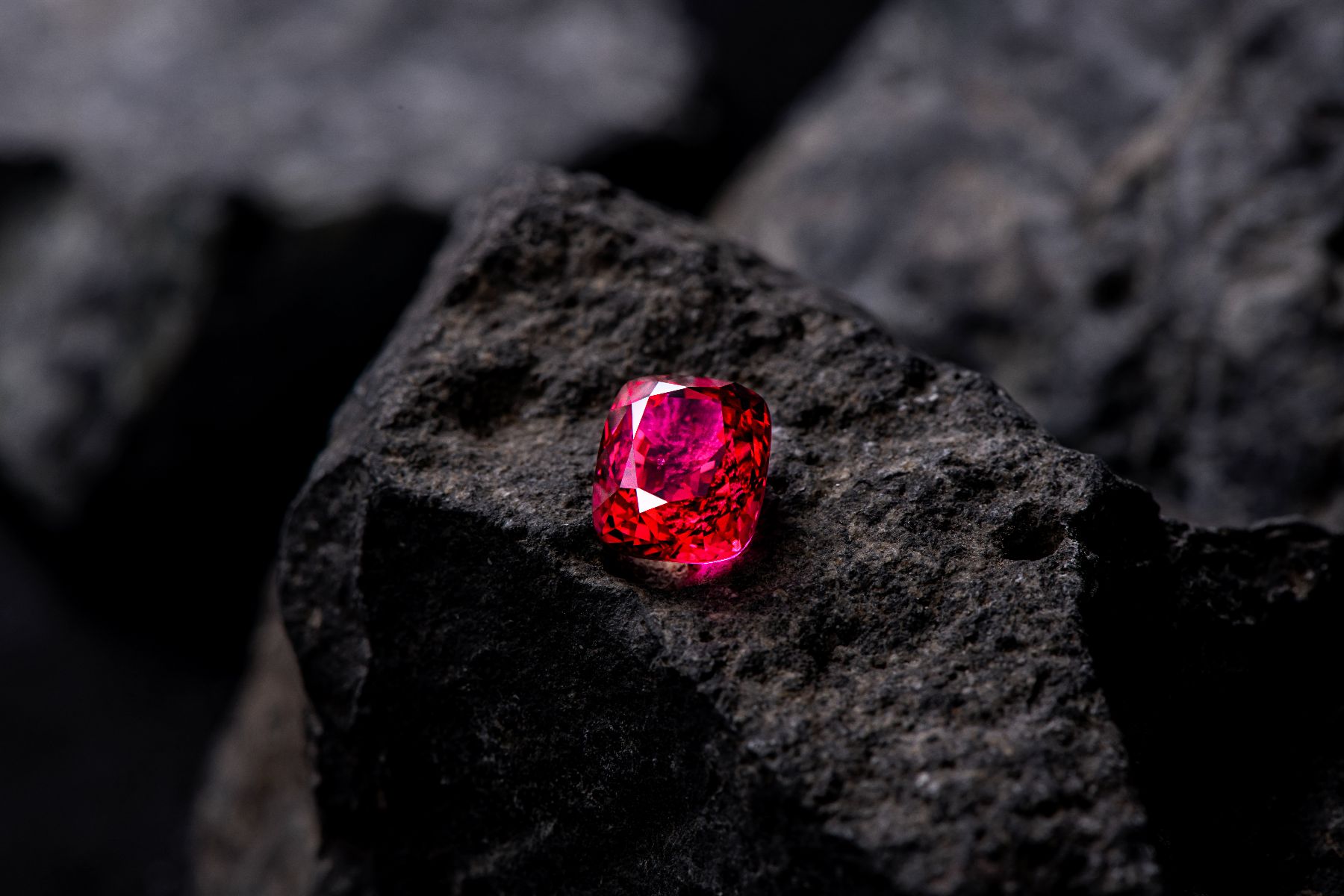
Among coloured gemstones, the ruby has long stood alongside sapphire and emerald as one of the most sought-after categories of all. Its intense, pure red comes from the presence of chromium during the stone's geological formation, and from a set of conditions that must hold at once: exceptional colour, a traceable origin, an untreated natural state, and confirmation from an internationally recognised laboratory.
At JUSTLEE, assessing a ruby follows a clear order of priority. We first confirm whether a stone is unheated, because treatment status determines whether it retains its original integrity; next we examine the report from an internationally recognised laboratory, the foundation of every judgment that follows; then we assess whether the colour reaches the Pigeon Blood grade; and finally we confirm origin. This order reflects a position unchanged across fifty years of curation — that the value of a collection rests on verifiable fact, not on market narrative.
This guide follows the way understanding is built, beginning with what a ruby is, then working through colour, origin, unheated status, and certification, and what a collector genuinely needs to grasp when assessing a stone.
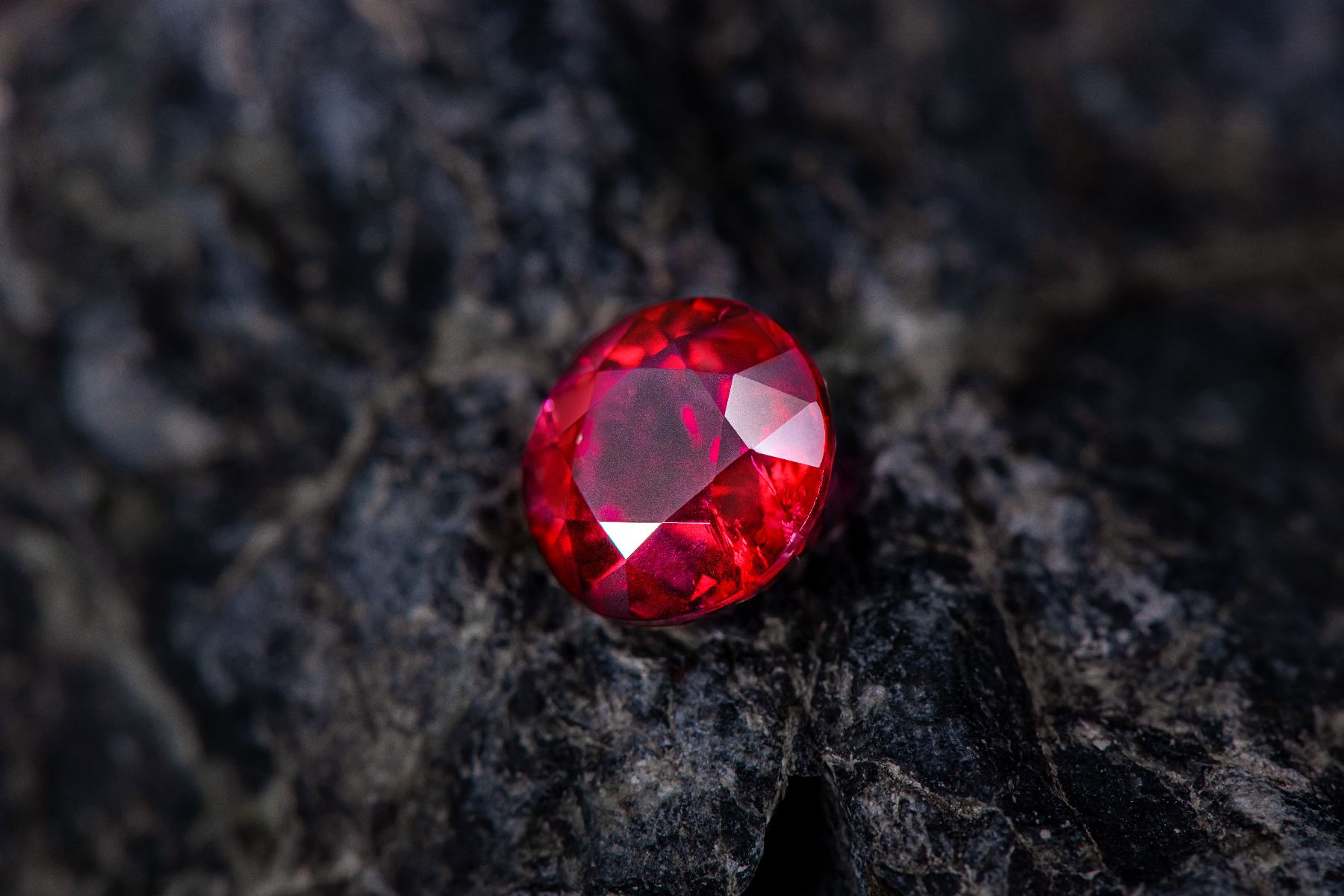
What Is a Ruby?
Ruby and sapphire belong to the same mineral family — corundum, or crystallised aluminium oxide. What separates them is the trace element responsible for colour: when corundum takes on a red hue from trace chromium, it is a ruby; corundum of every other colour is classed as sapphire.
It is chromium that governs the saturation and purity of a ruby's red. The higher the chromium content and the lower the presence of elements that mute colour — iron above all — the purer and more vivid the red. This difference in chemical composition is also the root of the fundamental distinctions in colour and optical behaviour seen between rubies of different origins.
Read more: Both Are Corundum — So Why the Difference Between Ruby and Sapphire?
Ruby Colour: Vivid Red and Pigeon Blood
A ruby's value rests first on the quality of its red. The laboratories assess colour by hue, saturation, and tone; those reaching the highest level of saturation are described as Vivid Red — the threshold for a top-grade ruby on colour alone.
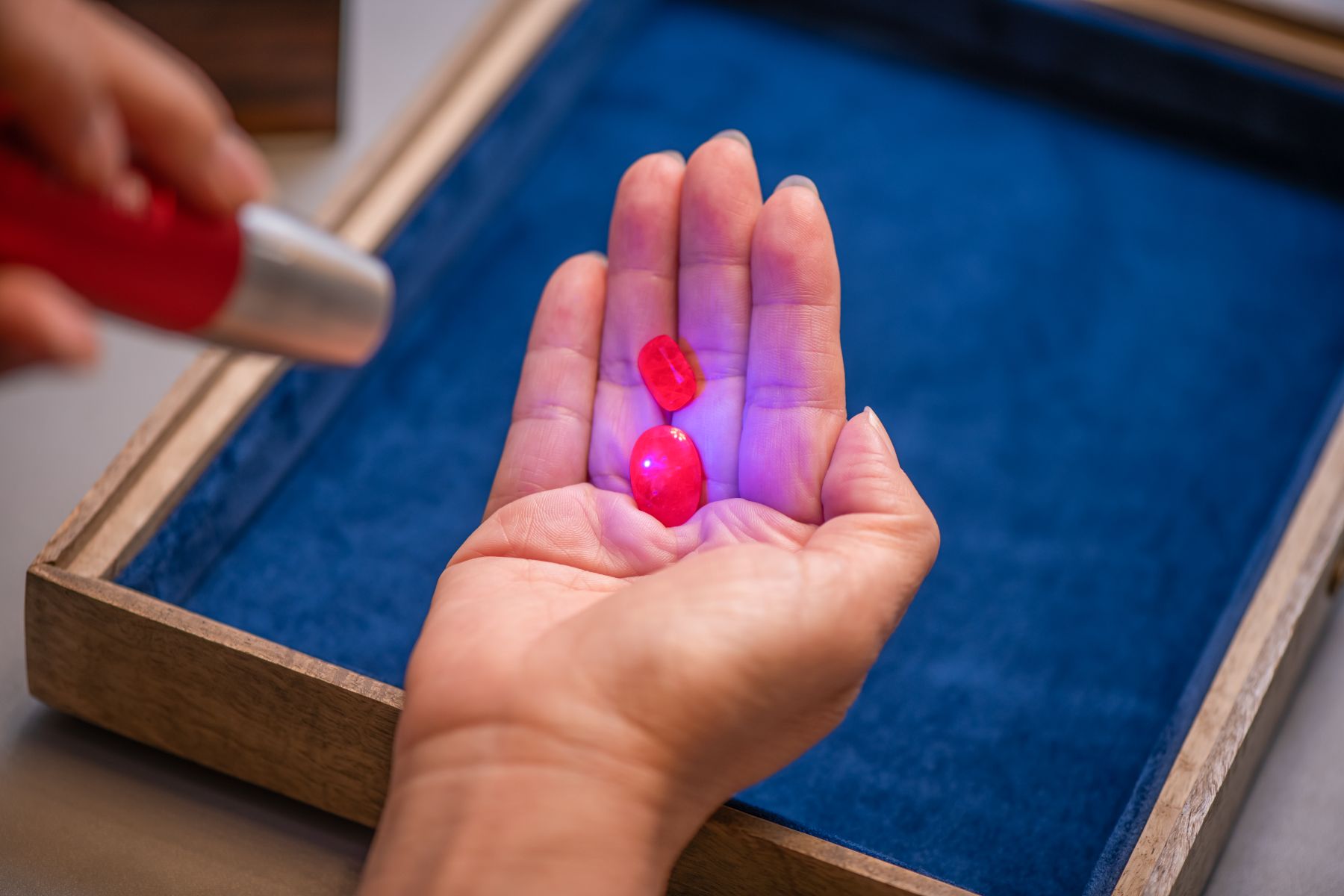
Above Vivid Red, the grade the market prizes most is Pigeon Blood. This is a top colour appendix designation formally used by GRS, Gübelin, and SSEF in their reports, requiring a pure red hue, saturation at the Vivid level, and a strong spontaneous red fluorescence at once. It is this fluorescence that makes the red appear lit from within under a range of light sources, the most recognisable trait of a fine ruby.
One common misconception is worth clearing up: Pigeon Blood is a colour grade, not a synonym for Burmese origin. Stones awarded the designation are predominantly Burmese, but colour grade and origin are two separate entries on a report and must be confirmed independently — one can never stand in for the other.
Read more: Burmese Unheated Ruby: Mogok Origin, the Pigeon Blood Grade, and Collecting Standards
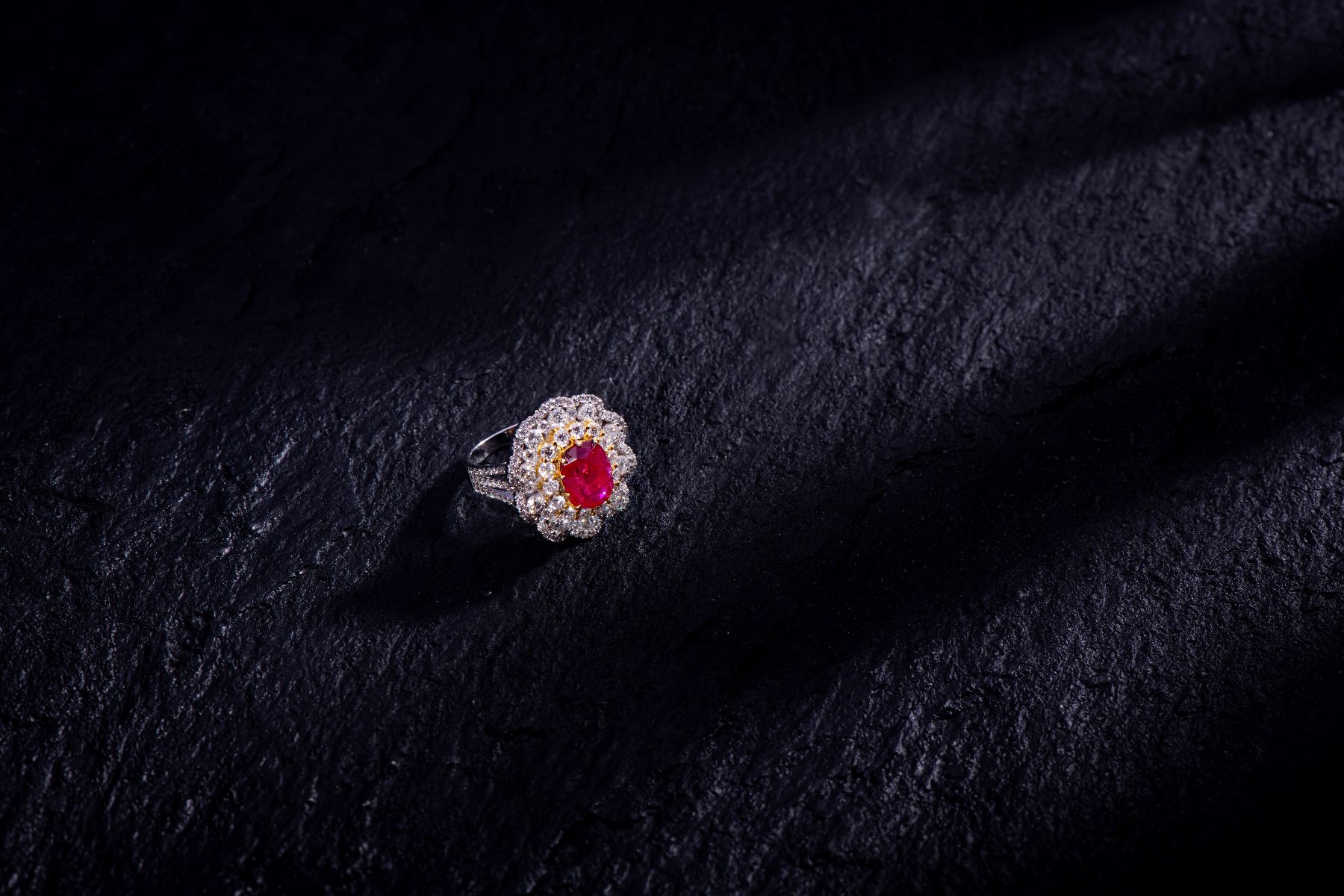
Ruby Origin: Burma, Mozambique, and Madagascar
Origin is an important coordinate in ruby valuation, because the geological conditions of each source directly determine a stone's chemical composition and optical behaviour.
Burma — specifically Mogok — is the most thoroughly documented and historically pre-eminent ruby origin. Its geology produces a combination of high chromium and exceptionally low iron, allowing the chromium-induced spontaneous red fluorescence to show fully under low-iron conditions and giving the stone its lit-from-within quality. The limited historical supply of top Mogok rubies is the objective basis for their enduring place at the summit of collecting.
Mozambique is among the most important ruby sources of the modern era, and some material reaches top-tier colour; but with generally higher iron content, its fluorescence falls observably short of Burmese material. This difference is discernible in laboratory reports and is reflected in the pricing logic of the auction market. Madagascar and other origins likewise supply rubies in meaningful quantity, each with its own colour and clarity characteristics.
For the collector, no origin is absolutely superior to another — but origin is essential information for understanding the source of a ruby's colour and its position in the market.
Read more: Burmese Unheated Ruby: Mogok Origin, the Pigeon Blood Grade, and Collecting Standards
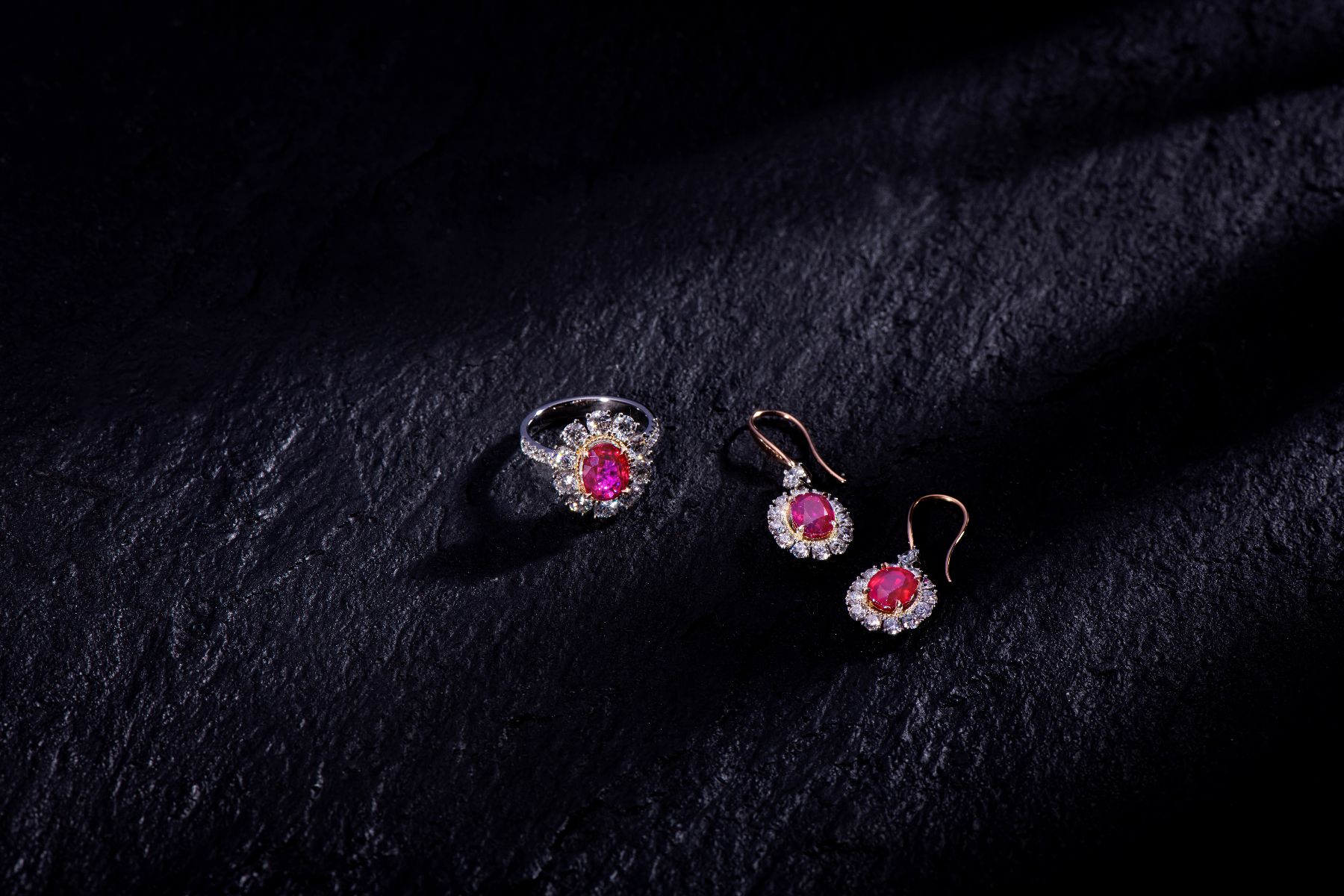
Why Unheated Status Is Central to Ruby Collecting
Of all the dimensions of assessment, treatment status has the most fundamental bearing on collecting value.
Heat treatment is a long-established and legitimate enhancement, using high temperature to dissolve internal silk inclusions and improve clarity and evenness of colour. It is widely accepted in the gem trade and must be disclosed in a laboratory report. The overwhelming majority of commercial-grade rubies on the market have been heated.
An unheated stone, recorded on a report as no indications of heating, is one that has never undergone any artificial heat treatment since it left the ground. A ruby that presents a saturated, pure red without any treatment is one that already held the ideal chromium-to-iron ratio at the moment of its formation, rather than reaching top-grade appearance through later intervention. Rubies that meet top colour standards and are also unheated are exceptionally scarce, which is precisely why an unheated ruby is regarded as a distinct tier in the collecting market, and why it has remained the constant, non-negotiable baseline of JUSTLEE's fifty years of curation.
Ruby Certification: Recognise the Trusted International Laboratories
Ruby collecting rests on verifiable, independent authentication. For a buyer, the first step in judging whether a report can be trusted is confirming that it comes from an internationally recognised laboratory. Those widely relied upon in the trade include GRS, GIA, SSEF, Gübelin, and AIGS — laboratories whose reference collections and standing support credible determinations of origin and treatment for rubies, with AIGS holding particular authority in the Thai, Burmese, and Singaporean markets.
It is worth noting that the laboratories differ somewhat in function. The Pigeon Blood colour grade is formally issued by GRS, Gübelin, and SSEF; GIA uses its own independent colour-description system and does not issue this grade, though it carries equal standing on origin and unheated determinations. For stones at the highest collecting tier, trade practice is to hold two reports from different leading laboratories, reinforcing the cross-institutional verification of the supporting documents.

What a Collector Truly Needs to Understand
The value of a fine ruby rests on a scarce combination of four conditions holding at once: a top colour grade such as Pigeon Blood, a traceable origin determination, unheated treatment status, and a rare carat weight. The absence of any one of them moves a stone into an entirely different value bracket. Understanding how these four conditions relate to one another is the foundation of serious ruby collecting.
These are the standards on which JUSTLEE has built fifty years of curation. We hold that the rarity and enduring value of a fine ruby rest on verifiable conditions of origin, treatment, and certification — not on market narrative. The trust that collecting depends on is built on facts that can be verified.
If you are considering your first ruby, or would like to understand how to read a certification in depth, we invite you to arrange a private consultation with a JUSTLEE consultant.
Read more: The Four Standards Behind Fifty Years of JUSTLEE Curation、JUSTLEE curated unheated ruby
Frequently Asked Questions
Q: How are ruby and sapphire related?
A: Ruby and sapphire are essentially the same mineral — corundum, or crystallised aluminium oxide. The only difference lies in the trace element responsible for colour: corundum coloured red by trace chromium is called ruby, while corundum of every other colour is classed as sapphire. Strictly speaking, ruby is the only corundum with a name of its own; all other colours fall under sapphire.
Q: What is Pigeon Blood?
A: Pigeon Blood is the top colour designation in ruby grading, describing a pure red hue, saturation at the Vivid level, and a strong spontaneous red fluorescence. It is formally used by GRS, Gübelin, and SSEF in their reports. Note that Pigeon Blood is a colour grade, not a synonym for origin — stones awarded it are predominantly Burmese, but origin and colour grade are separate entries on a report and must be confirmed independently.
Q: How do you tell a Burmese ruby from a Mozambican one?
A: The fundamental difference comes from chemical composition determined by geological formation. Burmese (Mogok) rubies have a high-chromium, exceptionally-low-iron combination that produces a strong spontaneous red fluorescence and a lit-from-within quality; Mozambican rubies generally carry higher iron, and their fluorescence falls observably short of Burmese material. This difference is discernible in reports from the leading laboratories and is reflected in auction-market pricing.
Q: Why are unheated rubies rarer?
A: Because the overwhelming majority of rubies on the market have been heat-treated — a legitimate and common enhancement. An unheated ruby has never undergone any artificial heat treatment, so its colour is determined entirely by its original chromium-to-iron ratio. A ruby that can present a top-grade saturated red without treatment is one that held the ideal chemistry from the moment it formed; such stones are very few, which is why they are regarded as a tier distinct from commercial-grade rubies.
Q: Which laboratories should I look for when buying a ruby?
A: The first step in judging whether a report can be trusted is confirming it comes from an internationally recognised laboratory. Those widely relied upon include GRS, GIA, SSEF, Gübelin, and AIGS, whose reference collections and standing support credible determinations of origin and treatment; AIGS holds particular authority in the Thai, Burmese, and Singaporean markets. Note that the Pigeon Blood colour grade is issued by GRS, Gübelin, and SSEF; GIA does not issue this grade but carries equal standing on origin and unheated determinations.
 Facebook
 Instagram
 Line
Line