

動態
JUSTLEE Insights
Ruby and sapphire belong to the same mineral species — corundum (Al₂O₃), with a Mohs hardness of 9. The colour difference between them comes down to trace elements alone: chromium produces red, yielding ruby; iron and titanium in combination produce blue, yielding sapphire. Beyond that single chemical distinction, however, the two stones operate by entirely different rules. Their origins, optical properties, treatment sensitivity, and certification languages reflect genuinely distinct gemological identities — and understanding those differences is the foundation of any serious coloured stone collection.
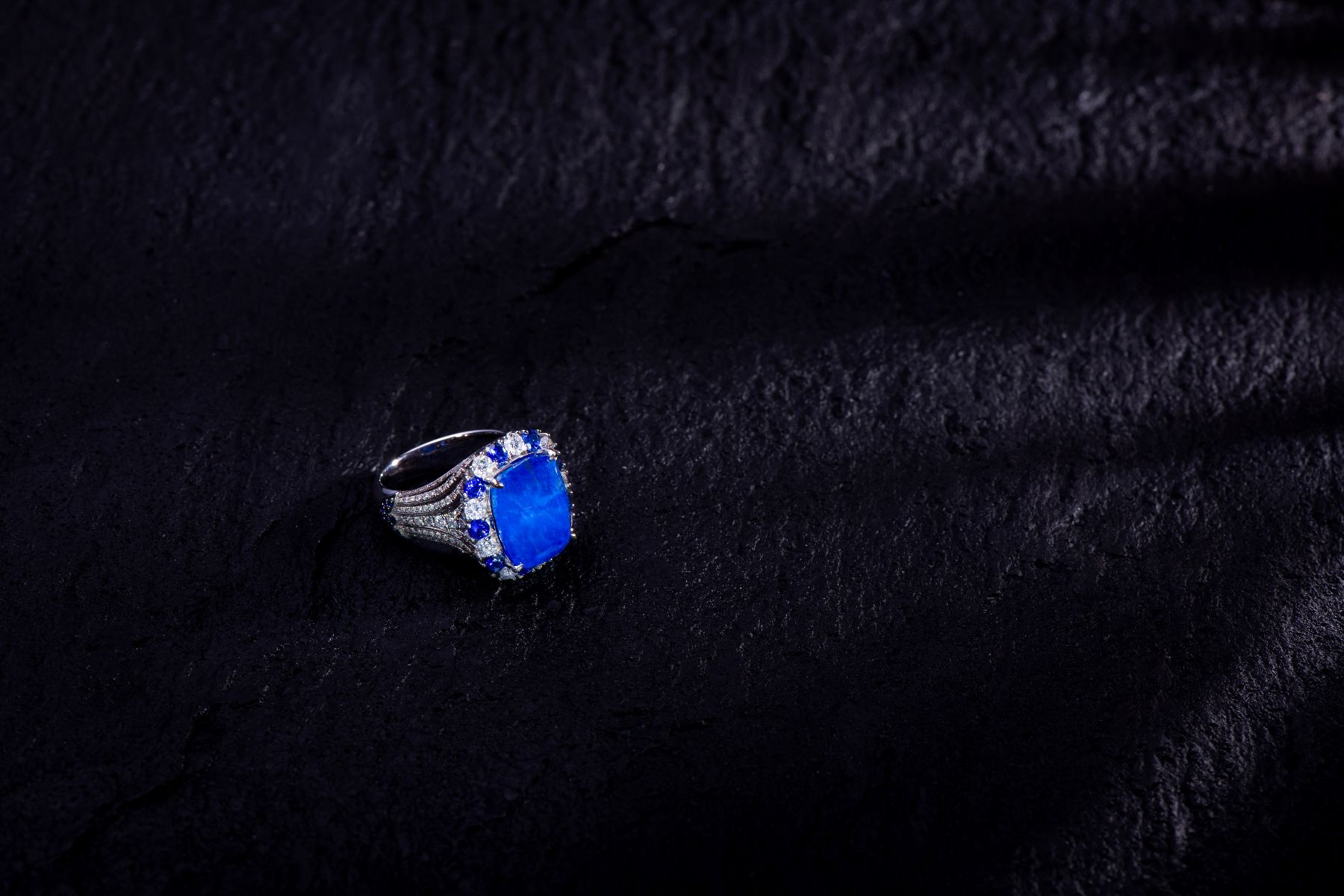
Origin — Geographic Conditions That Cannot Be Replicated
Origin in the coloured stone market is not a branding exercise. It is a geological statement.
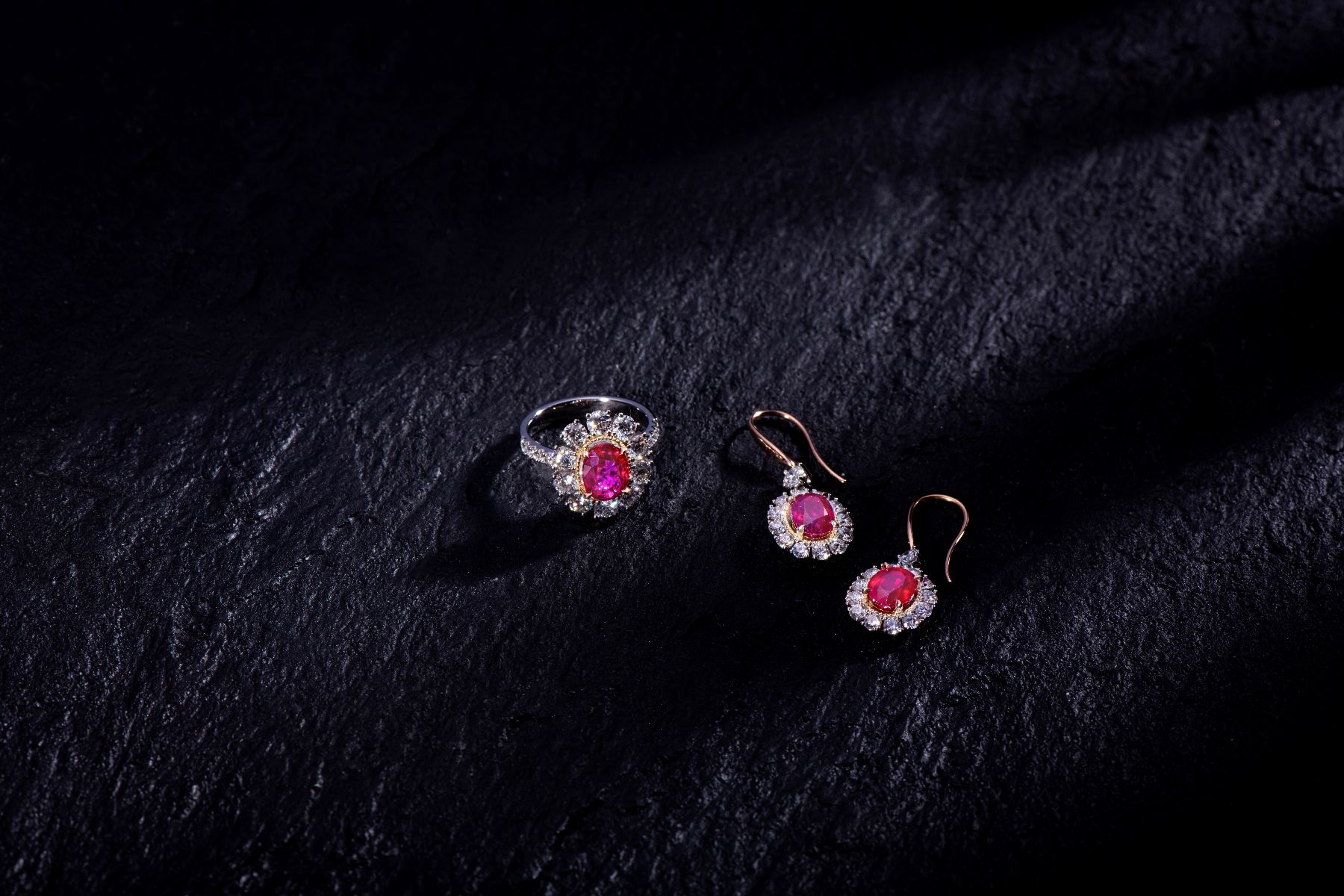
For ruby, the benchmark origin is Mogok, Myanmar. The specific chromium concentrations and crystal structure responsible for Mogok's pigeon blood colour and fluorescence character have not been replicated by any other deposit. Mozambique has emerged as a significant modern source, producing material of genuine collector quality — but the optical expression of Mozambican ruby remains distinct from Mogok. Madagascar and Thailand are also established producing regions, each with recognisable trade characteristics.
For sapphire, the reference origin is Kashmir. The deposits lie in the Zanskar Valley of the western Himalayas, at elevations above 5,000 metres. Meaningful extraction lasted less than a decade — from approximately 1880 to 1887 — before the deposits were largely exhausted. Every Kashmir sapphire on the market today is historical material from that brief window. No new production exists. Sri Lanka (Ceylon) currently provides the most important volume of top-grade sapphire and remains the primary source of record for Padparadscha.
Asterism — An Optical Phenomenon Found in Both
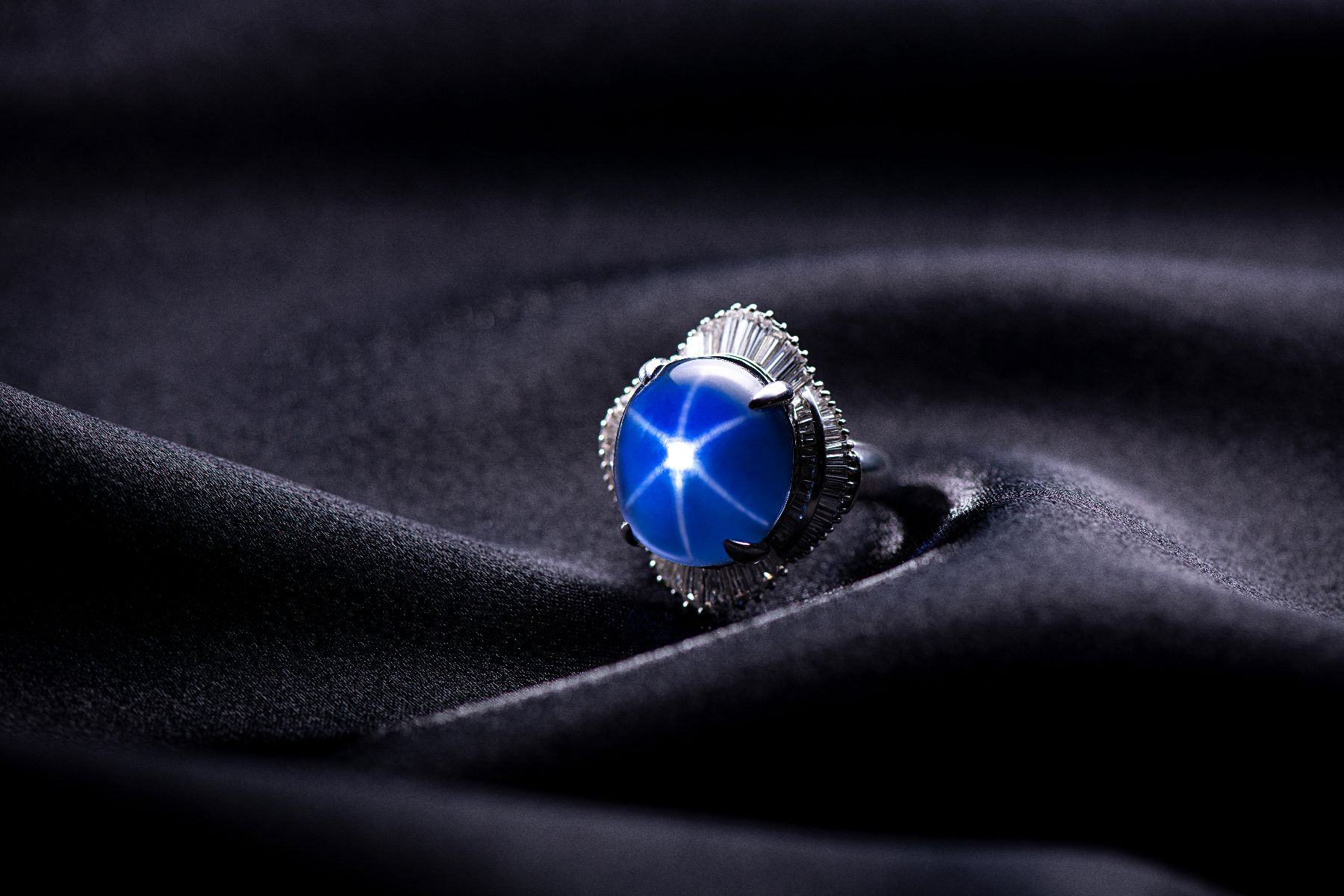
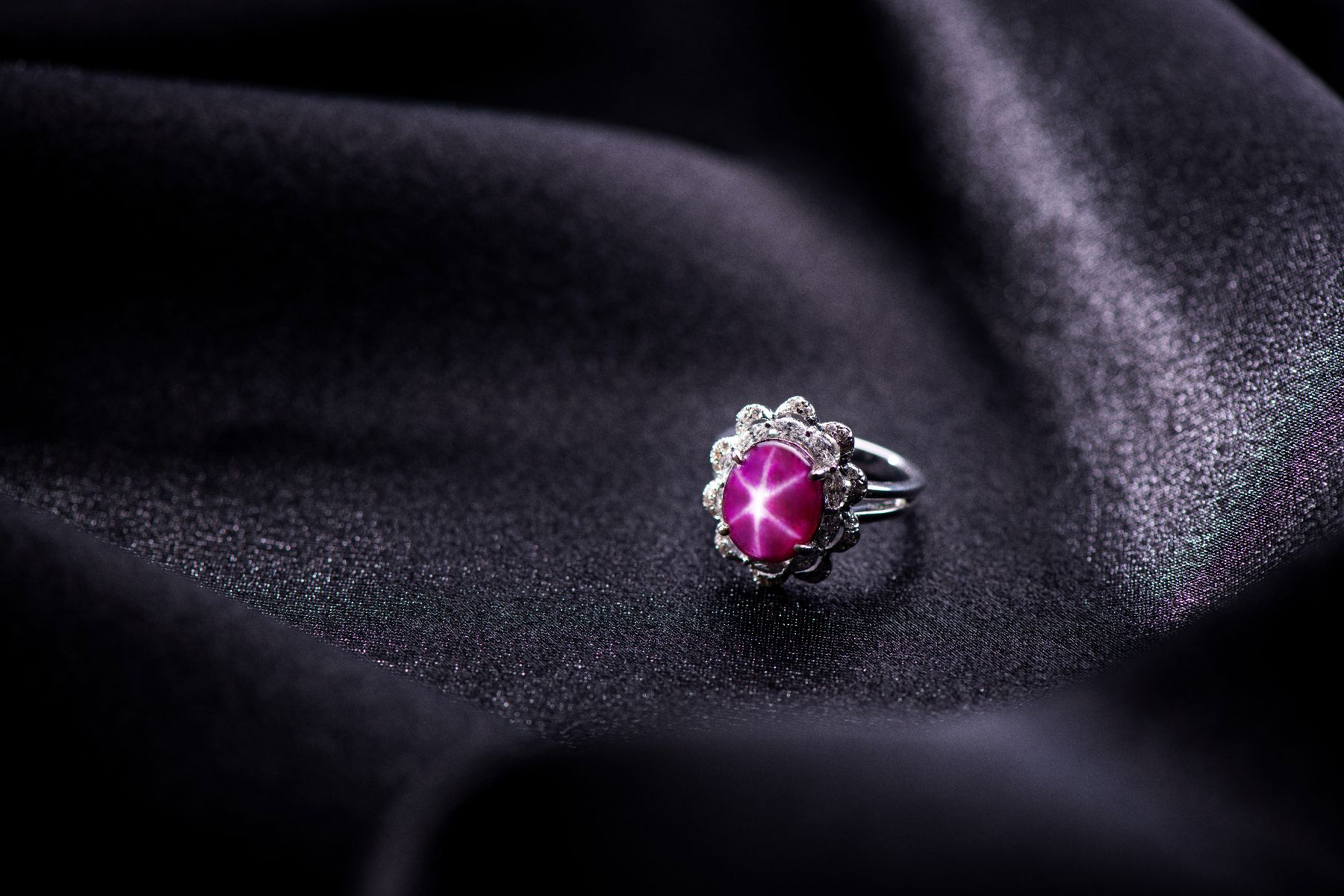
Both ruby and sapphire can exhibit asterism: the appearance of a six-rayed star across the dome of a cabochon-cut stone. The effect is produced by oriented silk inclusions within the crystal that reflect incident light into converging rays. Twelve-rayed stars occur in rarer specimens.
Star ruby and star sapphire are treated as independent collector categories, evaluated on the clarity and centring of the star, the saturation of the base colour, and the quality of the cabochon profile.
The silk inclusions responsible for asterism serve a second function in Kashmir sapphires: they are the structural source of the velvety blue optical quality that defines the finest Kashmir material. Heat treatment dissolves these inclusions — which is one of the primary reasons why unheated status carries particular weight for top-grade blue sapphire.
Colour Change — A Characteristic Found in Sapphire
Colour change — the shift in apparent colour between different light sources — occurs in some sapphires as a result of specific trace element combinations, primarily chromium and vanadium, within the crystal. A colour-change sapphire typically appears blue to violet under daylight and shifts toward purple to reddish purple under incandescent light. The strength and completeness of the transition determines collector value. Sri Lanka is a significant source.
Ruby does not typically exhibit colour change. Isolated cases have been recorded from certain origins, but this is not a recognised evaluation criterion for ruby and carries no standard market weight.
A clarification worth making: colour change is most commonly associated with alexandrite — a variety of chrysoberyl, an entirely different mineral species from corundum. Colour-change sapphire and alexandrite are not interchangeable terms. The phenomena are visually similar in effect but arise from different chemistry in different minerals.
Fluorescence — Ruby's Defining Optical Character
Fluorescence is among the most diagnostically significant differences between ruby and sapphire — and the one most commonly overlooked outside specialist circles.
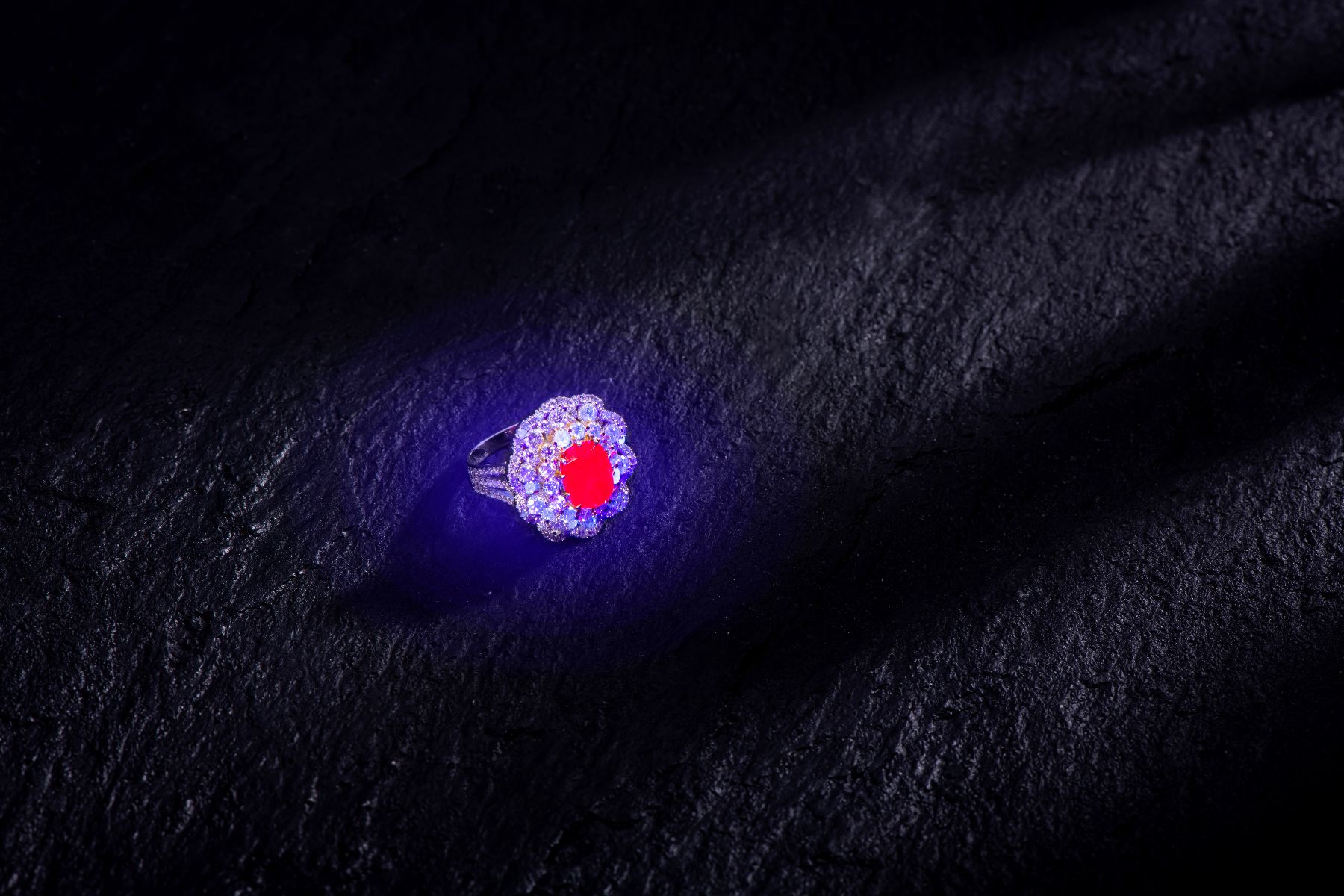
Ruby fluoresces strongly red under long-wave ultraviolet light. This is a direct consequence of chromium: the same trace element responsible for ruby's red colour is also responsible for its fluorescent response, as confirmed by GIA Gems & Gemology research on the Cr³⁺ chromophore in corundum. Because natural daylight contains UV wavelengths, this fluorescence amplifies perceived saturation in outdoor conditions — the optical basis for the near-incandescent quality of top Mogok material. GRS requires strong to very strong red fluorescence as a necessary condition of pigeon blood designation, not as supplementary description.
Sapphire is typically inert or weakly reactive under UV. Kashmir sapphires are notably low in fluorescence; the velvety optical quality associated with fine Kashmir material arises from light scattering by silk inclusions, not from any fluorescent response. Certain heat-treated sapphires show a chalky white fluorescence under short-wave UV — a response noted by GIA as an indicator of thermal treatment and used by laboratory gemologists during detection.
References: GIA Gems & Gemology (Winter 2024), GIA Gems & Gemology (Spring 2020 — Causes of Colour in Corundum), GIA Gems & Gemology (Spring 2019 — Pleochroism and Colour Change in Alexandrite)
Six-Dimension Comparison
| Ruby | Sapphire | |
|---|---|---|
| Colour-causing element | Chromium (Cr) | Iron + Titanium (Fe + Ti) |
| Colour range | Red only | All non-red corundum, including Padparadscha |
| Top colour grade | Pigeon Blood (GRS-certified) | Royal Blue / Velvety Blue |
| Primary origins | Mogok (Myanmar), Mozambique | Kashmir, Sri Lanka, Myanmar |
| Asterism | Yes — Star Ruby | Yes — Star Sapphire |
| Colour change | Extremely rare; not a standard evaluation criterion | Present in some specimens (Cr + V); not a general corundum property |
| Fluorescence | Strong red (Cr³⁺); required for pigeon blood designation | Typically inert; low fluorescence is characteristic of Kashmir |
None of the above properties can be introduced through heat treatment, synthesis, or optimisation.
Laboratory Reports — The Final Reference Point
A gemstone report is not a pass/fail document. It is a traceable record of a stone's identity, and the issuing laboratory brings its own research depth and market standing to every determination it makes.
GRS (Gem Research Swisslab) established the pigeon blood colour grade as an industry standard and remains the most widely recognised laboratory in the Asian collector market. For ruby, a GRS report confirming pigeon blood colour and no indications of heating represents the benchmark documentation combination.
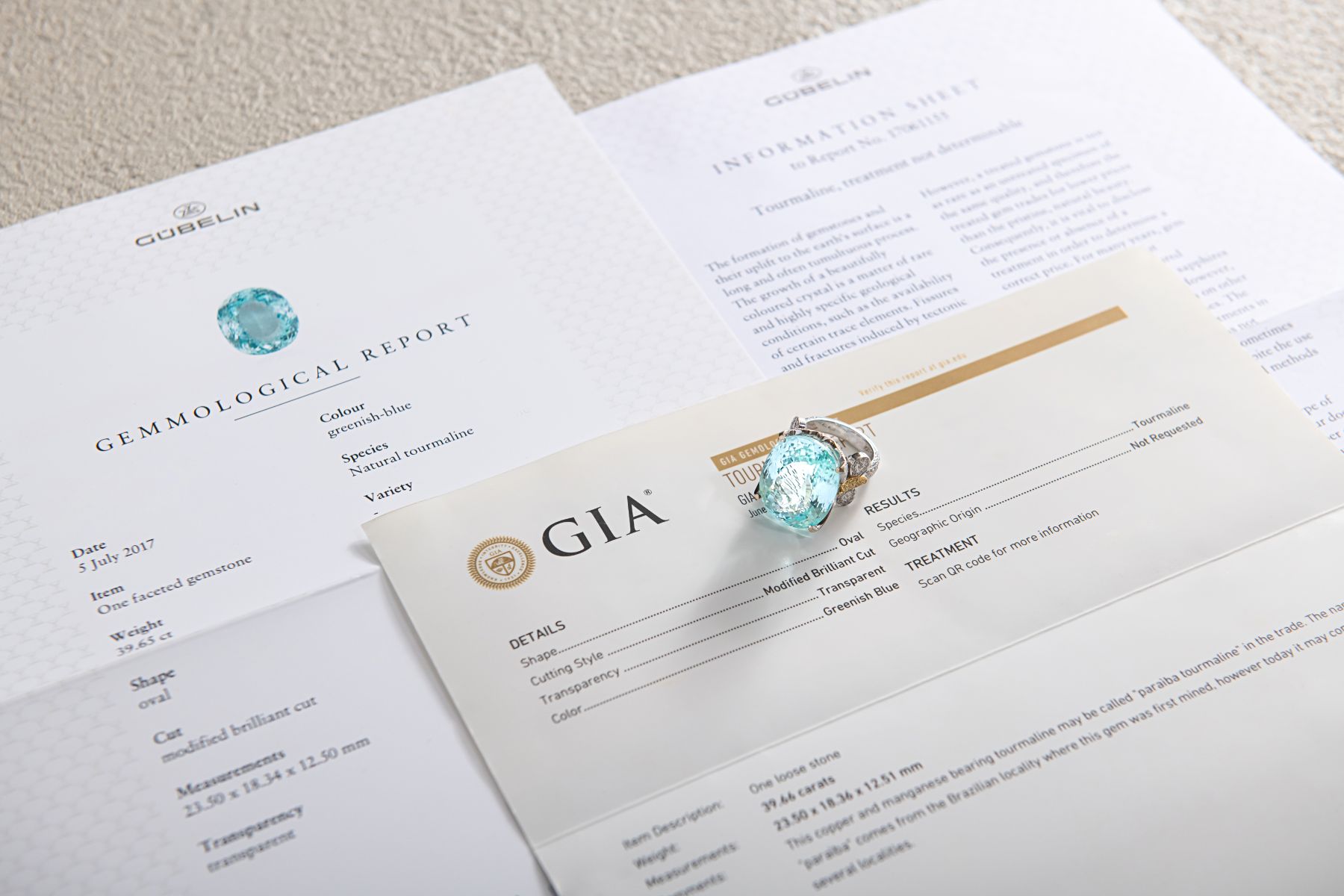
Gübelin Gem Lab and SSEF (Swiss Gemmological Institute) hold the deepest research authority on Kashmir sapphire origin determination. Their geological work on the Zanskar Valley deposits has established the reference standard for Kashmir identification, and concurrent reports from both laboratories represent the highest level of provenance documentation available. In major auction contexts — Christie's and Sotheby's among them — Gübelin or SSEF reports are standard requirements for significant Kashmir sapphire lots.
The JUSTLEE Standard
Fifty years of working with unheated coloured gemstones has produced one consistent principle: the first question is never ruby or sapphire.
Colour preference is personal. Provenance and treatment history are facts. Every stone JUSTLEE considers begins with a single question: has this stone been altered from its natural state?
Heat treatment can improve the appearance of an ordinary stone. It cannot produce the velvety saturation that forms only in Kashmir. It cannot replicate the fluorescence character that distinguishes Mogok from every other ruby origin. It cannot give a stone a provenance it does not have. What can be replicated is, by definition, not rare.
For questions about specific rubies or sapphires, or to discuss the selection criteria behind JUSTLEE's coloured stone holdings, private consultation is available.
→ Arrange a Private Consultation
Written by the JUSTLEE Consultant Team. JUSTLEE has worked with unheated and untreated coloured gemstones for over fifty years, with direct experience across GRS, Gübelin, and SSEF certified material. All technical terminology and grading standards referenced in this article are drawn from GIA Gems & Gemology research, official laboratory documentation, and established auction market records.
Ruby and Sapphire — Frequently Asked Questions
Are ruby and sapphire the same mineral?
Yes. Both are varieties of corundum (Al₂O₃), with a Mohs hardness of 9. Colour is determined entirely by trace elements: chromium produces red (ruby), while iron and titanium in combination produce blue (sapphire). All non-red corundum — blue, yellow, pink, orange, green — is classified as sapphire. Ruby is the only named exception in the corundum family.
What is pigeon blood, and is it an official designation?
Pigeon blood is an official colour grade established by GRS (Gem Research Swisslab), not a general market description. Certification requires two conditions to be met simultaneously: vivid red colour saturation and strong to very strong red fluorescence. Both must be confirmed and noted on the laboratory report. A stone described as pigeon blood without a GRS report confirming that designation does not carry the same standing in the collector market.
Are Kashmir sapphires still being mined?
Production is effectively closed. The primary deposits in the Zanskar Valley were largely exhausted following an extraction window of less than a decade, from approximately 1880 to 1887. Every Kashmir sapphire available today is historical material from that period. No sustained new production exists. This exhausted supply is the geological basis of Kashmir's rarity — not market positioning.
Can heat treatment be identified visually?
No. Heat treatment alters gemstone structure at the microscopic level and is not detectable by visual inspection. The only reliable confirmation is a laboratory report from GRS, Gübelin, or SSEF explicitly stating "no indications of heating." Visual assessment or verbal assurance alone provides no traceable documentation.
What is the difference between a GRS report and a Gübelin report?
The two are complementary, not interchangeable. GRS is the authoritative standard for colour grading — the pigeon blood and Royal Blue designations originate with GRS. Gübelin holds the deepest research authority for Kashmir sapphire origin determination. Collectors typically treat reports from both as additive rather than alternative.
If two rubies are both unheated, does origin still matter?
Significantly. Unheated status confirms a stone's natural character has been preserved — origin determines what that character actually is. The fluorescence intensity and colour saturation of a Mogok pigeon blood ruby reflect geological conditions specific to Myanmar that are not reproducible elsewhere. Origin and unheated status are two independent conditions, both of which matter.
Why does Mogok ruby appear especially vivid in sunlight?
Because Mogok ruby contains high concentrations of chromium (Cr³⁺), which is responsible for both the red colour and strong red fluorescence under UV — as confirmed by GIA Gems & Gemology research on the Cr³⁺ chromophore in corundum. Natural daylight contains UV wavelengths, and the resulting fluorescence amplifies perceived saturation in outdoor conditions. This is the scientific basis for the quality that sets top pigeon blood material apart from other ruby origins.
H3: Is Padparadscha a sapphire?
Yes. Padparadscha is a variety of corundum and, as such, classified as sapphire — the only variety of sapphire, beyond ruby itself, to carry a dedicated name. Per LMHC international standards, the colour must simultaneously present both pink and orange components in a pastel, low-to-medium saturation blend. A stone reading predominantly pink is a pink sapphire; one reading predominantly orange falls outside the designation. GRS subdivides the category into Sunrise (orangy pink) and Sunset (pinkish orange) types. Sri Lanka is the primary origin of reference.
Is colour-change sapphire the same as alexandrite?
No. Alexandrite is a variety of chrysoberyl — a different mineral species from corundum — that shifts from green in daylight to red under incandescent light. Colour-change sapphire is corundum, and its colour transition typically moves from blue-violet to purple-red. Both exhibit colour change, but through different chemistry in different minerals. The terms are not interchangeable.
 Facebook
 Instagram
 Line
Line