

動態
Brand Highlights
The Starting Point, 1970: When Curation Was an Oral Tradition
In 1970, when JUSTLEE first entered the gem markets of Mogok, Myanmar, GRS did not yet exist, Gübelin's reports had not been digitized, and there was no unified international grading system for colored gemstones. Selection rested on three things: an eye trained on tens of thousands of stones, a route that traced through Mogok and Sri Lanka, and a network of miners, cutters, and dealers built over years of presence — relationships that no document could ever fully record.
Five decades later, gemological institutions have matured, laboratory language has been internationalized and digitized, and the market has gradually grown more receptive to colored stones. But what JUSTLEE has truly accumulated is not the instruments that arrived later — it is the mine-to-market network, the curation experience, and the market memory built since 1970. This is knowledge that cannot be synthesized, and it remains the real foundation behind every judgment JUSTLEE makes about whether a stone deserves a place in a collection.
The First Standard: Untreated
A line that has not moved in fifty years
In the world of colored gemstones, treatment is a legal and widespread market practice. Heating intensifies the color and saturation of a sapphire; oiling reduces the visibility of fissures in an emerald. More than ninety percent of rubies and sapphires on the market today have been heated; nearly all emeralds carry some degree of oil treatment. For fifty years, JUSTLEE has accepted only the less-than-ten-percent: stones that are unheated and untreated (Unheated, No Indications of Heating).
For rubies and sapphires, the laboratory report must read "No Indications of Heating." For emeralds, it must read "No Oil" or "Insignificant." In the report language of GRS, Gübelin, and SSEF, these are the most stringent classifications available — they confirm that since the stone left the mine, no heat treatment or chemical modification has altered the color and clarity that nature first gave it.
Why has this standard remained unchanged for fifty years? Because heating and oiling are, at their core, ways of compensating for what nature did not deliver. When a sapphire requires heat to display Royal Blue, or an emerald requires oil to mask its fissures, its natural condition has not yet reached the starting point of a JUSTLEE collection. We believe that a colored stone worthy of being passed down is one already complete in itself — refined over millions of years of geological time, untouched by human enhancement.

The Second Standard: Provenance Transparency
Every stone must account for where it came from
The second standard concerns where a stone was born. In the world of colored gemstones, two rubies of identical quality from different origins can differ in price by three to five times — not because of marketing language, but because every top-tier provenance carries a layered history of geology, time, and market inventory.
- Kashmir Sapphire
Discovered in 1881 in the Zanskar Valley, the principal extraction window lasted only about three decades, and the mines have long since closed. What circulates today is almost entirely historical material — extracted between the late 19th and early 20th centuries. The signature Velvety Blue arises from fine silk inclusions that diffuse light into a soft, saturated glow — a geological identity belonging to a single origin, and replicated nowhere else.
→ Further reading: Why Is Kashmir Sapphire So Rare? - Mogok Ruby
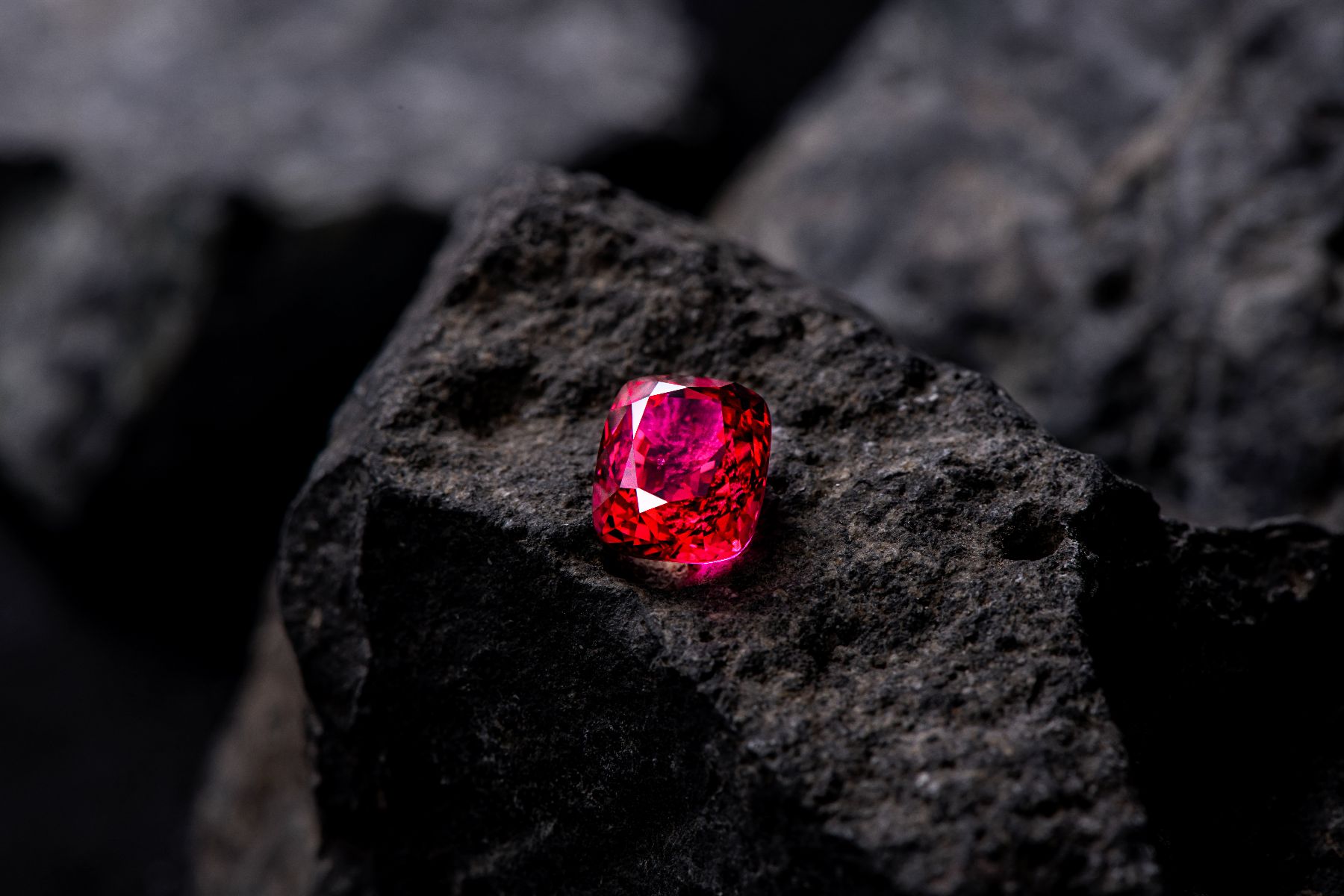
The ruby veins of Myanmar's Mogok Valley have been worked since the 16th century — more than five hundred years of continuous extraction — and they remain the principal source for the GRS-recognized Pigeon Blood color grade. Mogok rubies show strong fluorescence and a distinctive purplish-red tone — characteristics that newer sources such as Mozambique have yet to replicate. - Muzo Emerald (Colombia)
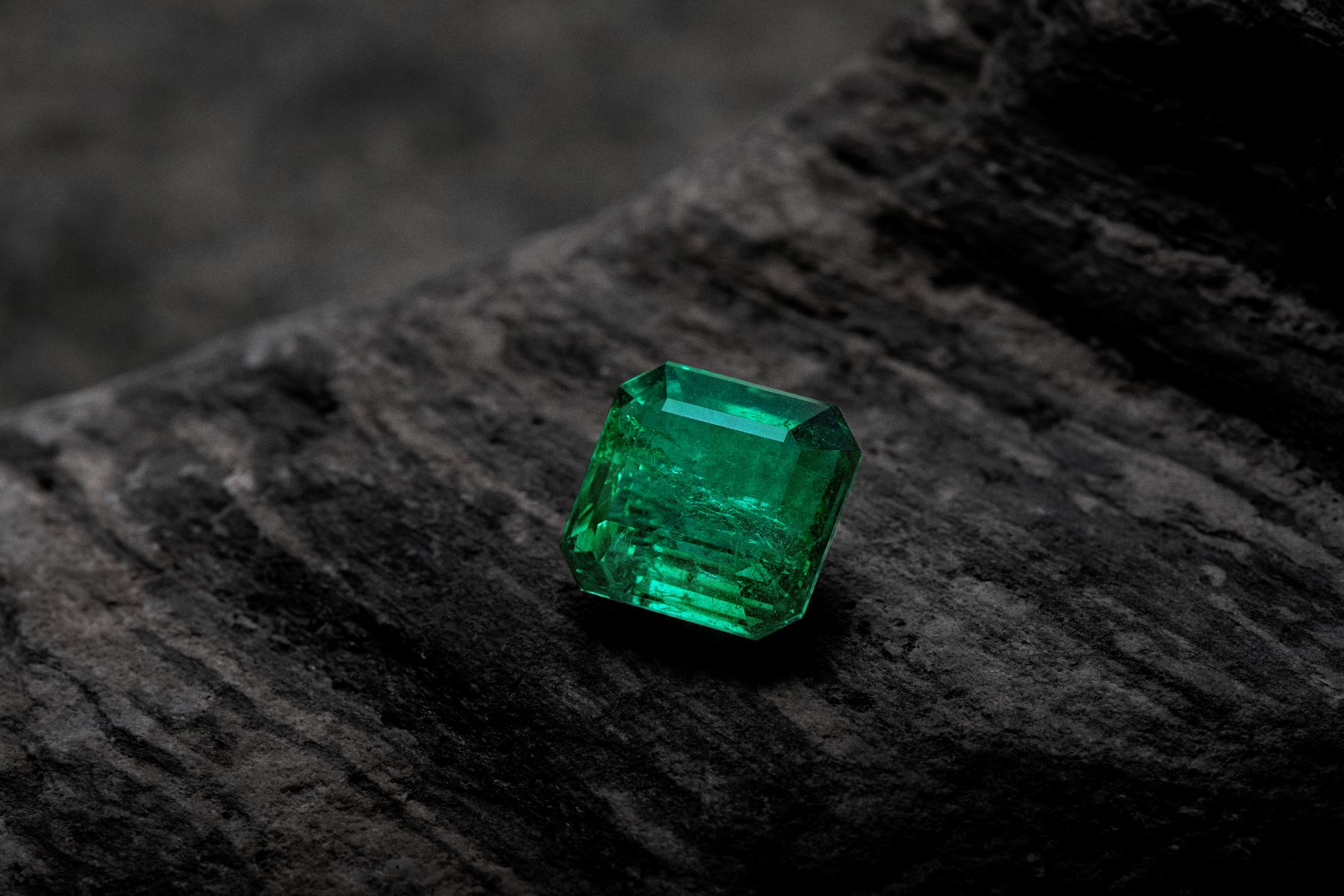
Emeralds from Colombia's Muzo mines, colored by trace chromium, display what the trade calls Muzo Green — the deep, vivid saturation that defines top Colombian material. An unoiled (No Oil) Muzo emerald is, by nature, an individual that cannot be replaced.
For JUSTLEE, provenance has never functioned as an exclusionary filter — it functions as a fact that must be disclosed in full. Whether a stone is an unheated Vivid Red ruby from Mozambique or an unheated Pigeon Blood ruby from Mogok, what JUSTLEE has held firm for fifty years is not which origin a stone must come from, but that every stone's origin must be clearly stated, independently certified, and validated by the market.
The Third Standard: Cross-Institutional Authentication
When a single report is not enough
The third standard is the stone's identity document. When an unheated Royal Blue Kashmir sapphire reaches the value level of an international auction record, what the market trusts is not the reading of any single institution — it is the fact that two independent laboratories, working separately, reached the same key conclusion.
The colored-stone market is served by a number of international gemological laboratories, each carrying its own area of authority:
- Gübelin Gem Lab (Switzerland)
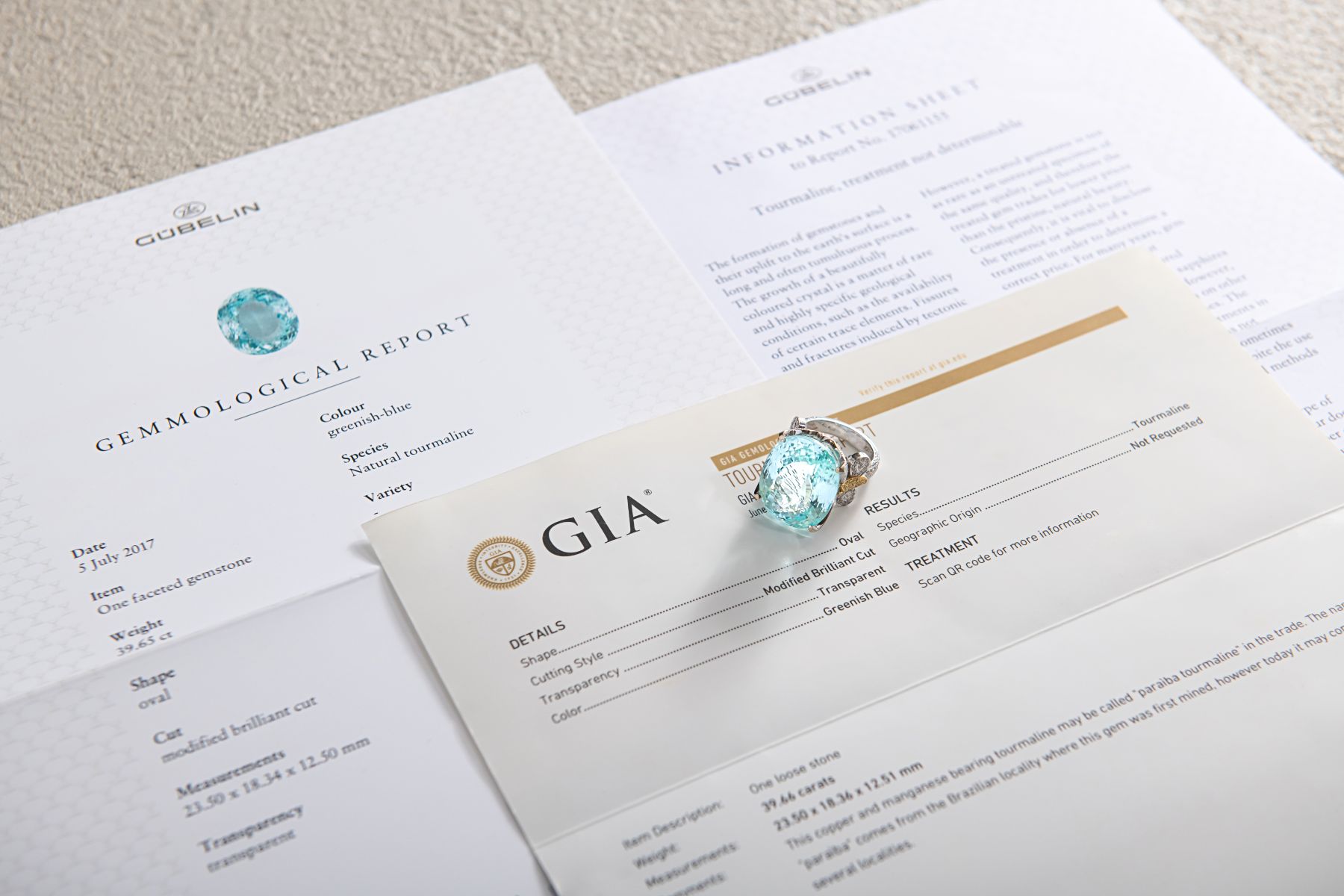
Established 1923; the foremost authority on Kashmir sapphire provenance. A Gübelin origin report is regarded as decisive evidence at every major international auction. - SSEF (Swiss Gemmological Institute, Switzerland)
Recognized alongside Gübelin as the dual authority on Kashmir, Burmese, and Colombian emerald provenance. When a Kashmir sapphire carries both a Gübelin and an SSEF report, and both laboratories have independently reached the same origin conclusion, these concurrent reports form the combination most trusted by serious colored-stone collectors. - GRS (Gem Research Swisslab)
Established 1996; the market reference for Pigeon Blood and Royal Blue color grading, and the report language most familiar to Asian collectors and the Taiwanese market. - GIA (Gemological Institute of America)
Established 1931 in the United States; the most universally recognized gemological institution, and the baseline certificate required at every major international auction. - Other international laboratories
Including AIGS (Thailand, specializing in Southeast Asian origins), Guild Laboratories (United States / Hong Kong, with growing visibility in the Asian market), and IGI (Belgium, widely used across the international jewelry trade), each holding its own regional and technical specializations.
For stones at JUSTLEE's collection level, a single laboratory report is the baseline requirement — indispensable, but not the conclusion. When a stone holds both a Gübelin and an SSEF report independently confirming Kashmir origin, or both an SSEF and a GRS report independently confirming Pigeon Blood color, that mutual verification between two independent laboratories is precisely the authentication standard JUSTLEE has maintained for fifty years.
The Fourth Standard: Auction-Grade Rarity
A value the market has already established
The first three standards — untreated, top-tier provenance, authoritative certification — verify whether a stone is good enough. The fourth standard verifies something different: whether it is rare enough.
In the world of colored gemstones, rarity is not an adjective. It is a coordinate formed by three converging facts:
Closed Mines and Historical Inventory
The Kashmir sapphire mines have been effectively dormant since 1925 — what circulates today is almost entirely century-old material. Production of top unheated Burmese Pigeon Blood from Mogok has long since fallen below mid-20th-century levels. When geological conditions no longer yield material of equivalent quality, this scarcity is a fact decided by time alone.
At the Top of the Quality Pyramid
Within a single top-tier origin, material that simultaneously achieves untreated status, top-grade color, and collector-grade clarity occupies the very apex of the pyramid. Colombia's Muzo mines produce a high volume of emerald each year, but only a small fraction meets the dual standard of No Oil and Muzo Green.
Records Set at International Auction
When material of equivalent quality has set a per-carat record at Christie's, Sotheby's, or Bonhams, the market has already established a price for that level. This valuation is a consensus reached in open bidding by leading collectors, museums, and family offices worldwide — a reference more credible than any single dealer or any single laboratory report.
For JUSTLEE, rarity is the final standard determining whether a stone belongs in a collection, and it is the true foundation of the Jewelry as Asset concept. The judgment and observation JUSTLEE has accumulated across fifty years allows every stone that clears these four standards to become something not only worth collecting, but worth passing on.

The JUSTLEE Perspective: What We Choose Not to Offer Matters More Than What We Do
Fifty years of curation is the professional judgment JUSTLEE has built; but what truly turns a gemstone into an heirloom is the family memory it comes to carry.
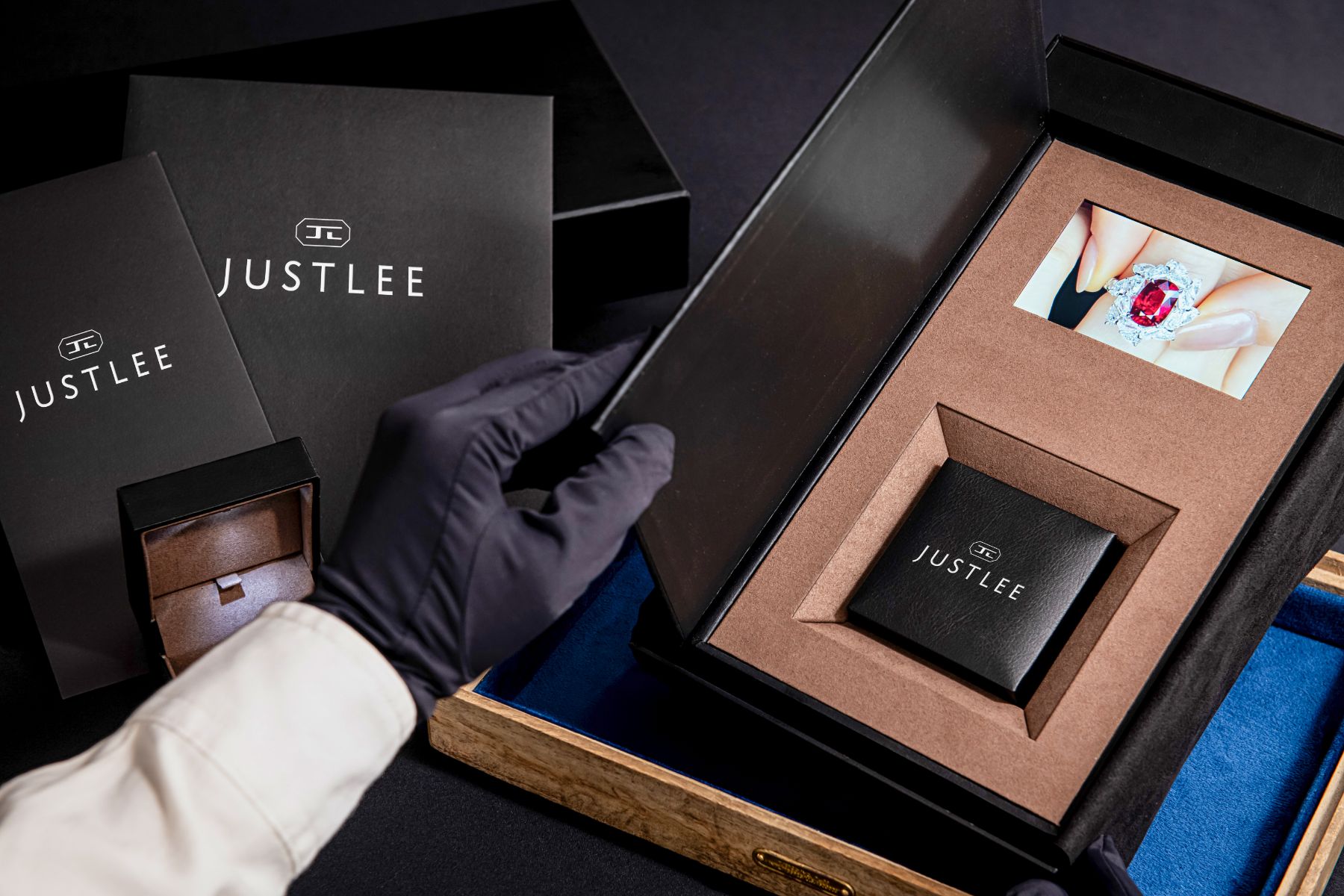
The JUSTLEE Legacy Capsule — honored with the 21st National Brand Yushan Award — combines collector-grade gemstones with private interview recordings, sealing the most precious voices and blessings into permanence. Every stone that clears the JUSTLEE standards enters not only a collection, but the memory of a family across generations.
→ Discover the JUSTLEE Legacy Capsule
FAQ
Q: Is there an industry-wide definition of a "rare coloured gemstone"?
A: No. "Rare" is a descriptive term in the coloured gemstone market, not a certified standard. Different brands, laboratories, and auction houses each apply their own criteria. Understanding whose definition you are working with is itself part of understanding rarity.
Q: How does JUSTLEE define rarity?
A: Three conditions: natural and unheated (No Indications of Heating), certified origin from a recognised top-tier source, and auction-grade quality. A gemstone that does not meet all three does not qualify as rare within JUSTLEE's selection framework.
Q: Why is the absence of heat treatment the most critical factor?
A: Over ninety percent of commercial coloured gemstones on the market have been heat-treated to improve appearance. A stone confirmed as unheated has retained the result of its geological formation without intervention — statistically uncommon, and precisely what "No Indications of Heating" in a laboratory report confirms.
Q: What is the relationship between origin certification and rarity?
A: Specific origins are directly associated with specific colour expressions — Pigeon Blood from Mogok, Royal Blue from Kashmir, Muzo Green from Colombia. These deposits are geologically finite and yield high-quality material inconsistently. Origin certification from GRS, Gübelin, or SSEF is currently the most authoritative way to document this dimension of rarity.
Q: How significant is the price difference between rare and standard coloured gemstones?
A: There is no fixed multiplier, but the gap is material. For Burmese rubies, auction records show that unheated stones regularly command several times the per-carat price of heat-treated equivalents at comparable weight — with certified origin widening that gap further. This is why JUSTLEE presents loose stones with laboratory reports as the basis for any serious collection.
 Facebook
 Instagram
 Line
Line