

動態
JUSTLEE Insights
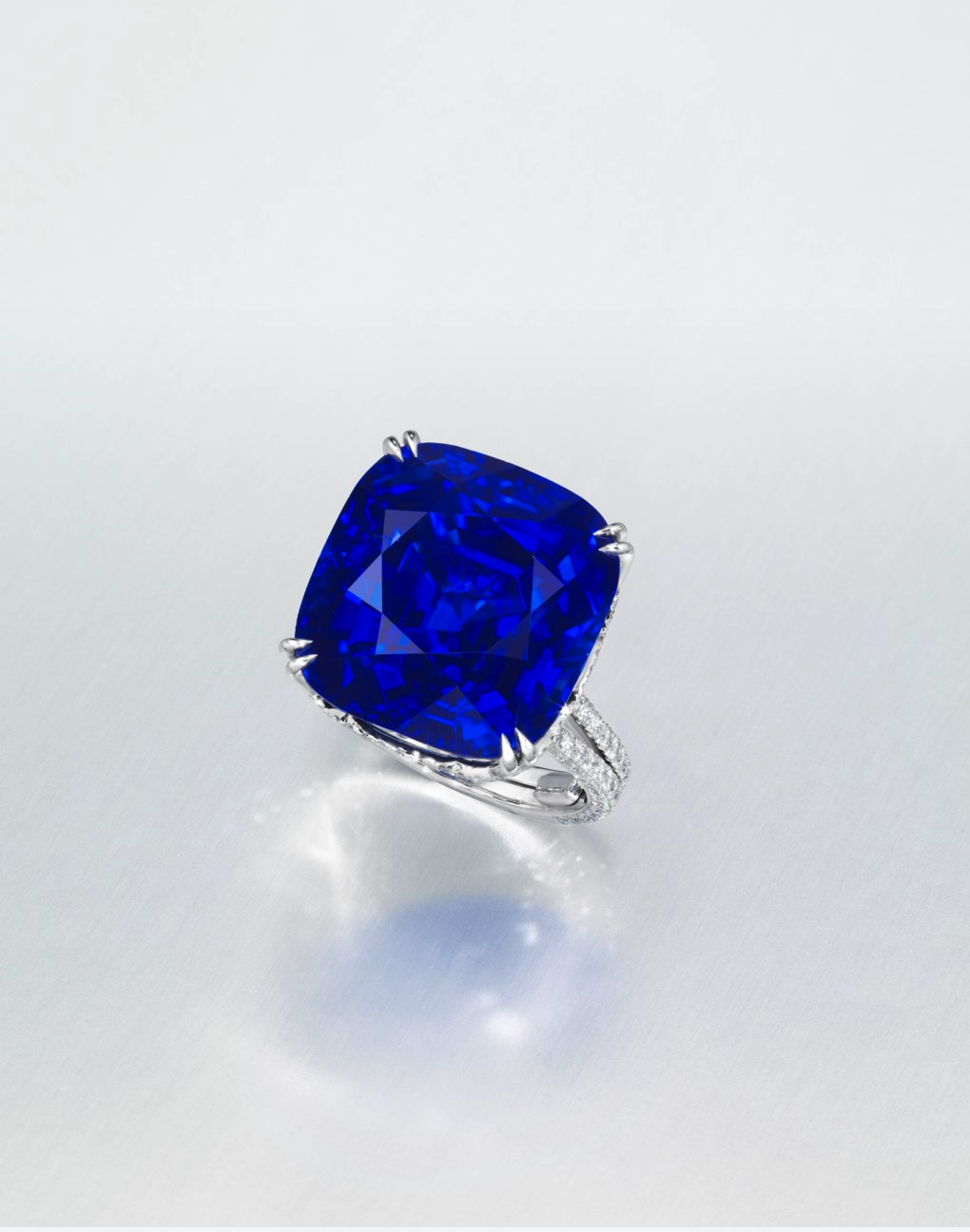
On 27 May 2025, a sapphire appeared at Christie's Hong Kong for the third time.It was not a new stone. The previous occasion had been Christie's Geneva, in 2015. Before that, Christie's New York, in 2000. The same stone, across twenty-five years, three cities, three continents — and each time it left the saleroom, it left at a higher price than it had arrived.
The stone is called The Regent Kashmir. 35.09 carats, antique cushion cut, set in platinum. Its auction history offers what is perhaps the clearest available illustration of why Kashmir sapphires occupy the position they do at the top of the coloured stone market — and why that position is unlikely to change.
Three Sales, One Stone
October 2000. Christie's New York. The Regent Kashmir sold for USD 1.2 million — USD 34,650 per carat.
May 2015. Christie's Geneva. The same stone sold for USD 7.4 million — USD 209,690 per carat, setting a record for Kashmir sapphires at the time.
May 2025. Christie's Hong Kong. USD 9.6 million — USD 272,810 per carat, a new all-time world record for the highest price per carat ever achieved at auction for a sapphire.
Over twenty-five years, the per-carat price rose by 687%.
For those who have followed the Kashmir sapphire market closely, this trajectory was not unexpected. The Regent Kashmir has never been following the market. The market has been following it.
The Mines Were Exhausted in the 1880s
To understand the value of The Regent Kashmir, it is necessary to understand something about where it came from — and what became of that source.
Kashmir sapphires were first discovered in the Zanskar Valley of the western Himalayas around 1879. The deposits were exceptional in quality. They were also, as became apparent quickly, exceptional in their limitations. Controlled by the local ruler and worked under severe conditions — difficult terrain, altitude, and harsh climate — the primary veins were largely exhausted within less than a decade of discovery. By the early twentieth century, organised high-quality mining had effectively ceased. In the century since, numerous geological expeditions have surveyed the surrounding region in search of comparable deposits. None have succeeded.
Every Kashmir sapphire on the market today — regardless of size, grade, or provenance — was mined within that brief window. These are not the product of an operating mine. They are a finite body of material, circulating between private collections and the auction room, with no possibility of new supply entering the market. Each time a stone changes hands, the total number available does not increase. It decreases.
The Regent Kashmir has come to auction three times. Each appearance confirmed the same underlying reality: stones of this quality are not becoming more available. They are becoming harder to find.
The Quality That Cannot Be Replicated
Kashmir sapphires have held the top position in the blue sapphire market for well over a century — not solely because of their scarcity, but because of an optical quality that no other source has been able to produce.
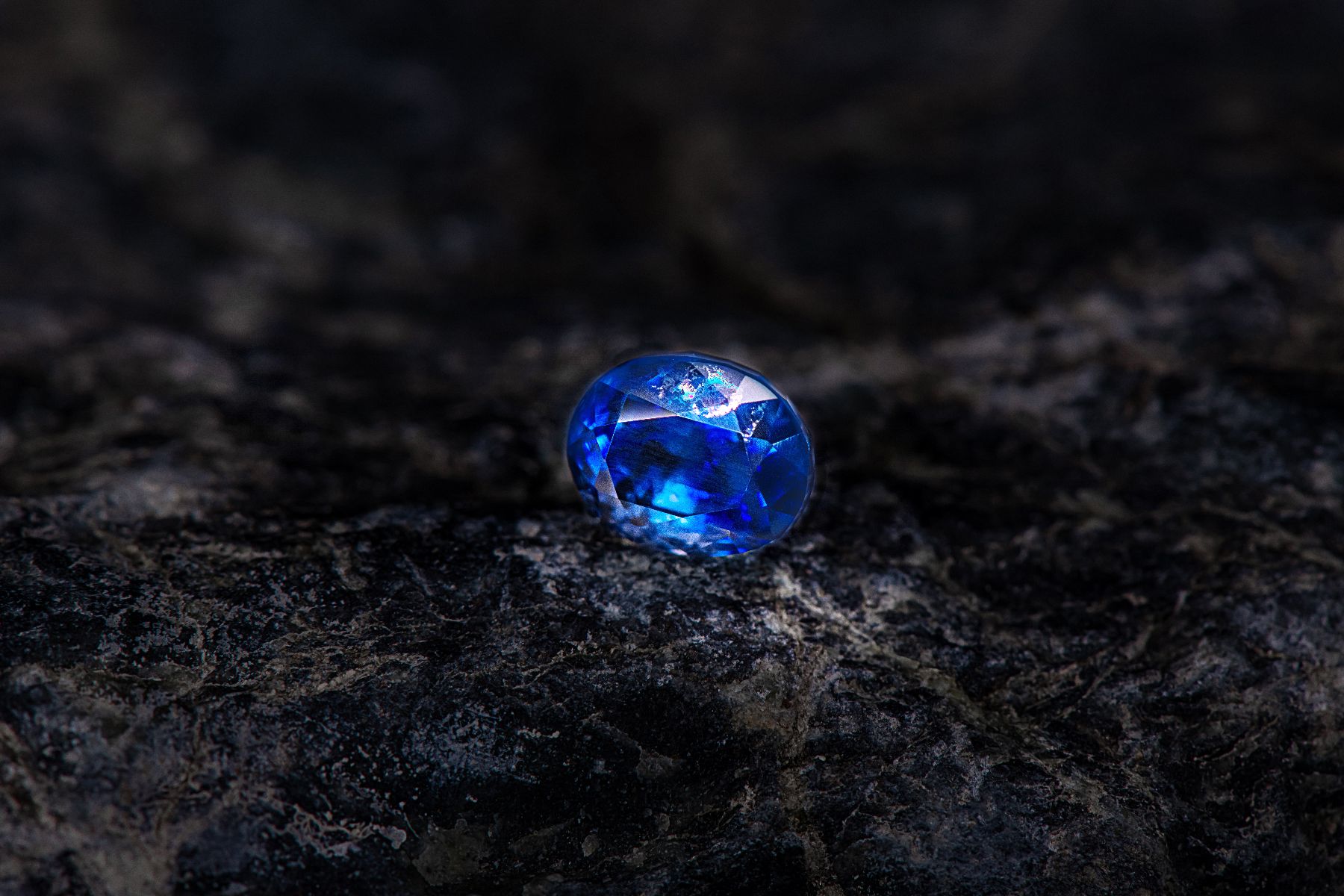
The trade refers to it as velvety blue, a characteristic produced by microscopic silk inclusions within the stone. These fine needles scatter light as it passes through the gem, softening and diffusing it in a way that gives the colour a depth and warmth absent from stones of comparable saturation from other origins. The result is a blue that reads as simultaneously rich and luminous, neither harsh nor flat. It is this quality — not the hue itself — that distinguishes Kashmir material.
This is a point worth clarifying, because colour terminology in the sapphire market can be imprecise. Kashmir sapphires are typically graded Royal Blue, a deep, velvety saturation that carries the weight of the stone. The term Cornflower Blue, by contrast, is more commonly associated with fine Ceylon sapphires from Sri Lanka, which tend toward a lighter, more transparent blue with a different quality of light. Both can be exceptional. They are not the same thing. The distinction between Royal Blue and Cornflower Blue is not simply a matter of shade, it reflects a fundamental difference in the character of the colour, and in what produces it.
The Regent Kashmir was graded Royal Blue by three independent institutions in 2025. That grade is entirely natural. The stone has never been heated.
What Three Concurrent Certifications Actually Mean
For the 2025 sale, The Regent Kashmir carried reports from Gübelin Gem Lab, GRS (Gem Research Swisslab), and SSEF (Swiss Gemmological Institute) — the three institutions whose opinions carry the greatest weight at the top tier of the international coloured stone auction market. All three confirmed two facts: Kashmir origin, and no indications of heating.
The phrase no indications of heating has a precise meaning in a laboratory report. The vast majority of commercial sapphires sold globally have been heat-treated — a process that improves colour and clarity, is entirely standard in the trade, and is disclosed at point of sale. It is also irreversible. Once a stone has been heated, it cannot be restored to its original condition, and the colour it presents is no longer what the earth produced. An unheated stone is a categorically different object: its colour, transparency, and every visible characteristic represent the stone exactly as it formed, without intervention of any kind.
Three institutions issuing concurrent reports on a single stone is unusual in the auction market. It is not redundancy — it is cross-institutional consensus. Each laboratory maintains its own reference collection and applies its own methodology. When all three arrive at the same conclusion independently, it represents the strongest possible authentication available in the trade.
What Collectors Need to Know
The Regent Kashmir's history offers several concrete reference points for anyone approaching Kashmir sapphire seriously.
On certification
Not all gemological laboratories have the reference material or specialist knowledge required to determine Kashmir provenance with confidence. Gübelin, SSEF, and GRS are the three institutions with the strongest established track records in this determination. When evaluating a Kashmir sapphire, the laboratory that issued the report is as significant as its findings.
On treatment status
An unheated Kashmir sapphire and a heated Kashmir sapphire are not the same category of purchase at different price points — they are fundamentally different objects, and the market prices them accordingly. The premium for unheated material at this level is not arbitrary. It reflects the difference between a stone that presents its natural character and one that has been altered to present better.
On the convergence of value factors
The Regent Kashmir's per-carat record reflects the simultaneous presence of Kashmir origin, Royal Blue colour, unheated status, and significant carat weight in a single stone. Each of these factors independently commands attention at auction. Their convergence in one gem is what produced a result the market had not previously seen. Understanding how these variables interact — and what changes in value when any one of them is absent — is foundational to collecting seriously in this category.
These are the standards JUSTLEE has applied to every Kashmir sapphire in our collection for over fifty years. Not because we follow auction records, but because the records continue to confirm what we have long understood: that value grounded in physical rarity, transparent documentation, and consistent standards does not erode with time.
If you are considering a Kashmir sapphire for the first time, or wish to go deeper on how to read and evaluate certification reports, we welcome a private conversation with our collecting advisors.
 Facebook
 Instagram
 Line
Line