

動態
JUSTLEE Insights
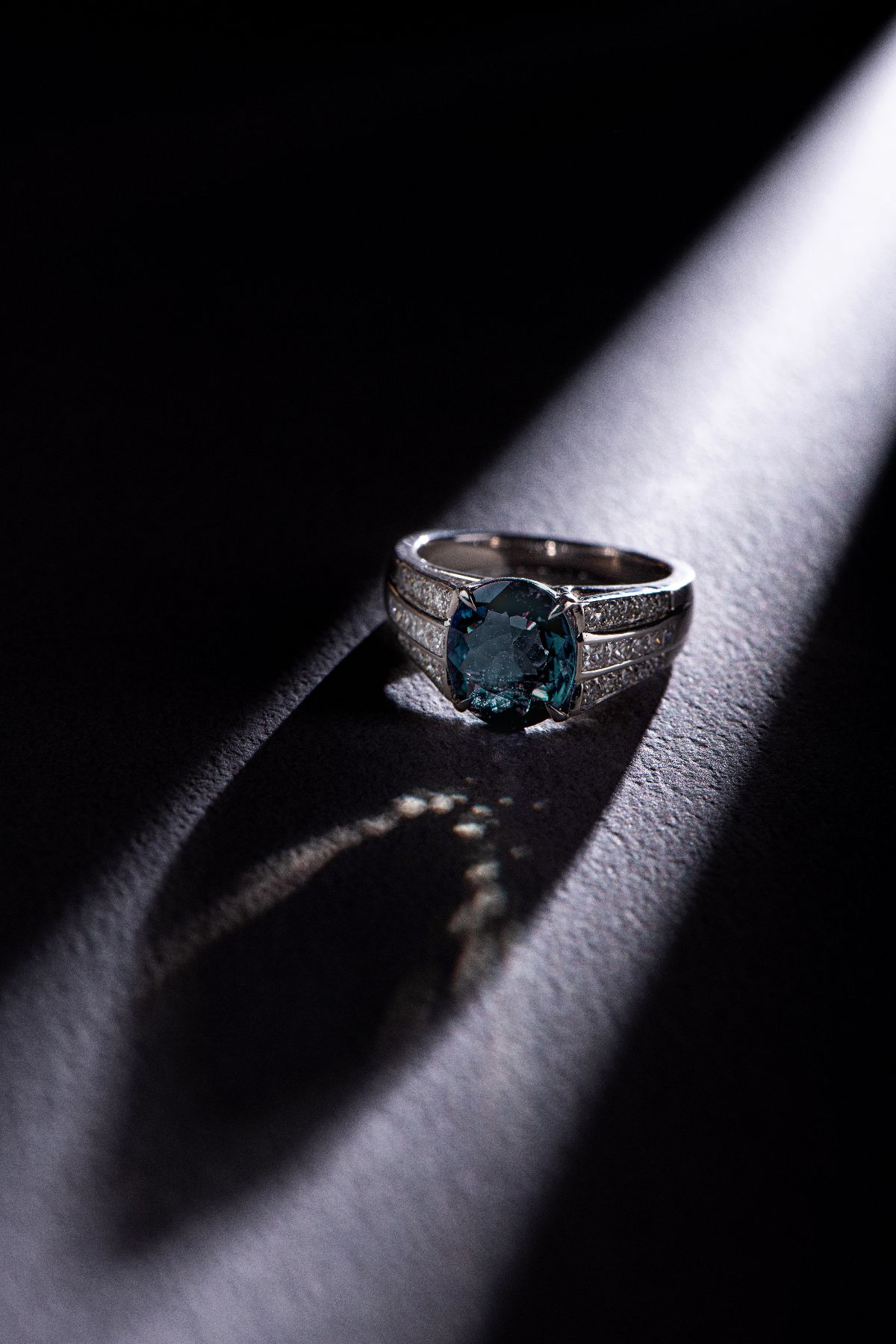
Alexandrite is one of the rarest members of the chrysoberyl family. Trace amounts of chromium give it a pronounced colour-change effect: green to bluish-green in daylight, shifting to red or purplish-red under incandescent light or candlelight. This dual character — "emerald by day, ruby by night" — makes it one of the most compelling optical phenomena in gemmology, and fine stones above one carat rarely reach the market.
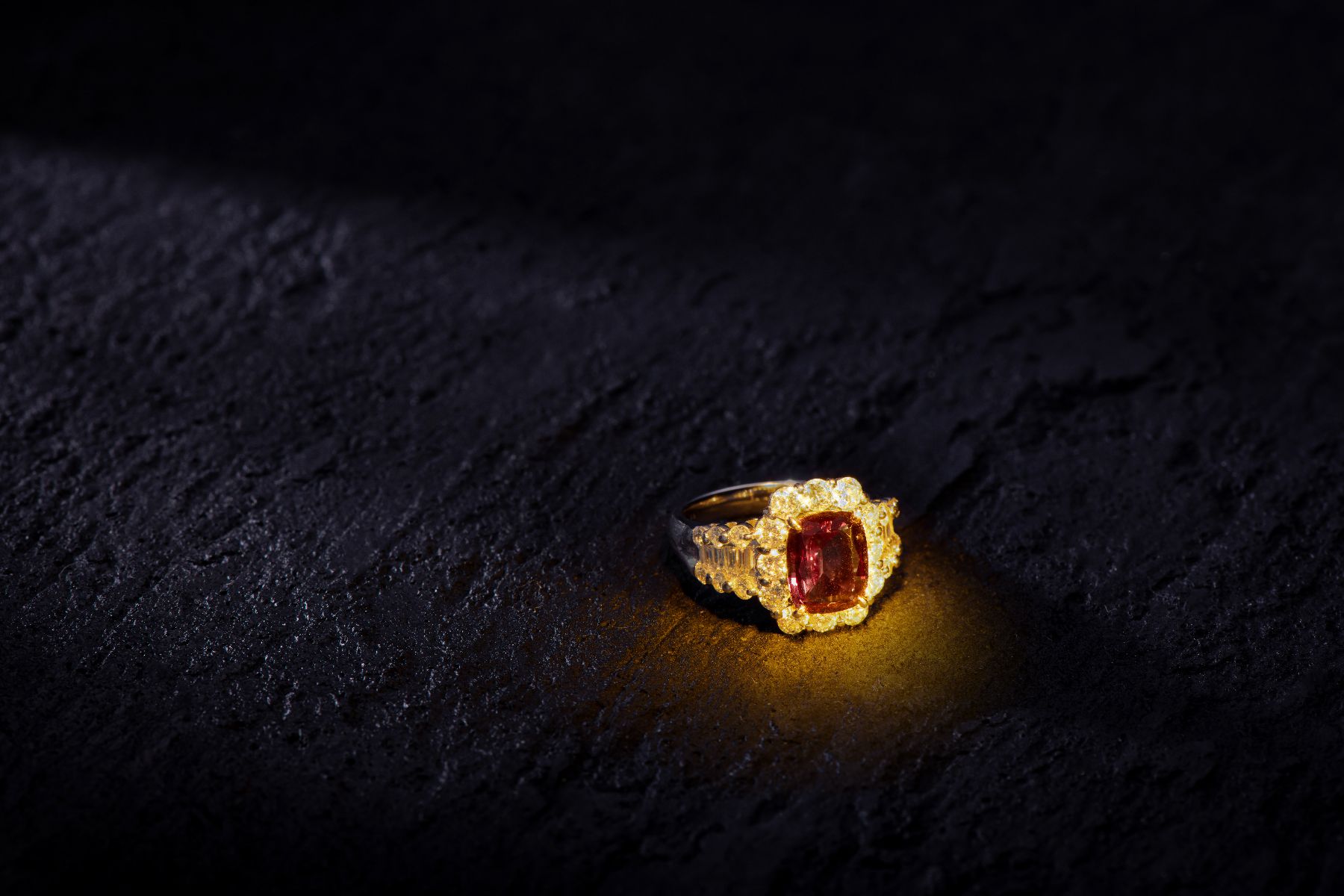
Why Does Alexandrite Change Colour?
Alexandrite's colour-change effect comes from trace chromium (Cr³⁺) within the crystal. According to research published in GIA's Gems & Gemology, chromium is the same element responsible for the red of ruby and the green of emerald. The difference lies in balance: in ruby, red dominates decisively; in emerald, green prevails; and the colour is therefore fixed. In alexandrite, the red and green regions are held in near-equilibrium, so the outcome is decided by the light source — green under the green-rich wavelengths of daylight, red under the red-rich wavelengths of incandescent light. One stone, two entirely different faces.
This is why laboratories define alexandrite not by colour itself, but by the change. GIA classifies a chrysoberyl as alexandrite when it shows a distinct colour change — a true shift rather than a subtle colour shift — while GRS describes it as a colour-change chrysoberyl coloured by chromium. The strength of that change is central to value: the cleaner the transition and the more saturated both end colours, the higher the collecting tier. Stones that earn a strong colour-change grade remain a small minority of the market.
Alexandrite's Origin: Russia
Alexandrite was discovered in the 1830s in Russia's Ural Mountains. As recorded by GIA, it was named in 1834 by the Finnish-Swedish mineralogist Nils Gustaf Nordenskiöld in honour of the future Tsar Alexander II — its red and green echoing the colours of the Imperial Russian military.
The Ural deposits produced the most iconic historical stones. According to GIA's origin research, by the 1980s Russian output had dwindled and Sri Lankan supply had declined, shifting the centre of production to Brazil. Genuine Uralian Russian alexandrite now circulates almost exclusively through the secondary market and established collections, and is considerably scarcer than material from later sources.
How Is Alexandrite Quality Judged? Colour Change Comes First
Alexandrite is not assessed by the same logic as a diamond's 4Cs. Here, the strength and clarity of the colour change override every other factor.
Laboratories evaluate two things: the extent of the change — what percentage of the stone shifts colour — and the saturation of both end colours. Reports typically describe the effect as weak, moderate, or strong. A stone graded strong colour-change by a laboratory such as Gübelin or SSEF is uncommon, and that grade largely sets the ceiling on collecting value.
An ideal alexandrite reads close to a pure green or bluish-green in daylight and a saturated red to purplish-red under incandescent light, with a clean transition and no obvious grey mask. Too pale and it falls short of top intensity; too dark and it loses brightness, drifting toward black. A complete, 100% colour change is exceptionally rare in nature.
Alexandrite at Auction: Value Across Origins
Alexandrite's market value can be read directly from recent international auction records, and it clearly stratifies by origin.
In December 2024, Sotheby's New York Magnificent Jewels sold a 16.53-carat Brazilian alexandrite ring, accompanied by AGL and Gübelin reports, for USD 1.9 million — approximately USD 115,000 per carat — setting a world auction record for the species; three alexandrite lots in the same sale realised USD 3.3 million combined. Sotheby's jewellery department noted a notable surge in demand for the variety. By comparison, the roughly USD 60,000 per carat achieved by the Russian stone at Christie's in 2014 reflects the scarcity value of exhausted original deposits — one figure representing a peak in total price through size and quality, the other a peak in per-carat value through origin rarity. Together they define the two axes on which alexandrite is valued.
These records point to a structural fact: alexandrite is priced on the combined result of colour-change strength, clarity, carat weight, and certified origin — never a single variable. With top material constrained by near-exhausted original deposits, demand in the high-end coloured stone market has remained consistent.
Is Alexandrite Treated? The Real Question Is Synthetic Stones
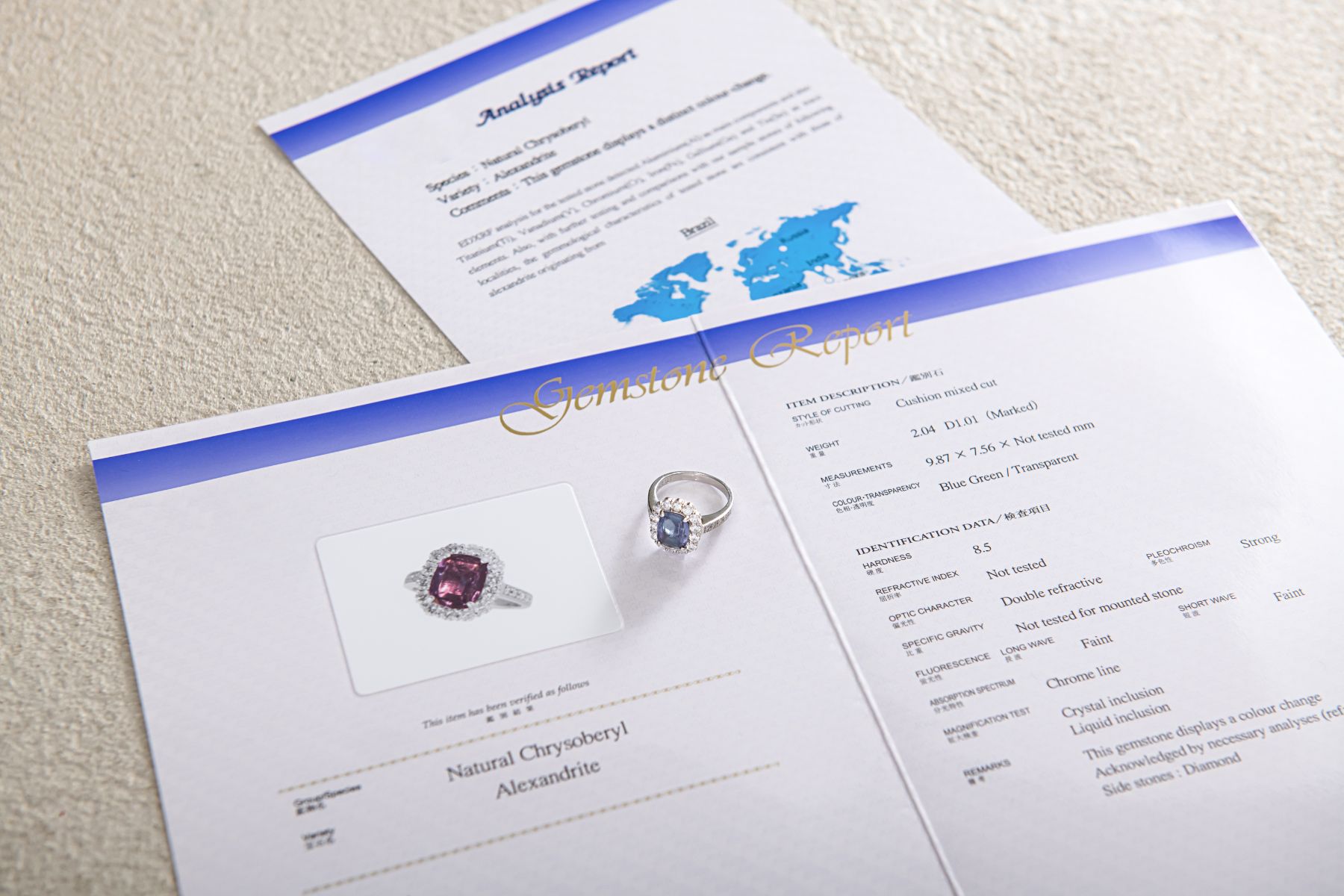
Unlike ruby and sapphire, where heat is the dominant treatment, GIA reports that alexandrite is rarely treated — its colour change is naturally occurring and generally requires no enhancement. The treatment that does occasionally appear is fracture filling: surface-reaching fractures are impregnated with a filler whose refractive index approximates the host, improving apparent clarity. Under the disclosure standards of GIA and AGTA (American Gem Trade Association), this is a material fact that must be disclosed, and filled stones are worth measurably less than untreated equivalents.
For alexandrite, the real risk lies not in treatment but in synthetic material. Synthetic alexandrite shows the same red-green change and is difficult to distinguish from natural stone by eye; doublets and coated imitations also circulate. As GIA cautions, a stone offered at a low price yet showing a strong colour change is most likely not natural. For this reason, a stone's natural origin, treatment status, and geographic source must be confirmed by an international laboratory with advanced spectroscopic and trace-element capability — GIA, Gübelin, SSEF, GRS, or AIGS — an indispensable step before any acquisition.
JUSTLEE's Curation Standard and Perspective
Alexandrite is one of the few gemstones whose knowledge threshold exceeds its price threshold. Those who truly understand it look past colour to the cleanliness of the change, the tier of the origin, and a report able to withstand the most rigorous scientific scrutiny.
At JUSTLEE, the first criterion for selecting an alexandrite is always natural and untreated; the second is the clarity and strength of the colour change. An alexandrite worthy of being passed down should hold both natural rarity and a source that can be independently verified — a standard we have never relaxed before any colour-change stone.
Check more JUSTLEE curated unheated Alexandrite
This article was compiled by the JUSTLEE consultant team, drawing on GIA (Gemological Institute of America) Gems & Gemology origin research and published materials, the certification standards of Gübelin Gem Lab, SSEF, GRS, and AIGS, and official auction records from Sotheby's and Christie's. All statements regarding colour-change causation, origin hierarchy, and gemmological terminology follow the definitions of these international laboratories.
FAQ
Q: Why is alexandrite so rare?
A: Alexandrite forms only where beryllium and chromium occur together in the same geological environment — a combination seldom found in nature. According to GIA, the chromium content must also fall within a specific range to produce an ideal colour change; too much yields other, opaque minerals instead. Transparent gem-quality stones above one carat reach the market in very limited numbers.
Q: What is the difference between Russian and Brazilian alexandrite?
A: Russia's Ural Mountains are the earliest and most celebrated source, with original deposits now nearly exhausted; most Russian material circulates through the secondary market and established collections. Brazilian stones tend toward a bluish-green daylight colour turning purple under incandescent light — an origin characteristic, not a flaw. In collecting terms, fine Russian material generally sits at the top for its historical standing and scarcity, with fine Brazilian material following.
Q: How can I tell whether the colour change is good?
A: Two things matter: the extent of the change — how much of the stone shifts colour — and the saturation and purity of both end colours. Reports describe the effect from weak to strong, and stones graded strong by a leading laboratory are the minority. The ideal reads close to pure green in daylight and a saturated red to purplish-red under incandescent light, with no obvious grey mask.
Q: Should I be concerned about treatment or synthetics in alexandrite?
A: Unlike ruby and sapphire, the main concern for alexandrite is not heat but fracture filling and, more importantly, laboratory-grown synthetics. Synthetic stones are difficult to identify by eye, so any fine specimen should be verified by an international laboratory (GIA, Gübelin, SSEF, GRS, or AIGS) confirming it as natural with no indications of treatment.
Q: Why does certification matter when buying alexandrite?
A: Because a stone's natural origin, treatment status, and source cannot be judged by eye, they must be confirmed by an international laboratory with trace-element analysis capability. A stone carrying two reports from independent laboratories reaching the same conclusion — Gübelin and GIA, for example — commands greater market confidence and liquidity, a configuration now common among top alexandrite at auction.
 Facebook
 Instagram
 Line
Line