品牌
動態
JUSTLEE Insights
What Is Spinel? Hardness, Colour, Origins and the Unheated Standard
Spinel is a naturally occurring magnesium aluminium oxide, Mohs 8 in hardness, with a bright vitreous lustre and a colour range extending from red and pink through blue, violet and orange to black. Few gem species cover so wide a spectrum. Its name derives from the Latin spina, meaning thorn or spike, a reference to the sharply pointed octahedral crystals the species forms in nature — the most immediate identifying feature of spinel in its rough state. Before modern gemmological instruments existed, red spinel was routinely mistaken for ruby — the Black Prince’s Ruby, set at the front of the British Imperial State Crown and weighing approximately 170 carats, is in fact a natural red spinel.
This guide has been compiled by the JUSTLEE Consultant Team. It sets out the physical properties of spinel, the colouring elements behind each hue and how they rank in scarcity, the differences between the principal sources, and why an untreated condition — normal for this species — still requires confirmation from an international laboratory.
The Physical Properties of Spinel
Spinel registers 8 on the Mohs scale, placing it below only diamond, the corundum family of ruby and sapphire, and chrysoberyl (including alexandrite). Its refractive index is approximately 1.718, with a specific gravity of approximately 3.60. It crystallises in the cubic system, is singly refractive, and — importantly — has no true cleavage, though octahedral parting may be seen.
These figures are best read together rather than separately. High hardness delivers resistance to abrasion. The absence of true cleavage means there is no structural plane along which the stone parts under stress, giving consistent toughness. A high refractive index returns bright dispersion when the stone is well cut. Taken together, these three properties are the physical reason spinel has survived centuries of royal wear intact, and the reason it is regarded today as among the more practical fine gems for regular use.
Single refraction carries an implicit demand on the cutter. Light entering spinel does not split into two rays as it does in ruby or sapphire, so brilliance reflects the precision of the cut far more directly. In spinel, a mediocre cut has nowhere to hide.
Spinel Is Not Ruby — It Is a Species in Its Own Right
The question most often put to us about spinel is how it differs from ruby.
The answer is not that it sits a grade below. They are different minerals entirely. Ruby belongs to corundum; spinel belongs to a wholly separate mineral family, with a different formation environment, a different internal structure and different optical behaviour. The two were conflated historically for one reason only: before instruments existed, the unaided eye could not reliably separate two stones of equally saturated red and equal transparency.
The misattribution persisted for centuries, and it occurred at the highest level of collecting. The Black Prince’s Ruby in the British Imperial State Crown, at approximately 170 carats, is a natural red spinel. The Timur Ruby in the British Royal Collection, weighing over 350 carats and inscribed with the names of several Mughal emperors, is likewise a red spinel. Both remain in the royal collection today. Their identity was settled by modern gemmology long ago; their standing was never diminished by it.
For a collector, the significance of that history lies not in the error but in what the error demonstrates: spinel entered royal collections not because it passed for ruby, but because it met the aesthetic standard of that tier on its own terms. The judgement was made by eye — and the qualities the eye responded to have not changed.
Can Spinel and Ruby Really Not Be Told Apart by Eye? How Do Laboratories Confirm the Species?
Among red stones of the finest quality, visual judgement is genuinely unreliable — which is precisely why the historical misattribution happened. The measurable differences, however, are unambiguous. Light entering ruby splits into two rays (double refraction); in spinel it does not (single refraction), and this difference is directly observable under a polariscope. The two species have different refractive indices, and their internal inclusions are characteristic: ruby commonly shows silk, while spinel more often contains fine crystals aligned along octahedral directions. Through refractive index measurement, spectroscopic analysis and microscopic examination, laboratories including GRS, GIA, SSEF, Gübelin and AIGS reach a definitive species determination, recorded in the Species field of a formal report.
Further reading: A Collector’s Guide to Unheated Ruby Origins: Burma, Mozambique, Madagascar and Sri Lanka
What Should You Look For in a Spinel?
Before comparing colours and origins, it helps to establish a shared vocabulary. Looking directly at a spinel, visual assessment resolves into three dimensions — and each of them traces back to the stone’s chemistry and geological formation.
Purity and Saturation of Colour
This concerns whether the dominant hue carries any secondary modifier, and whether saturation reaches the top standard. A fine red spinel should read as a clean vivid red, without brown and without an excessive orange modifier; a fine blue spinel should read as a clean blue without grey. Dark tone is the most common quality failing in spinel — it flattens what should be a vivid red or pink, and it is the clearest visual line between top-tier material and general commercial goods. The colour terminology laboratories such as GRS apply in their reports provides the objective reference for this assessment.
Fluorescence
Fluorescence gives a gem the quality of glowing from within rather than simply reflecting from its surface. In spinel, chromium drives fluorescence while iron and vanadium suppress it — where chromium is present and iron and vanadium contents are very low, fluorescence is fully expressed. This optical character is shared by fine Burmese red spinel and by pink spinel from Mahenge in Tanzania, and it is the physical basis for the attention both sources command. Fluorescence is the property collectors most readily sense in person and find hardest to describe precisely.
Clarity and Inclusions
This covers the transparency of the stone and the distribution of its internal features. Spinel reaches eye-clean clarity more often than ruby does, a consequence of the species itself; the top standard, however, requires high transparency and precise cutting together, not one in place of the other. Inclusion type and orientation also serve as an important reference in origin determination, since spinel from different sources carries its own characteristic inclusion assemblage.
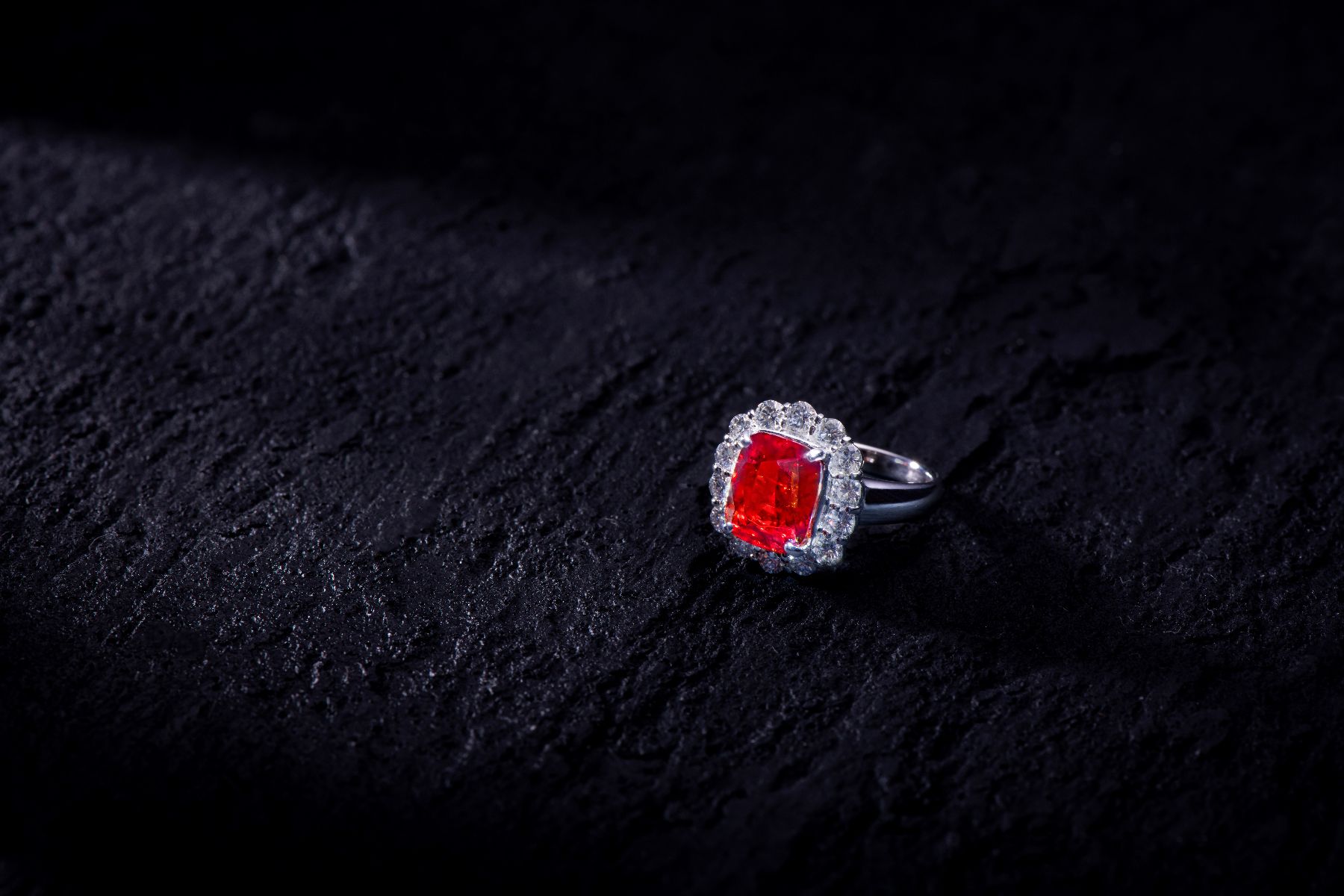
The Colour Spectrum of Spinel: From Vivid Red to Cobalt Blue
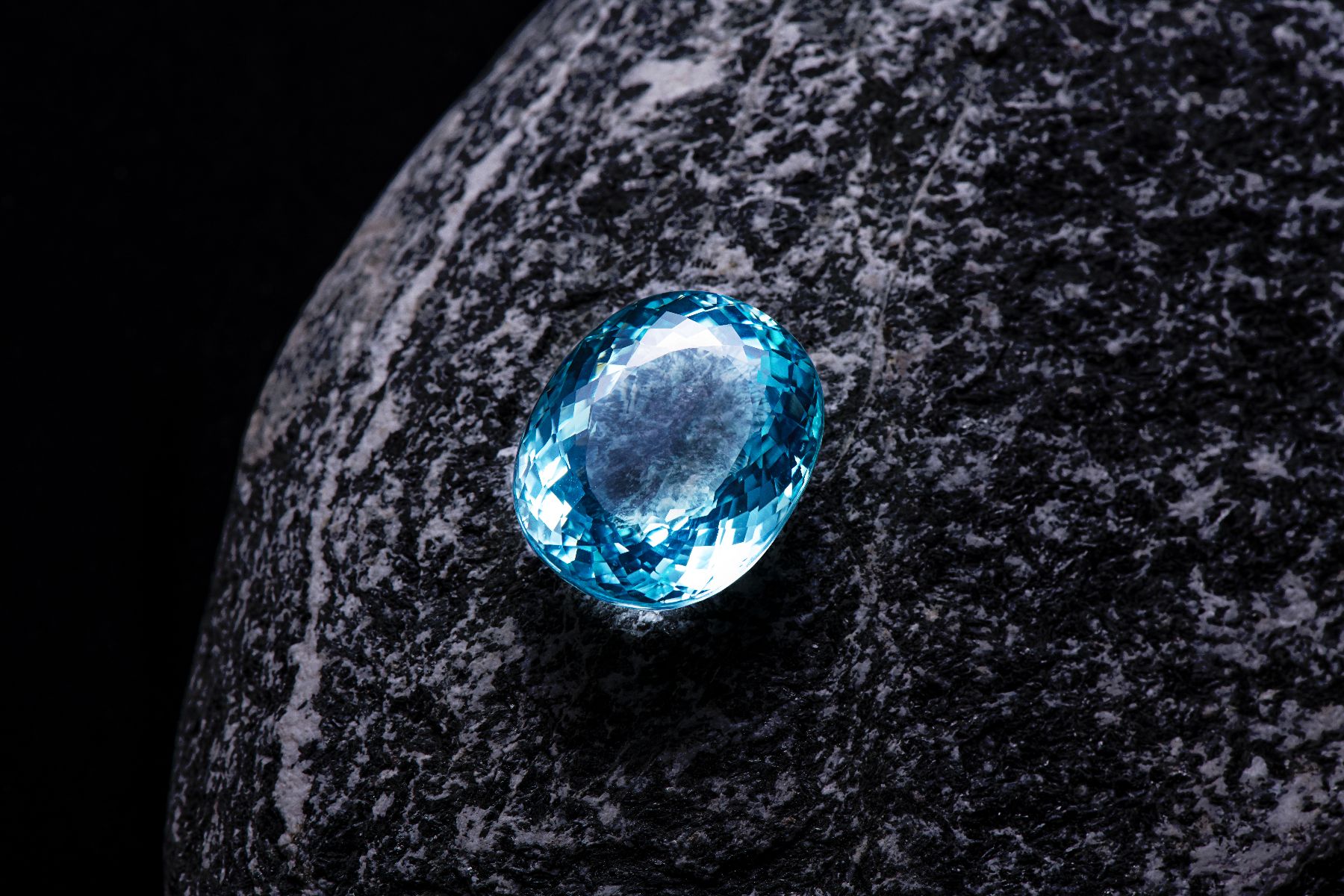
Few coloured gems match spinel for range, and behind every hue lies a specific colouring element and a specific set of geological conditions — none of it the result of human intervention. Understanding how the colours rank in scarcity is the first step towards a collecting judgement.
- Red spinel
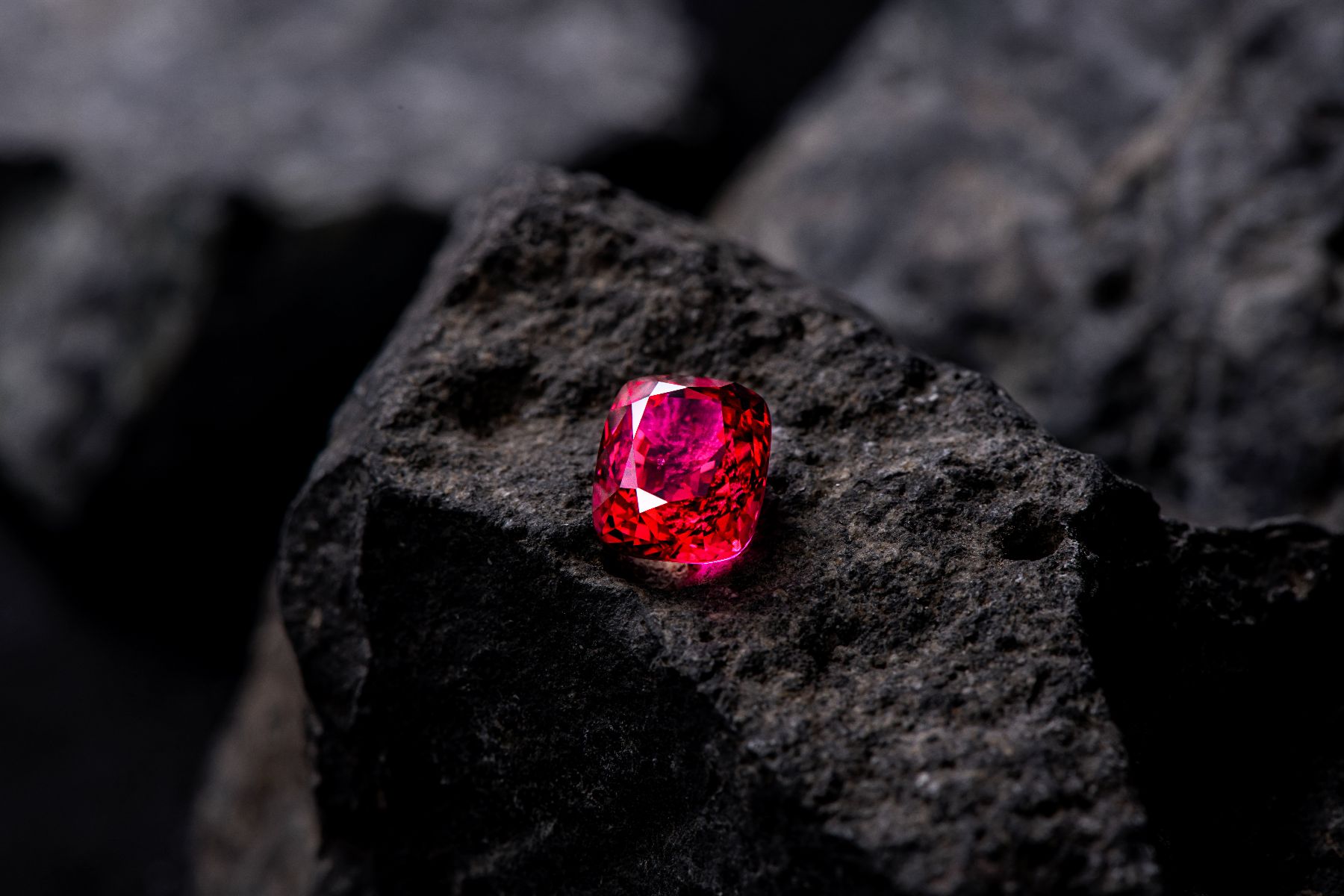
Coloured by chromium. Where chromium is present and iron and vanadium contents are very low, the result is a clean vivid red with pronounced fluorescence — the most valuable part of the spinel spectrum. Red spinel meeting the top saturation standard without dark tone is in very limited supply, particularly at larger carat weights. - Pink spinel
Also chromium-coloured, at lower concentration than red material. Pink spinel from Mahenge in Tanzania owes its glowing vivid pink to a particular combination of chromium with very low iron, and represents the top expression of this hue. - Blue spinel
Two entirely different colouring mechanisms operate here, and the distinction is the key to understanding value in blue spinel. Iron-coloured blue spinel reads comparatively deep and is more readily available. Cobalt-coloured spinel — cobalt spinel — shows a highly recognisable electric blue and is produced in very small quantities, the rarest end of the spinel spectrum. One point deserves emphasis: on a laboratory report, cobalt is a chemical determination of the colouring element, not a colour descriptor. Where a report does not explicitly identify cobalt as the colouring element, a blue spinel may simply be the far more common iron-coloured material. - Violet and blue-violet spinel
Formed through iron or the participation of trace cobalt. Sri Lanka is an important source for this range, typically producing soft pinkish violet to violet tones with considerable gradation. - Black spinel
Opaque as a result of high iron content. Hardness and lustre are retained, but in collecting terms it belongs to a different category of assessment from the transparent hues above.
Why Are Red and Cobalt Blue the Rarest Spinels?
Because both require two conditions that rarely coincide. Red spinel needs chromium present with iron and vanadium contents very low, in order to reach high saturation and pronounced fluorescence at the same time. Cobalt blue spinel needs cobalt as its principal colouring mechanism, and cobalt occurs only rarely in the geological environments where spinel forms. Both combinations are uncommon in nature, and the cases that achieve top colour, good transparency and meaningful carat weight simultaneously account for a very small fraction of total spinel production. This scarcity is set by geological constraint, not by the market.
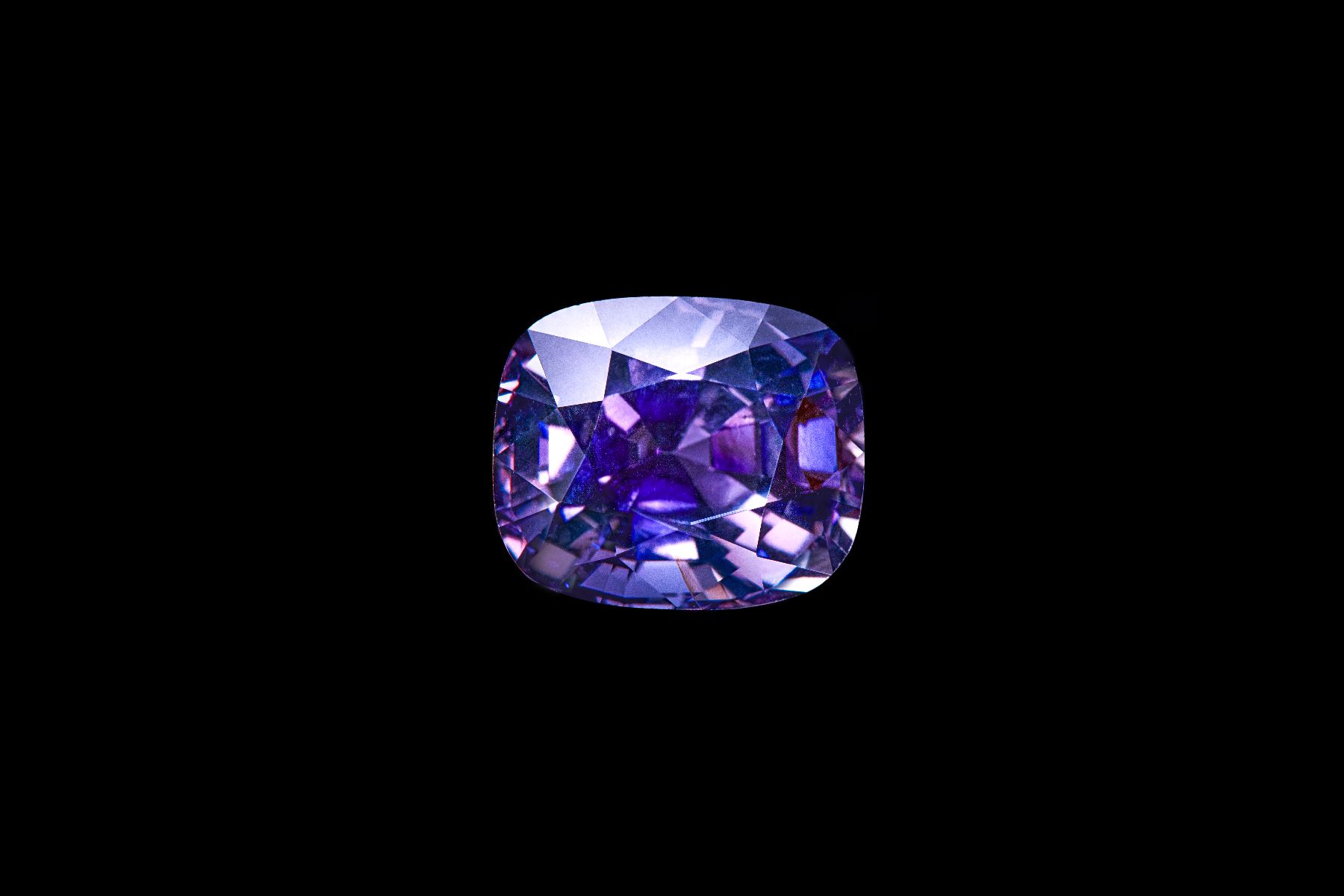
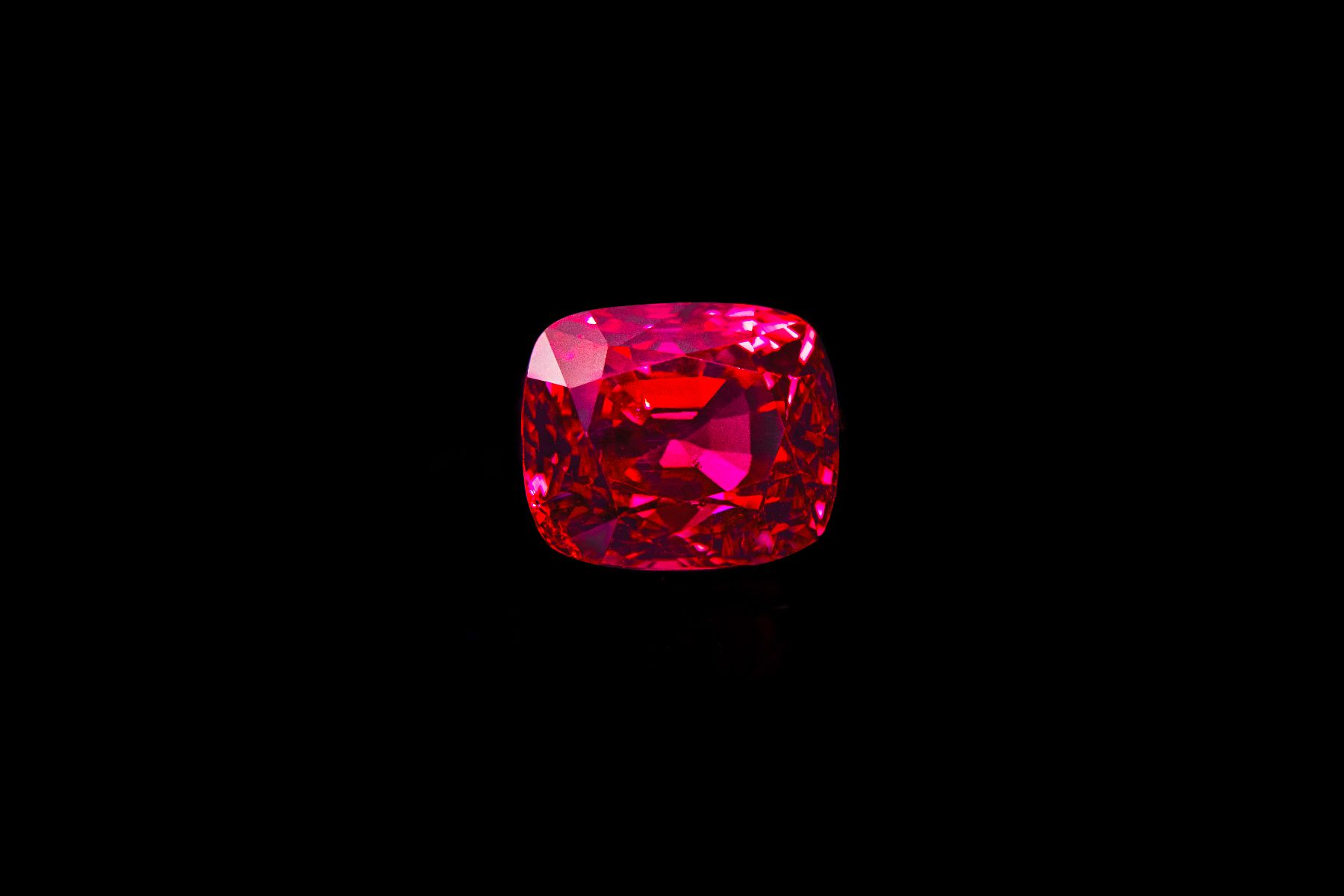
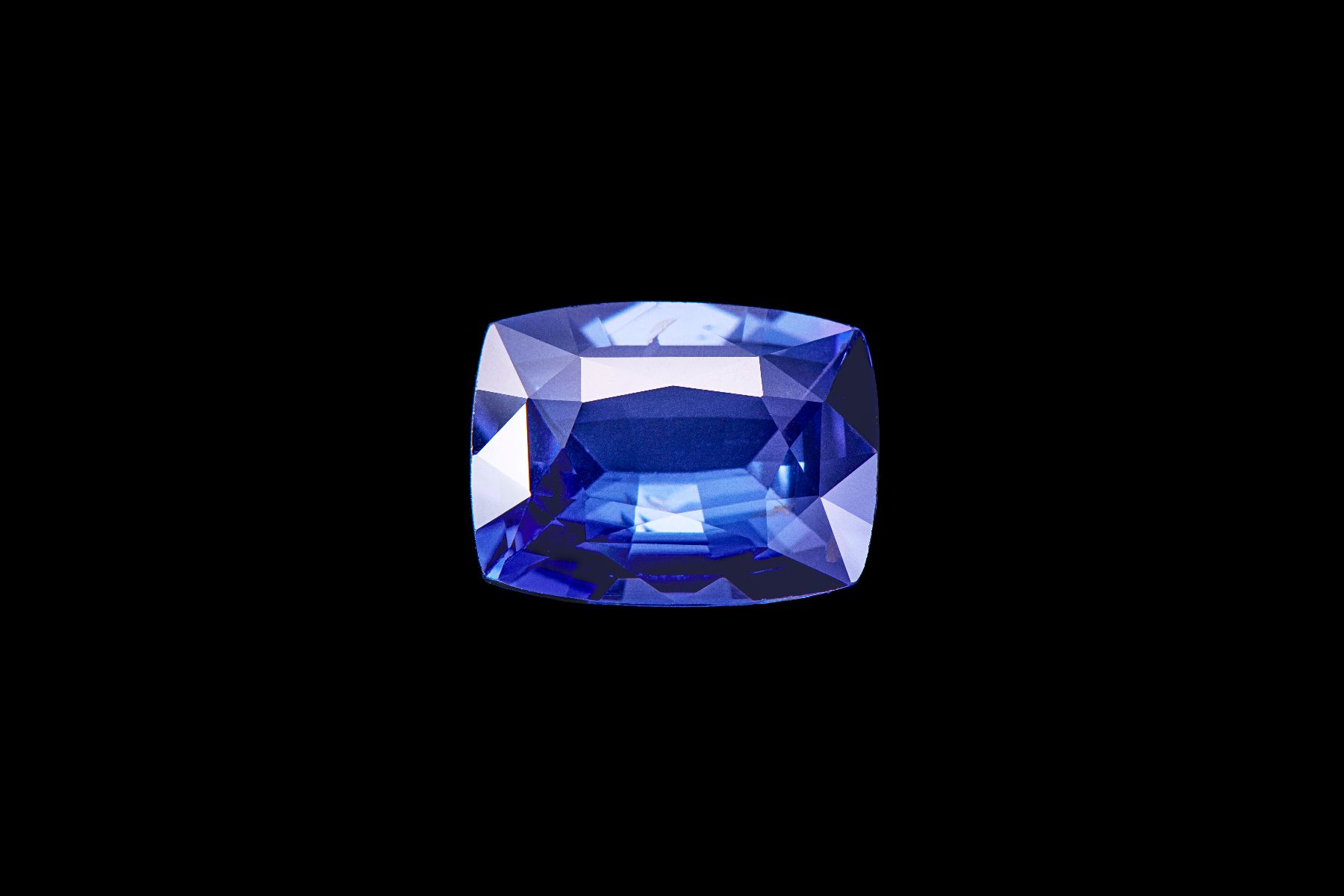
Click to view more JUSTLEE Exceptional Selections | Natural Unheated Spinel
The Principal Sources of Spinel
Fine spinel comes from a relatively concentrated set of localities, and the geology of each determines the hues it is known for. Historically, Tajikistan, Afghanistan and Sri Lanka were the classical sources. Contemporary collecting attention centres on the following.
| Origin | Characteristic Hues | Principal Colouring Element | Market Position |
|---|---|---|---|
| Burma (Myanmar) | Vivid red, pinkish red | Chromium, in a low-iron environment | Historic source of top colour with strong fluorescence; the finest material is known to the trade as Jedi spinel |
| Tanzania (Mahenge) | Glowing pink to red | Chromium, with very low iron | Established as a top source following the major 2007 find; known as Mahenge spinel |
| Vietnam (Luc Yen) | Cobalt blue | Cobalt | The first source of cobalt spinel to be systematically studied |
| Tanzania (Lukande) | Cobalt blue | Cobalt | Discovered in September 2021 some 15 km southeast of Mahenge; analysis by the SSEF research team published in the Journal of Gemmology, Vol. 38, No. 5 (2023) |
| Sri Lanka | Pinkish violet to violet, blue-violet | Iron, with trace cobalt | An important source of softer tones with wide gradation |
Three of these names carry particular weight in the collecting market, and all three are commonly misunderstood. Jedi spinel is a quality grading term. Mahenge is a geographical origin determination. Cobalt is a chemical determination of the colouring element. Mahenge and cobalt each correspond to a specific field on a laboratory report, while Jedi is a trade term with no standardised laboratory definition — a distinction that is central to reading a spinel report correctly.
Why Is Most Spinel Untreated? And Why Certification Still Matters
Spinel differs from ruby and sapphire in one respect that shapes the whole selection process: spinel generally reaches the quality seen in the market without heating, so the proportion of untreated material is markedly higher than in the corundum family. An untreated condition is closer to the norm for the species than to a rare exception.
Normal, however, is not the same as exempt from verification. At least three treatment types are documented in spinel, each corresponding to a different point of confirmation on a report.
Heat Treatment
Heat treatment does occur in spinel. Major laboratories test for it and record the finding, GRS spinel reports stating the conclusion in terms such as no indications of thermal treatment.
Cobalt Diffusion
A risk specific to blue spinel. GRS has documented a treatment combining heat with cobalt diffusion in its published spinel research — meaning the cobalt content of a blue spinel may be the product of artificial diffusion rather than nature. This is exactly why the identification of cobalt spinel must come from laboratory spectroscopic and trace-element analysis, and cannot rest on the appearance of the colour.
Fracture Filling
Applied to improve transparency rather than to alter colour, and a further category requiring confirmation in the spinel market.
Because all three are real, a laboratory determination of no treatment carries substantive meaning: it confirms not only that the colour is natural, but that the stone’s physical structure is in its original state. When reading a spinel report, the treatment field should be matched against specific treatment types rather than accepted as a general assurance that the stone is “natural”.
Wearing and Caring for Spinel
Mohs 8 hardness combined with the absence of true cleavage gives spinel comparatively strong everyday durability among coloured gems, and it sets well in rings, pendants and other regularly worn pieces. Proper care nonetheless depends on distinguishing hardness from toughness: hardness is resistance to abrasion, toughness is resistance to fracture under impact. Even at Mohs 8, spinel can be damaged by a concentrated blow, most vulnerably along cut edges and at points.
Three points cover routine care:
Store separately:
Avoid contact and abrasion with harder stones such as diamond.
Avoid chemical exposure:
Cleaning agents, perfume, and household products containing acids or alkalis can affect both the mounting metal and the stone's surface lustre.
Remove when appropriate:
Take pieces off for household work, exercise and sleep to reduce unnecessary stress on the setting. Clean with warm water and a soft brush. Where a piece contains fracture-filled material or a complex mounting, refer it to a professional.
The JUSTLEE Perspective on Selecting Spinel
JUSTLEE has worked in coloured gemstones for over fifty years, across Taiwan, Hong Kong and Thailand. In spinel, our selection follows the same sequence we apply to every coloured stone: confirmation of natural, untreated condition comes first, supported by a full report from a leading laboratory — GRS, GIA, Gübelin, SSEF or AIGS — and only once both conditions hold does the assessment of origin and colour carry any meaning.
Spinel should not be understood within a collecting framework as an alternative to ruby. It has its own logic of rarity, its own map of sources, its own certification standards, and an assessment system built on hue and colouring element. Royal collections chose it by eye; a collecting judgement today rests on spectroscopic data, origin determination and full documentation of treatment status. Both point to the same question: whether the stone itself merits being passed on.
The spinel currently held by JUSTLEE spans Burmese and Sri Lankan origins, in vivid red, pink and blue-violet, all natural and unheated with international laboratory reports. To learn more or to arrange a private viewing, please visit JUSTLEE Exceptional Selections | Natural Unheated Spinel
Further reading: The Four Standards of Fifty Years of Curation at JUSTLEE
This guide has been compiled by the JUSTLEE Consultant Team from published gemmological research, laboratory standards and public international auction records. It is offered as collecting reference only and does not constitute investment advice.
Frequently Asked Questions
Q: What is spinel?
A: Spinel is a naturally occurring magnesium aluminium oxide gem, Mohs 8 in hardness, with a bright vitreous lustre, a refractive index of approximately 1.718 and a specific gravity of approximately 3.60. It crystallises in the cubic system, is singly refractive and has no true cleavage, though octahedral parting may be seen. The name comes from the Latin spina, meaning thorn, a reference to its sharply pointed octahedral crystals. Spinel occurs in red, pink, blue, violet, orange and black, one of the widest colour ranges of any gem species, with principal fine sources in Burma, Tanzania, Vietnam and Sri Lanka.
Q: Is spinel a substitute for ruby?
A: No. The two are different minerals — ruby belongs to corundum, spinel to a separate mineral family, with different formation environments, internal structures and optical behaviour. Spinel was historically mistaken for ruby not because it is a lesser substitute, but because before modern instruments the unaided eye could not reliably separate two stones of equally saturated red and equal transparency. The Black Prince’s Ruby in the British Imperial State Crown, at approximately 170 carats, is a natural red spinel. Spinel has its own logic of rarity, its own sources and its own assessment standards, and belongs in a collection as a species in its own right.
Q: Is spinel hard enough for everyday wear?
A: Yes. Mohs 8 places spinel in the high-hardness range with good resistance to abrasion, and the absence of true cleavage gives it strong overall durability among coloured gems. Hardness and toughness are distinct properties, however: hardness resists abrasion, toughness resists fracture under impact. Even at Mohs 8, spinel can be damaged by a concentrated blow, most vulnerably along cut edges and at points. Store it separately from harder stones, keep it away from cleaning agents and perfume, and remove pieces for household work and exercise.
Q: Does spinel need an unheated certificate?
A: Yes. Spinel generally reaches market quality without heating, so the proportion of untreated material is markedly higher than in the corundum family — but that does not make certification optional. At least three treatments are documented: heat treatment, which major laboratories test for and record; cobalt diffusion, a risk specific to blue spinel, meaning cobalt content may be artificial rather than natural; and fracture filling, used to improve transparency. A laboratory determination of no treatment confirms not only that the colour is natural but that the stone’s physical structure is original. The treatment field should be read against specific treatment types rather than accepted as a general assurance that the stone is “natural”.