品牌
動態
JUSTLEE Insights
Pigeon Blood Ruby by Origin: How Burma, Mozambique, Madagascar and Sri Lanka Compare
Origin is not background information. The colour depth, fluorescence, and transparency of a ruby are determined by the conditions under which it formed — host rock composition, chromium-to-iron ratios, crystallisation environment. These were fixed millions of years ago and cannot be replicated through treatment.
This article compares the visual characteristics of unheated rubies from four major origins: Burma, Mozambique, Madagascar, and Sri Lanka, with Vietnam and Thailand included as reference points to illustrate the visual consequences of elevated iron content.
For a detailed breakdown of pigeon blood grading standards and how to read a GRS or Gübelin certificate, see: Unheated Burmese Ruby: Pigeon Blood Grading, Certification and Collector Standards.
Origin Is a Physical Code, Not a Label
The chemical composition of ruby varies little across origins. All are corundum crystals coloured by chromium. What differs, decisively, is host rock type and trace element ratios — factors that determine the optical ceiling a stone can reach, and whether it can meet the criteria for pigeon blood classification.
Unheated Burmese rubies have commanded consistent premiums in the international market not because of geographic prestige, but because Burma's specific geological conditions produce optical characteristics that cannot be reproduced elsewhere. When those characteristics are combined with a confirmed unheated status, the result is the category that defines the market's upper tier.
What to Look for When Evaluating a Ruby
Before comparing origins, it helps to establish a shared vocabulary. Visual assessment of any ruby comes down to three dimensions — all of which trace directly back to geological origin.
Colour purity
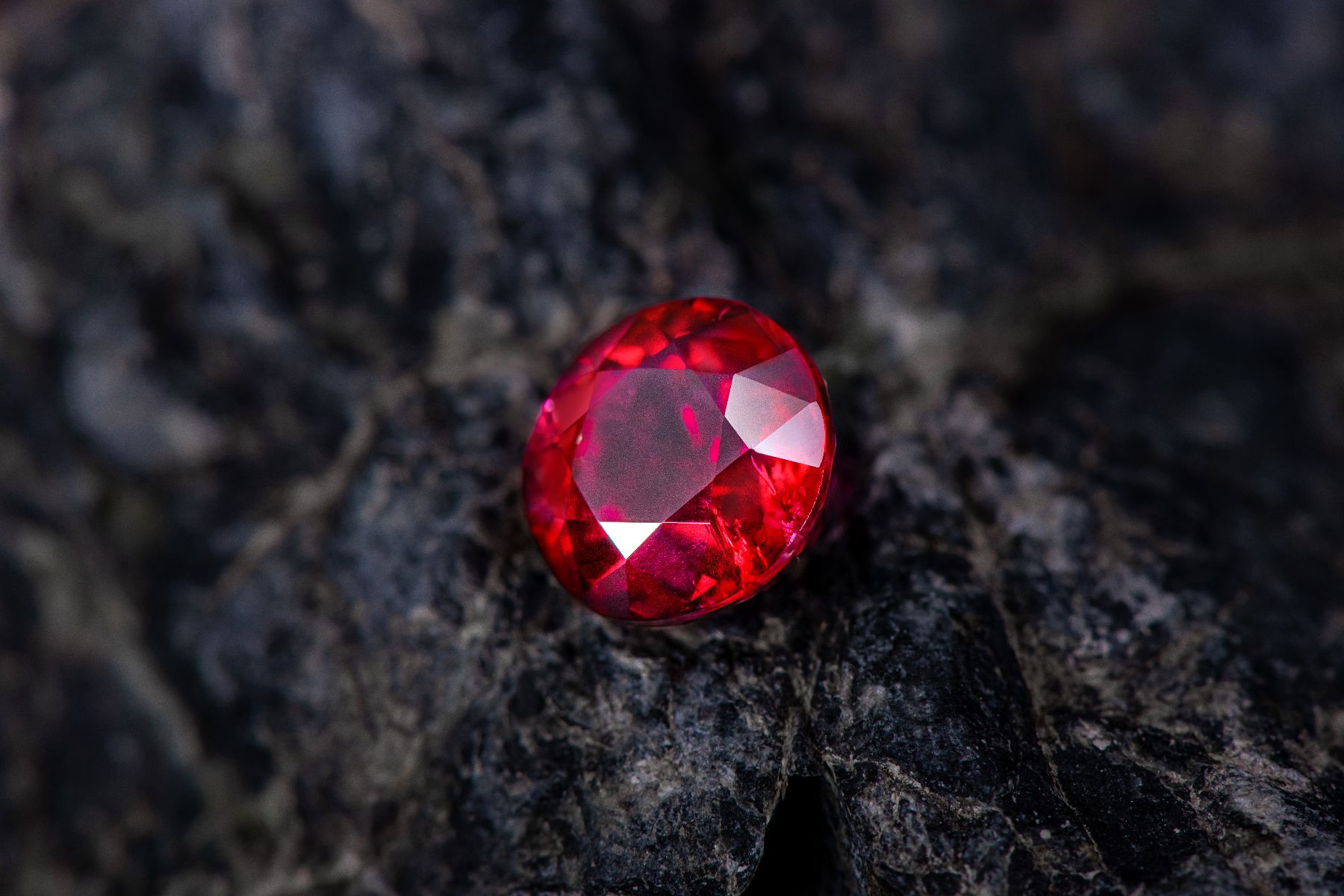
Refers to whether the dominant red hue carries a secondary modifier. A top-tier ruby reads as pure red: no visible orange, brown, or blue-violet cast. GRS's pigeon blood classification requires red as the primary hue, with strict limits on secondary colour contribution.
Fluorescence
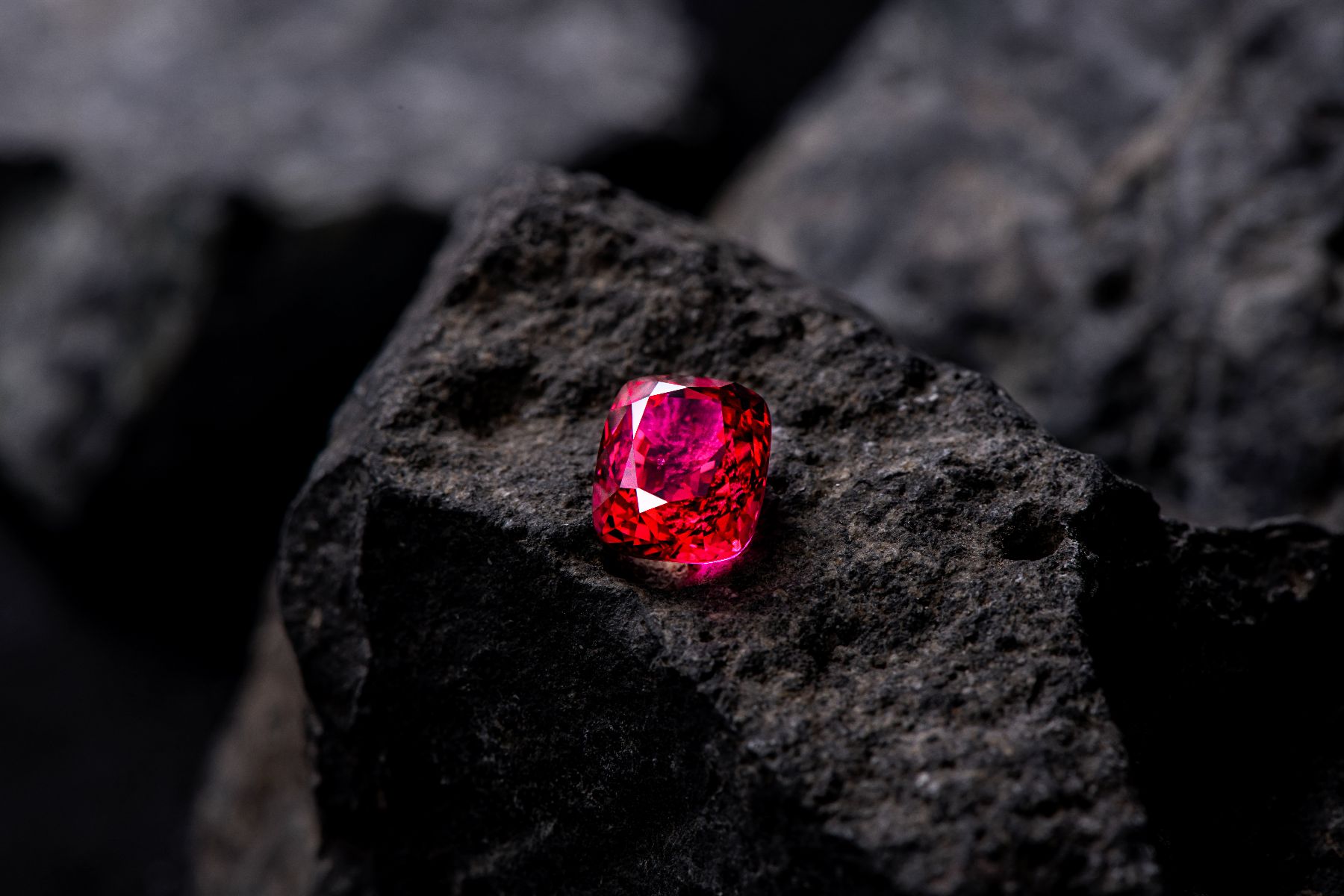
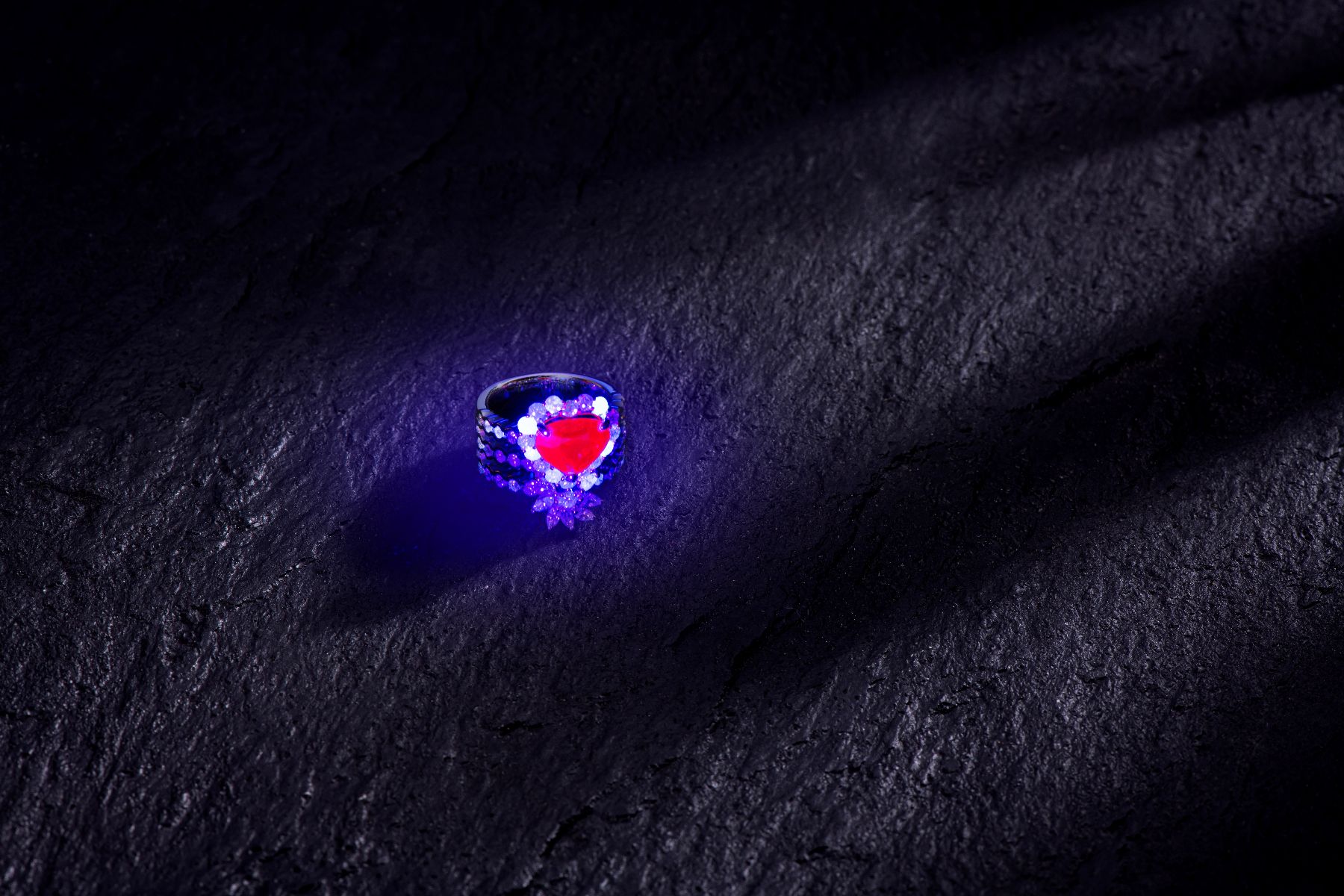
It is the quality most collectors recognise instinctively but find hardest to describe. In natural light — particularly daylight, which contains ultraviolet — fluorescent rubies appear to emit light from within rather than simply reflecting it off the surface. This is the physical basis for what the market describes as a ruby that "glows." It is not a subjective impression; it is a measurable optical phenomenon driven by chromium content and iron suppression.
Transparency and inclusions
To determine how light travels through the stone. Ruby is a Type II gemstone: natural inclusions are expected. What matters is their character — type, density, and distribution. In Burmese rubies, fine rutile silk is both a visual characteristic and one of the primary markers used by laboratories to confirm origin.
What is fluorescence in a ruby, and why does it matter for valuation?
Fluorescence occurs when a gemstone absorbs ultraviolet energy and re-emits it as visible light. In rubies, chromium is the primary driver. When iron levels are sufficiently low, chromium fluoresces strongly — producing the inner glow associated with top-tier stones. Strong fluorescence is one of the necessary criteria for pigeon blood classification across GRS, Gübelin, SSEF and AIGS — the leading laboratories assessing this designation. Burma's geology positions its stones to meet that threshold at a rate no high-iron origin can match.
How Chromium and Iron Determine the Red You See
The red in an unheated ruby comes from chromium. But chromium rarely occurs in the earth's crust without iron — and iron acts as a fluorescence suppressant, absorbing the energy chromium would otherwise radiate as visible red light. The result: reduced fluorescence, and a colour that reads darker and heavier. The chromium-to-iron ratio is the single most important geological variable separating one origin's visual character from another.
Burma's ruby deposits are predominantly marble-hosted — an environment naturally low in iron. With iron suppression minimal, chromium fluorescence releases freely, producing the pure, luminous red that has defined the category for over a century. Strong fluorescence is one of the necessary criteria for pigeon blood classification on a GRS certificate; Burma's geology positions its stones to meet that threshold at a rate no high-iron origin can match.
For a full explanation of how to read a pigeon blood designation on a GRS, Gübelin, or SSEF report, see: Unheated Burmese Ruby: Pigeon Blood Grading and Certification Standards.
Visual Profile by Origin: Burma, Mozambique, Madagascar and Sri Lanka
| Origin | Host Rock | Typical Colour | Fluorescence | Common Inclusions | Transparency |
|---|---|---|---|---|---|
| Burma | Marble | Pure red, brightened by fluorescence | Strong | Rutile silk | Moderate |
| Mozambique | Amphibolite | Deep, saturated red; some with darker tone | Moderate to weak | Generally clean | High; exceptional in large sizes |
| Madagascar | Predominantly marble | Pure to deep red; variable | Moderate to strong | Needle and silk inclusions | Moderate to high |
| Sri Lanka | Crystalline metamorphic | Light pinkish-red | Moderate | Needle inclusions | Moderate to high |
| Vietnam | Marble | Predominantly purplish-red | Moderate to strong | Needle and fingerprint inclusions | Moderate |
| Thailand | Basalt | Dark brownish-red | Weak to absent | Fingerprint inclusions | Moderate to low |
Burma (Myanmar)
The defining quality of unheated Burmese rubies is inner light — colour that radiates outward, not off the surface. This is the direct result of strong chromium fluorescence in a low-iron marble environment, and it is the characteristic no other origin reliably replicates. Supply of collector-grade unheated material continues to contract; most of what reaches the market today is finite historical inventory.
Mozambique
Top-tier unheated Mozambique rubies are deeper in tone and more restrained in fluorescence than Burmese material — but exceptional in clarity and transparency, particularly in larger sizes. GRS pigeon blood classification has been awarded to qualifying Mozambique-origin stones. Mozambique is now one of the most significant ruby sources at top-tier auction level.
Madagascar
Madagascar's northeastern deposits are primarily marble-hosted, and top-tier unheated stones have achieved GRS pigeon blood classification with strong auction results. Quality distribution is wider here than in other major origins; reaching collector grade requires rigorous selection. An origin with genuine upside — and corresponding curation risk.
Sri Lanka (Ceylon)
Ceylon rubies read lighter — a pinkish red distinct from the saturated pure red of Burma or the deep tone of Mozambique. Pigeon blood classification is less common, but top Ceylon rubies have built a stable market on their own visual terms. Sri Lanka is also a meaningful source of star rubies: six-ray asterism stones with well-defined stars represent a separate and genuinely rare collector category.
Vietnam and Thailand — Iron as a Visual Variable
Vietnamese rubies show reasonable fluorescence but carry a visible purple modifier in a significant proportion of stones, limiting pigeon blood eligibility. Thailand's basalt-hosted deposits produce the highest-iron material among major sources — fluorescence near-absent, colour dark and brownish — the clearest illustration of what elevated iron does to a ruby's visual character.
How Origin Shapes Collecting Logic
When two rubies both carry top-tier certificates, both confirmed as carrying no indications of heating, and both meeting pigeon blood colour criteria — origin still determines collecting logic. Not through prestige, but through the structure of scarcity.
What is the fundamental collecting difference between Burma, Mozambique and Madagascar rubies?
Burma's scarcity is absolute: historical inventory that cannot be replenished. Mozambique operates within a larger supply base but applies equally rigorous selection thresholds, with a structural advantage in large, high-clarity stones. Madagascar is an emerging tier — strong upside in top-certified material, with meaningful quality variance across the broader supply. The three represent different risk profiles and legacy considerations; a balanced coloured gemstone allocation can accommodate all three.
Christie's and Sotheby's long-term auction records show that confirmed unheated Burmese pigeon blood rubies hold a structural premium on a per-carat basis — one that expands with stone weight. The 2015 Sotheby's Geneva sale of the Sunrise Ruby — 25.59 carats, Burma origin, no indications of heating, GRS pigeon blood — realised over USD 30 million, a per-carat auction record for any ruby that stands to this day.
Mozambique has established its own presence at the top of the market. The 2023 Sotheby's Geneva sale of the Estrela de Fura — 55.22 carats, Mozambique origin — realised approximately USD 34.8 million, setting the all-time record for total hammer price for any ruby sold at auction.
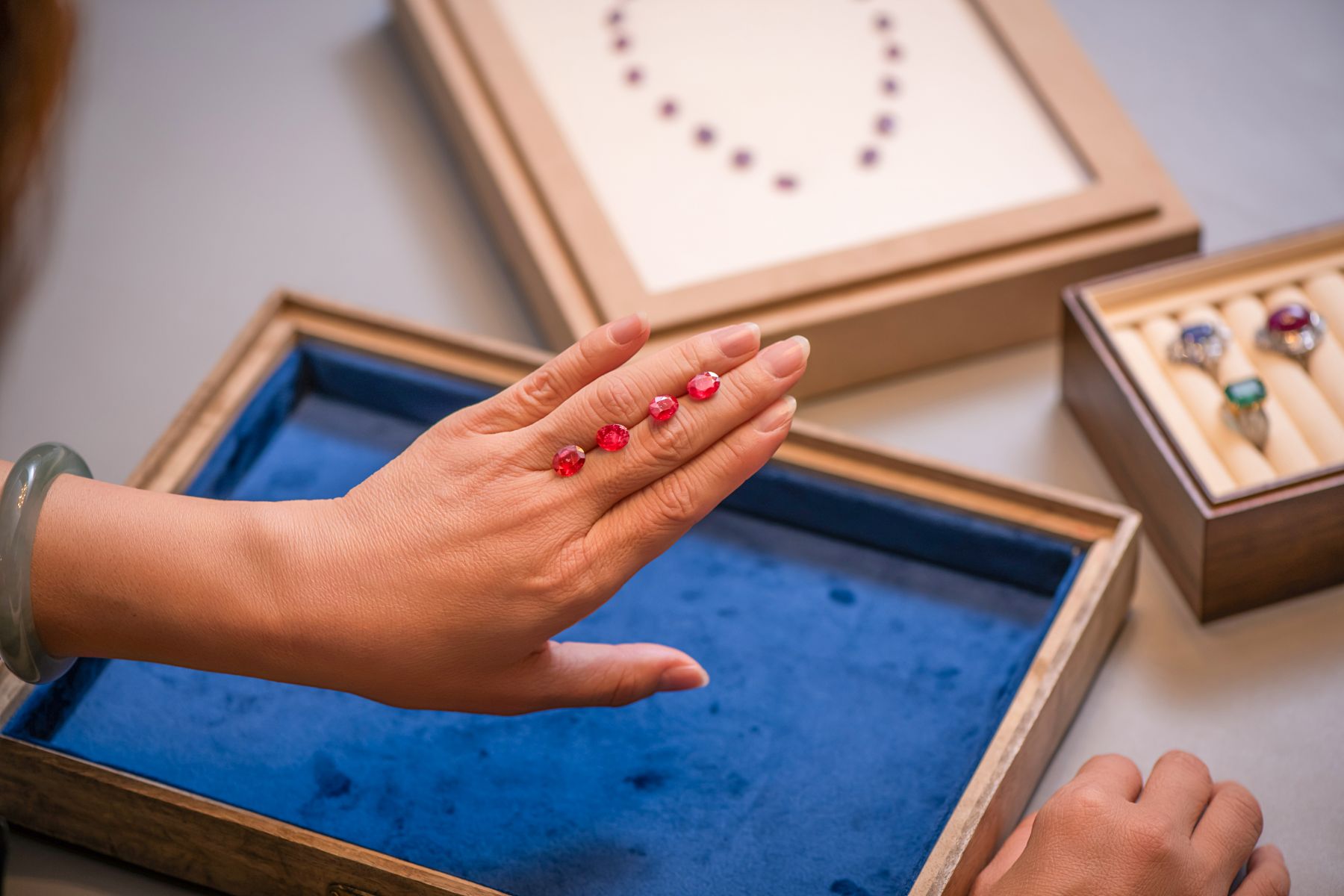
JUSTLEE Perspective on Coloured Gemstones
JUSTLEE has been active in the coloured gemstone market for over fifty years, with direct sourcing experience across Taiwan, Hong Kong, and Thailand. The judgements informing our work — how each origin performs under different light conditions, which stones hold long-term market support — are built from hands-on evaluation of rough and finished material, not synthesised from published literature.
Our selection criteria do not vary by origin.
Every stone must carry confirmed no-indications-of-heating status, supported by a complete certificate from GRS, Gübelin, SSEF, or AIGS.
Provenance documentation is non-negotiable. Different origins represent different collecting propositions, but the threshold for consideration has never changed. Fifty years of curation means being able to advise — beyond what any certificate conveys — from direct knowledge of the stone itself.
Further reading: JUSTLEE's Four Standards for Gemstones Curation

Compiled by JUSTLEE consultant team from published gemmological research, laboratory standards, and publicly available auction records. For educational reference only; Does not constitute investment advice.
FAQ
Q: What does "no indications of heating" mean on a GRS ruby report?
A: "No indications of heating" is a formal laboratory statement confirming that a stone shows no microscopic or spectroscopic evidence of heat treatment. Heat is the most common optimisation applied to ruby — it can improve colour saturation and reduce visible inclusions, but leaves identifiable traces in the stone's internal structure. When a GRS report carries this designation, the stone's colour and clarity are entirely natural. In the collector market, unheated status is the foundational criterion — more consequential, in many cases, than colour grade alone.
Q: Why are unheated rubies significantly more expensive than heat-treated stones?
A: An unheated ruby has reached collector-grade colour without any intervention — a condition that occurs in a very small proportion of natural rough. The vast majority of rubies require heat treatment to achieve the colour saturation the market typically sees. A stone that combines pigeon blood colour, strong fluorescence, and high clarity entirely in its natural state is a genuine rarity. That scarcity is structural and geological — not a market narrative — and it is priced accordingly.
Q: Why do Burmese rubies appear to glow from within?
A: The effect is a direct result of chromium fluorescence. Burma's marble-hosted deposits are exceptionally low in iron — the primary suppressant of fluorescence in ruby. With iron minimal, chromium fluoresces freely under natural and ultraviolet light, producing visible red emission from within the stone rather than surface reflection. This is a geological inheritance that no post-formation treatment can replicate.
Q: Can pigeon blood rubies come from origins other than Burma?
A: Yes. GRS's pigeon blood classification is based on colour criteria — hue, saturation, and fluorescence — not origin. Unheated rubies from Mozambique and Madagascar have received the designation when meeting the required thresholds. Burma's structural advantage is geological: its low-iron marble environment produces the strong fluorescence that pigeon blood classification requires at a significantly higher rate than high-iron origins can achieve.
Q: Why do Mozambique rubies tend to show better clarity than Burmese?
A: Mozambique's deposit conditions produce stones with comparatively few inclusions, particularly in larger sizes. Burmese rubies commonly contain rutile silk — a natural product of the marble formation environment that carries genuine gemmological significance as a provenance indicator, not simply a clarity deduction.
Q: Is Madagascar ruby a sound collecting choice?
A: Unheated Madagascar rubies supported by top-tier certificates from GRS, Gübelin, or SSEF represent a credible collecting opportunity. The northeastern marble deposits are geologically similar to Burma, and the best stones have achieved pigeon blood classification and strong auction results. The critical consideration is supply variability: quality range is wide, selective curation is essential, and a complete laboratory certificate from a recognised institution is the minimum baseline for any serious acquisition.
Q: What distinguishes Ceylon ruby from other major origins?
A: Ceylon rubies are characterised by a lighter, pinkish-red tone — visually distinct from the saturated pure red of Burma or the deep red of Mozambique. Pigeon blood classification is less common for Ceylon material, though top stones have established a stable market on different aesthetic terms. Sri Lanka is also a meaningful source of star rubies, with six-ray asterism stones in good clarity representing a separate rare-gemstone category in their own right.
Q: How do I verify a ruby's origin from its certificate?
A: Origin is recorded in the Geographical Origin field of GRS, Gübelin, and SSEF reports, determined through combined analysis of trace element chemistry, inclusion characteristics, and spectroscopic data.
AIGS — the Asian Institute of Gemological Sciences, Bangkok — carries particular market recognition across Thailand, Myanmar and Singapore, and JUSTLEE holds certified pieces with AIGS documentation. For collector-grade acquisitions, concurrent reports from two independent top-tier laboratories represent the strongest available form of provenance documentation.