

動態
JUSTLEE Insights
Misconceptions about "unheated" gemstones are common. Some treat it as a quality descriptor; others assume that any stone described as natural is also unheated. The accurate definition comes from one place only: the written conclusion of an internationally recognised gemological laboratory. "Unheated" is a technically specific determination — not a marketing term, and not a designation any seller can make unilaterally.
Unheated Is Laboratory Language, Not a Quality Descriptor
Heat treatment is the most widely applied optimisation method in the ruby and sapphire trade. For sapphires, controlled high temperatures cause iron and titanium ions to redistribute within the crystal, deepening and homogenising colour. For rubies, heat dissolves fine rutile silk inclusions, improving transparency and eliminating unwanted brown or purple secondary tones. The practice is industry-standard: it is estimated that over 90% of sapphires and more than 95% of rubies on the global market have undergone some degree of heat treatment.
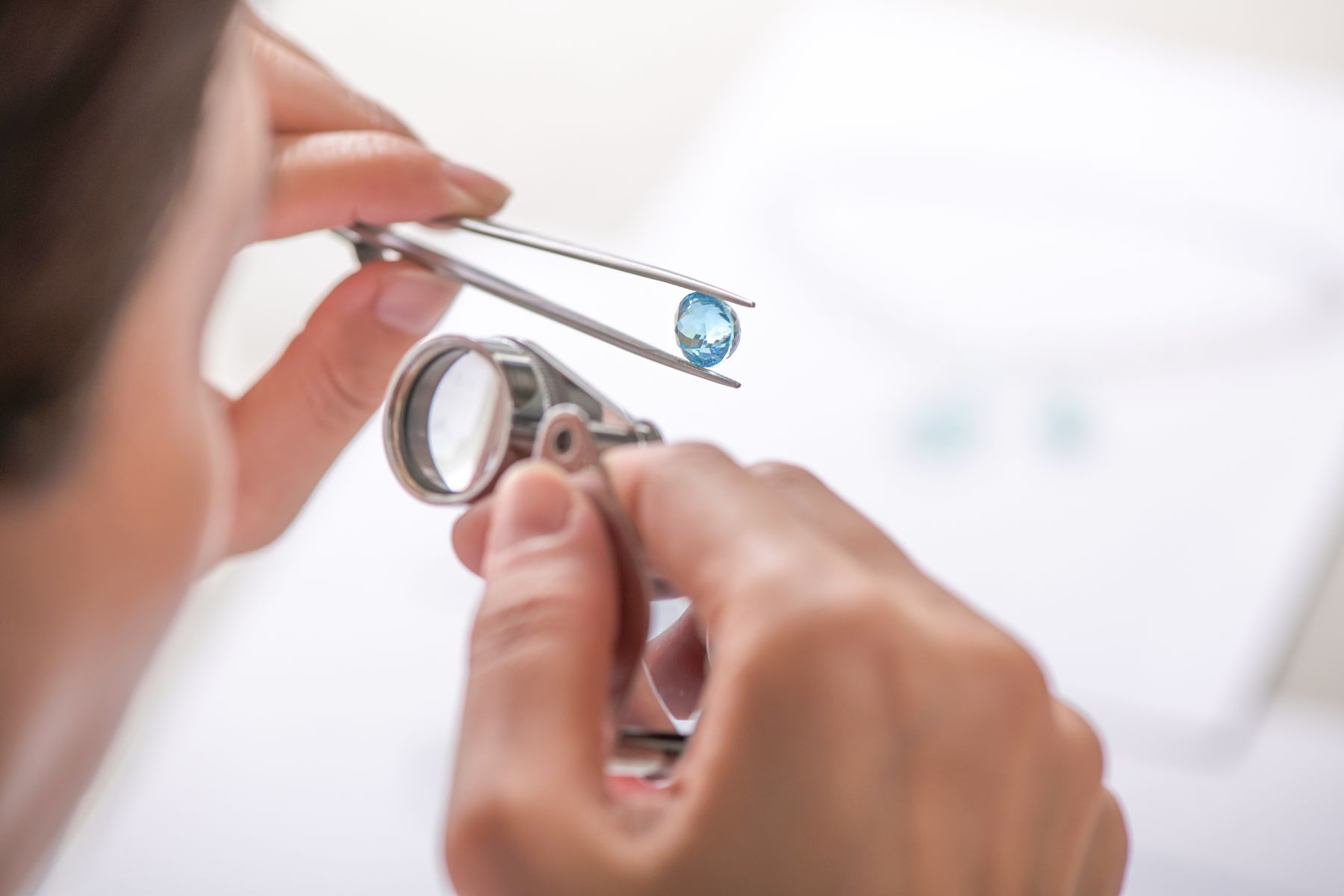
"No indications of heating" is the standard terminology used by GRS, Gübelin, SSEF, GIA, and other major gemological laboratories to indicate that no scientific evidence of heat treatment was identified within the scope of testing. This conclusion is based on multiple analytical methods: microscopic examination at 40× magnification or higher, infrared spectroscopy (FTIR), and Raman spectroscopy. Visual inspection — whether by the naked eye or a 10× loupe — cannot produce an equivalent determination. Laboratory analysis is the only reliable basis for this designation.
Unheated gemstones typically retain the natural inclusion characteristics formed during crystal growth: rutile silk, growth zones, and other internal features that are often dissolved or altered by heat. The optical appearance of a fine unheated stone reflects the geological conditions of its source — not a post-extraction adjustment. This makes it fundamentally different from a heated stone of similar colour, not inherently more or less beautiful by appearance alone.
The Material Basis of Scarcity
The scarcity of unheated gemstones is grounded in the irreproducibility of natural conditions. The three principal categories below have different origins of scarcity, but share the same conclusion: collector-grade unheated supply does not increase over time.
Gemstone | Source of Scarcity | Current Status |
|---|---|---|
Kashmir Sapphire | Mine deposit exhausted | The primary Old Mine was exhausted by 1887. Subsequent reopening attempts produced no meaningful output. All material currently on the market is historical stock — no new supply exists. |
Burmese Ruby | Formal production halted by political disruption | Official mining licences expired in 2020 and were not renewed. Conflict escalated following the 2021 coup; by 2024, the mining region had become an active conflict zone. Organised supply is effectively suspended. |
Colombian No-Oil Emerald | Treatment-grade scarcity, not mine closure | Colombian mines remain active, but emeralds confirmed by laboratory testing to show no indications of clarity modification represent less than 5% of the market. |
How to Find the Answer in a Lab Report
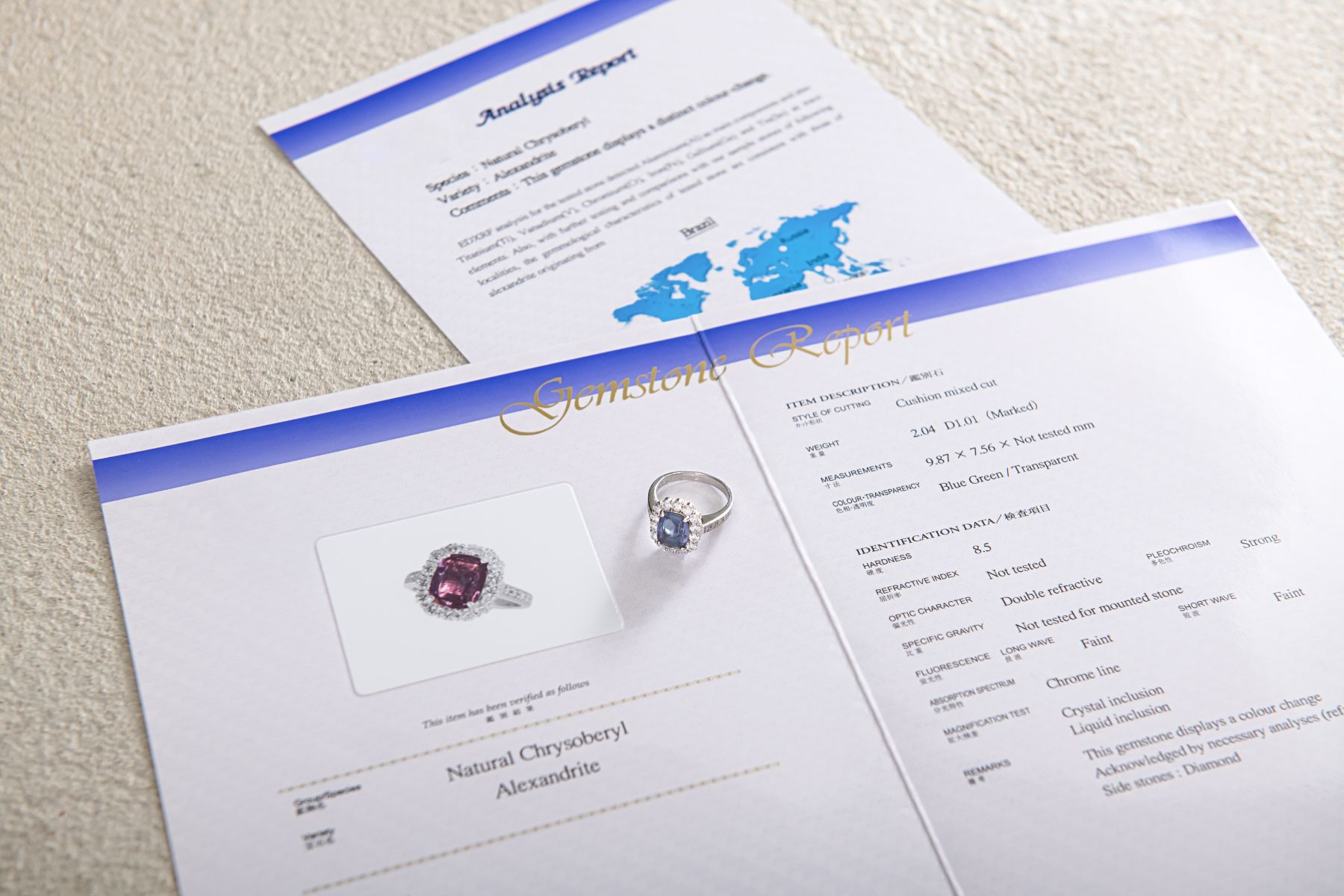
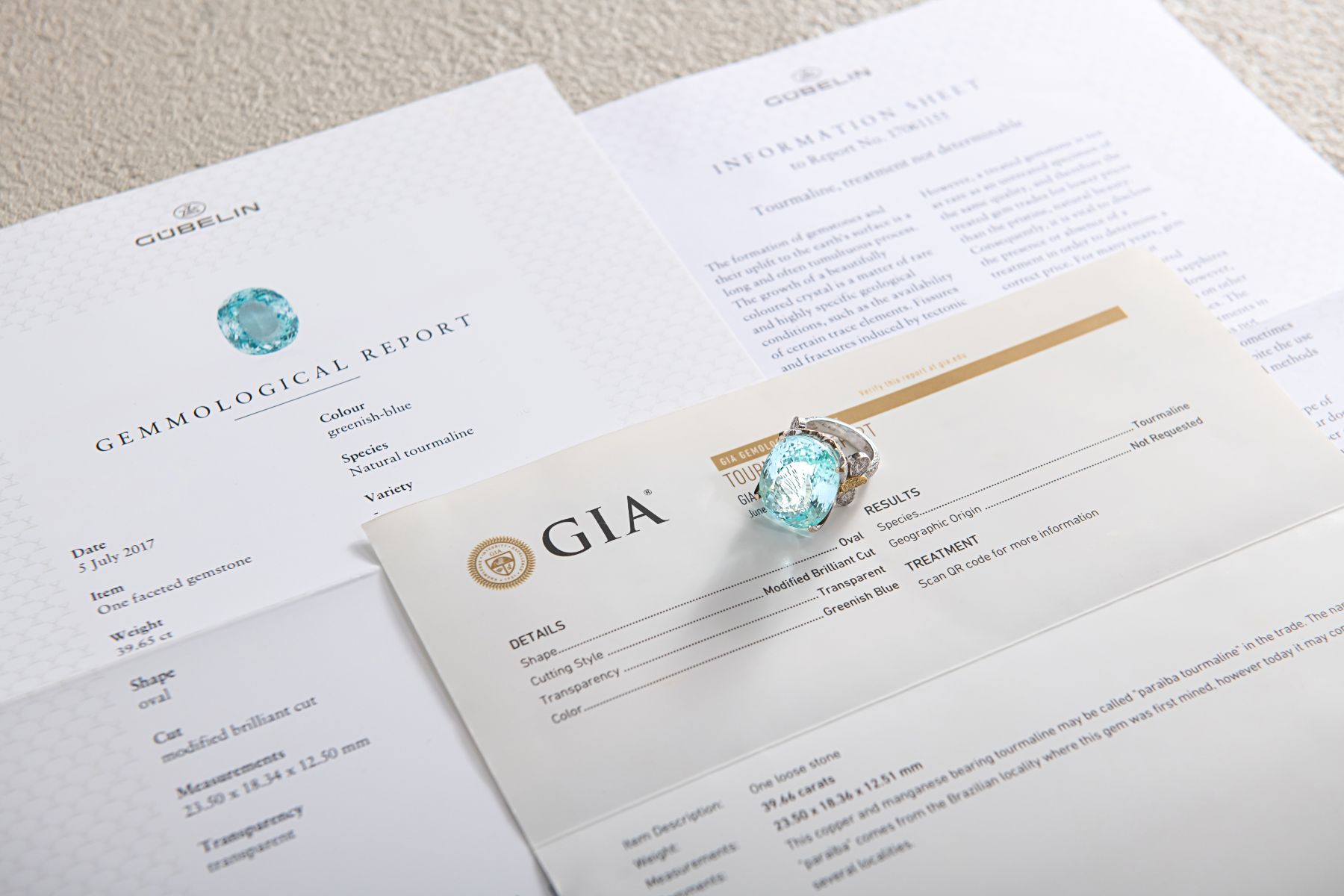
Treatment status cannot be taken on a seller's word. The only reliable basis is the written conclusion of a recognised laboratory report, and each institution records this information in a specific location. On a GRS report, treatment findings appear in the Comments section: an unheated stone will read "no indications of heating"; a heated stone will read "indications of heating." Gübelin and SSEF reports state the presence or absence of treatment in their conclusions as a primary scientific finding. On a GIA Colored Stone Report, the relevant field is Clarity/Color Treatment — unheated stones are listed as "None."
The issuing laboratory itself is part of the evaluation. At major auction, dual origin certification from Gübelin and SSEF carries measurable market weight. In May 2025, Christie's Hong Kong Lot 1930 — The Regent Kashmir, a 35.09-carat Kashmir sapphire with concurrent SSEF and Gübelin reports confirming both origin and unheated status — sold at USD 271,515 per carat, establishing a new auction record for the category. GRS holds a significant position in ruby and sapphire colour grading, including the Pigeon Blood and Royal Blue designations. AIGS carries particular authority in the Thai, Burmese, and Singaporean markets.
Where two independent reports from recognised laboratories reach the same conclusion — whether issued by one institution as a dual report or by two institutions separately — the certification carries greater weight than a single report alone. This principle is consistently reflected in the results of top-tier auction sales.
Emeralds Follow a Different Standard
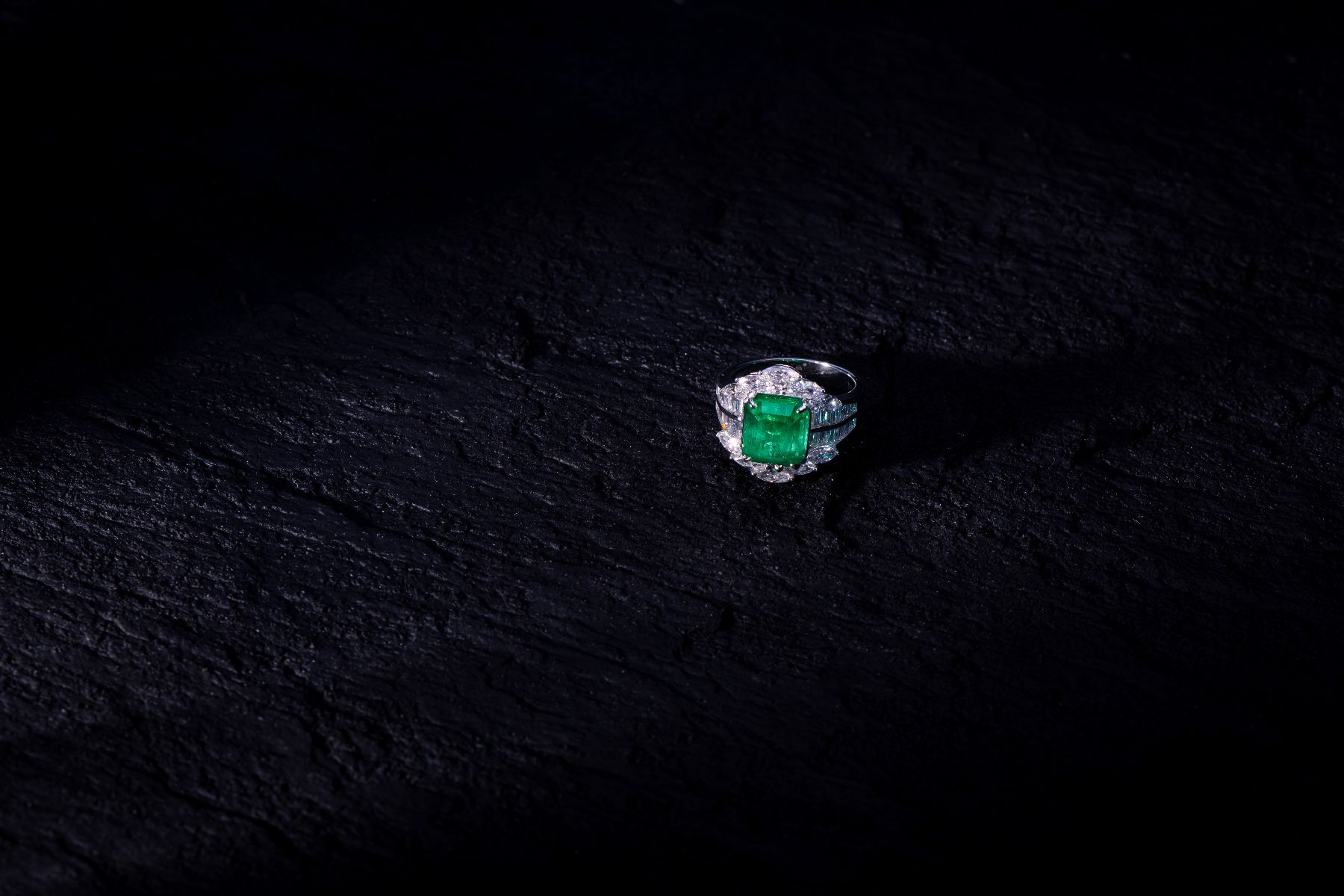
Emeralds belong to the beryl family. Their natural fissures — the internal characteristics known in the trade as Jardin — are part of the mineral's structure. Beryl cannot withstand the temperatures required to heat corundum; exposure to such heat would cause fracture, not improvement. There is no heat treatment in the emerald market.
The relevant treatment assessment for emeralds concerns clarity modification: the filling of surface-reaching fissures with cedar oil or synthetic resin to reduce their visual prominence. GRS, Gübelin, and SSEF all apply an internationally recognised grading scale. The highest designation is "no indications of clarity modification in fissures," followed by insignificant, minor, moderate, and significant, with the type of filler — oil or resin — specified in each case. When evaluating an emerald, the question is not whether it has been heated, but what the filling level and filler type are.
Read more: JUSTLEE Collector's Perspective | Colombian Emerald
JUSTLEE's Selection Standard
In over fifty years of curatorial practice, JUSTLEE has treated unheated and untreated status as a prerequisite for consideration — not as a premium attribute. Unheated represents the complete preservation of a stone's geological conditions: the chemical composition, optical characteristics, and inclusion distribution formed over millions of years of crystal growth, unchanged by human intervention before the stone reaches a laboratory. This standard provides collectors with a documented and verifiable basis for long-term judgement.
To arrange a private consultation or viewing, please submit a request through the contact form and JUSTLEE Consultant Team will follow up to confirm the details.
This article was compiled by the JUSTLEE Consultant Team drawing on published materials from GRS, Gübelin, SSEF, and AIGS, and publicly available auction records from Christie's and Sotheby's. JUSTLEE has worked with natural unheated and untreated coloured gemstones for over fifty years, maintaining this as the foundation of its curatorial standard.
FAQ
Q: Are unheated gemstones and natural gemstones the same thing?
A: They are not the same. The two terms describe different things — one refers to origin, the other to treatment status.
- Natural gemstone: Describes where the stone comes from. Any gemstone formed through natural geological processes — as opposed to manufactured in a laboratory (lab-grown) — is a natural gemstone.
- Unheated gemstone: Describes what has been done to it. An unheated gemstone is a natural stone confirmed by laboratory analysis to have undergone no artificial heat treatment. It is a subset of natural gemstones, not a synonym for them.
In short: an unheated gemstone is always natural, but a natural gemstone is not necessarily unheated. The majority of natural rubies and sapphires on the market are heat-treated — this is standard practice, disclosed on laboratory reports, and widely accepted in the trade.
Q: Are heat-treated gemstones still natural?
A: Yes. Heat treatment is a long-established, industry-accepted optimisation process. It alters a stone's colour or clarity after extraction, but does not change the fundamental nature of the mineral — the stone is still the product of geological formation over millions of years.
Heat treatment is categorically different from laboratory synthesis. A lab-grown gemstone is manufactured under controlled conditions; though chemically similar to a natural stone, its formation process, internal characteristics, and market position are entirely distinct. A heat-treated natural ruby and a lab-grown ruby are not comparable categories.
Treatment status is fully disclosed on laboratory reports. Heated stones will carry a corresponding notation — "indications of heating" on a GRS report, for example — making the distinction clear and verifiable before purchase.
Q: Why is emerald treatment not measured by "unheated" status?
A: Because emeralds cannot be heated. Beryl's structure — with its natural internal fissures (Jardin) — cannot withstand the temperatures used for corundum treatment; heat causes fracture, not improvement.
What is assessed instead is clarity modification: whether fissures have been filled with cedar oil or synthetic resin. GRS, Gübelin, and SSEF grade this on a standardised scale from "no indications of clarity modification" through minor, moderate, to significant, with the filler type specified. When evaluating an emerald, the question is the filling level and filler type — not heat treatment.
Q: If two stones look similar, why does the unheated one cost more?
A: The price reflects more than appearance. You are paying for the irreproducibility of natural conditions — not only the colour you see.
A heat-treated sapphire or ruby achieves its final appearance through a combination of what the earth produced and what human intervention added. An unheated stone's colour is determined entirely by the geological chemistry of its source — chromium concentration, trace element distribution, crystallographic structure — with no post-extraction modification. The visual similarity between a heated and an unheated stone does not make them equivalent in origin.
Supply is also a factor. With over 90% of rubies and sapphires on the market having undergone heat treatment, stones that pass the scrutiny of a top-tier laboratory with a "no indications of heating" conclusion represent a small fraction of available material. At Christie's Geneva in May 2024, an 8.01-carat unheated Burmese ruby graded Pigeon Blood sold for approximately USD 6.4 million. That figure is the market's direct assessment of what natural preservation, at this level of rarity and certification, is worth.
 Facebook
 Instagram
 Line
Line