
品牌
動態
Signature Creations
JUSTLEE Masterpiece — GRS-Certified Dual Phenomenon: A 45 ct Natural Unheated Color-Changing Star Sapphire from Burma
Asterism is an optical phenomenon unique to certain corundum crystals: three sets of oriented rutile needle inclusions align along the crystallographic axes, each refracting a band of light that converges at the apex of the cabochon, producing a floating six-rayed star that shifts fluidly with the light source. Gemological laboratories such as GRS examine the depth distribution and crystal morphology of these rutile inclusions under magnification to confirm the natural origin of the asterism, formally recording "Star Sapphire" in the Identification field.
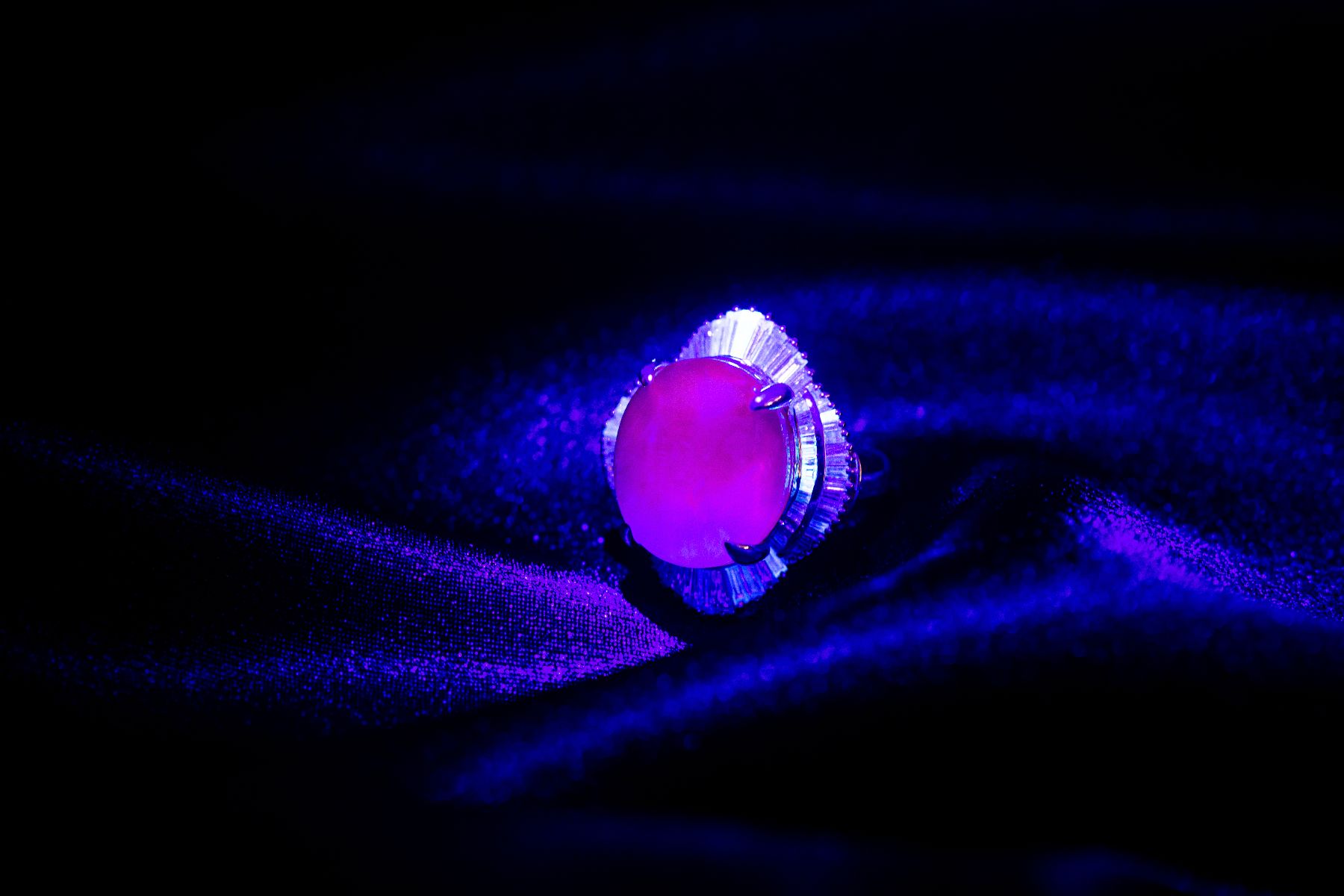
This 45ct oval cabochon sapphire has been certified by GRS as Burmese origin (Burma / Myanmar), with no indication of thermal treatment confirmed. The same report documents both asterism and colour change: under daylight the stone presents a deep blue body colour, which transitions to a purple-pink under incandescent or warm artificial light. JUSTLEE's master craftsmen have mounted this specimen as a centrepiece of the JUSTLEE Starlight Collection.
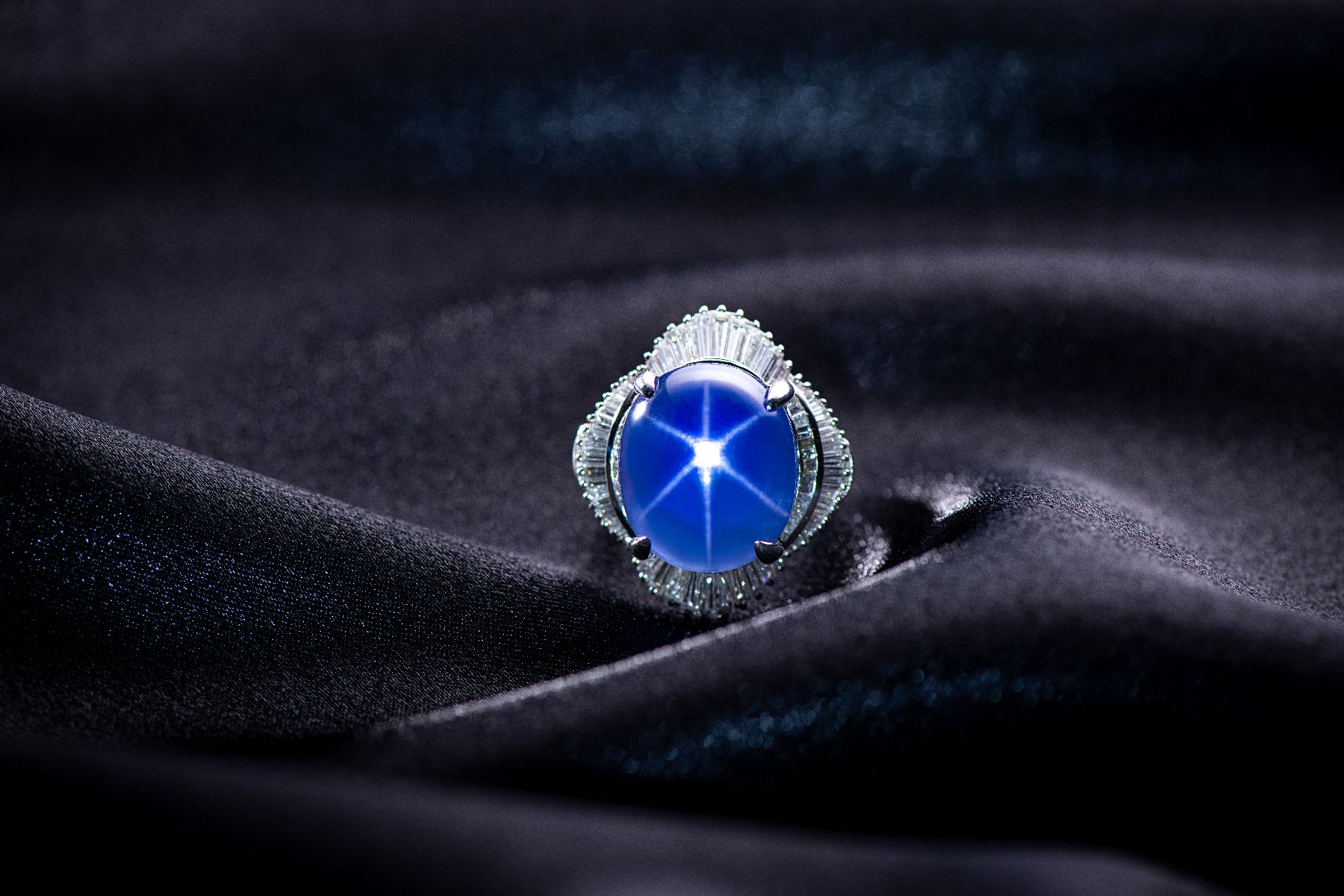
Sotheby's Hong Kong Fine Jewels, April 2026: Natural Unheated Star Sapphire Achieves Ten Times Estimate
On 23 April 2026, Sotheby's Hong Kong Fine Jewels sale (Lot 1712) saw a ring set with a 47.63 ct natural unheated star sapphire sell for HKD 1,254,400 — more than ten times the pre-sale estimate. The accompanying Gübelin Gem Lab report stated: "Sapphires which have not been enhanced by heat are scarce," a testament to the rarity of unheated sapphires in the current market.
Natural unheated star sapphires are already exceptional in the high-end auction market. Specimens exceeding 45 carats with confirmed unheated status have become increasingly rare in recent sale records.
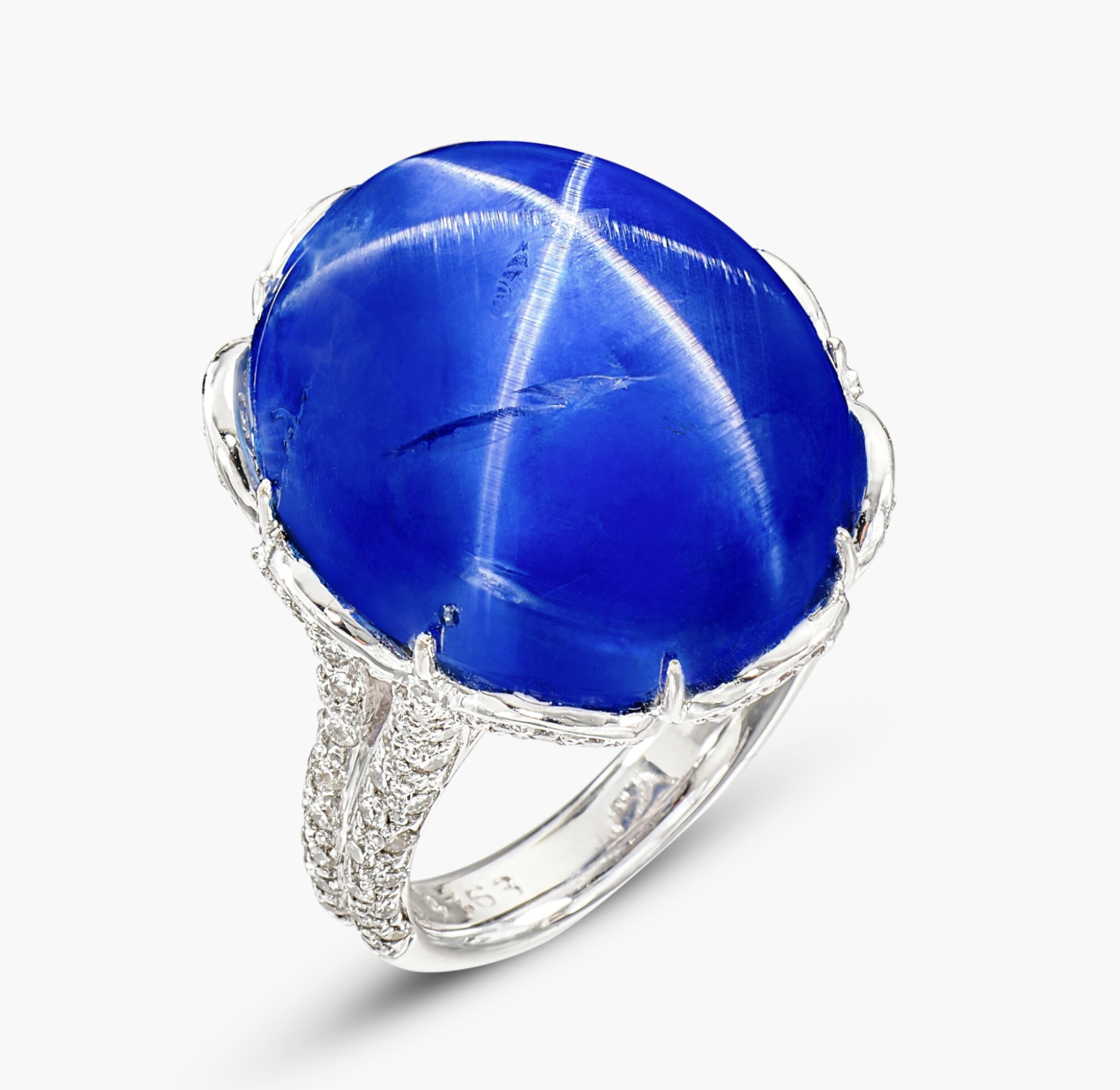
The GIA Standard for a Star Sapphire
GIA identifies three defining criteria for a top-quality star sapphire: a sharp, well-centred star; a saturated body colour; and sufficient translucency to give the colour depth and dimension. In practice, these three factors work against one another — the denser the rutile silk that sharpens the star, the more it clouds the stone's transparency. Achieving all three simultaneously in a large cabochon is the greatest challenge in sourcing a specimen of this calibre. This stone is fully polished on the face (viewing surface), with a partially natural base — a standard finishing approach for large star sapphires. The partially unpolished base serves two purposes: it preserves carat weight, and it maintains the dome height required for the star to focus sharply at the apex. A complete front polish ensures all six rays remain crisp and unobstructed.
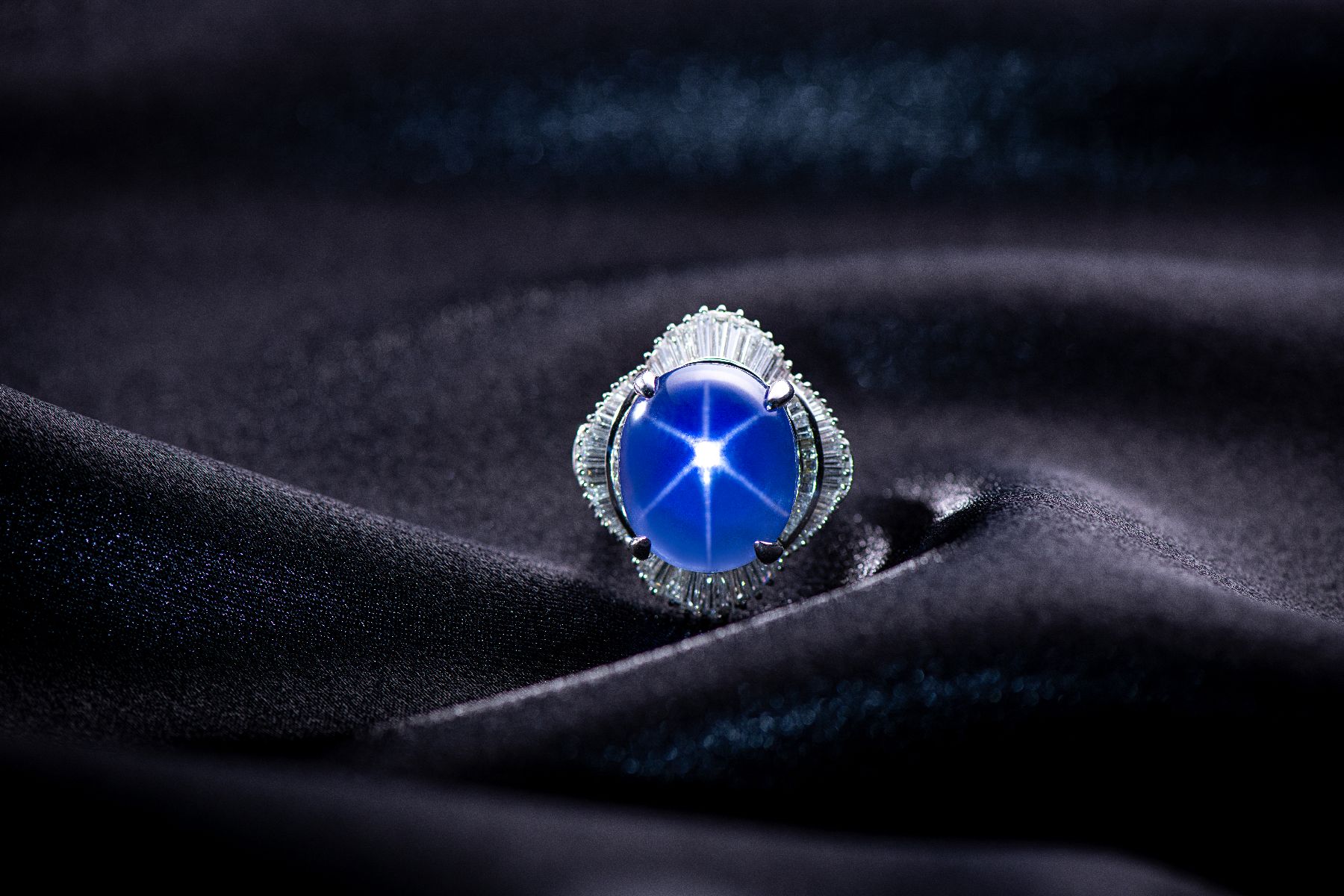
What It Means for GRS to Record "Natural Color-Changing Star Sapphire" in the Identification Field
The Identification field of a GRS certificate represents the laboratory's most authoritative definition of a stone's identity. A standard star sapphire carries simply "Natural Star Sapphire"; if any colour shift is noted, it typically appears only in the Comments section, leaving the formal designation unchanged. For this stone, GRS has inscribed "Natural Color-Changing Star Sapphire" in the Identification field — a designation that reflects the laboratory's determination, following comprehensive optical and spectroscopic analysis, that the colour-change phenomenon is not incidental but fundamental to the stone's identity.
Asterism and colour change arise from entirely different physical mechanisms within the same crystal: the star is produced by oriented rutile silk; the colour change is governed by trace element composition. Both phenomena occur independently — and in this specimen, both are present simultaneously.
JUSTLEE Selection Standard
The primary criterion for acquiring this star sapphire was GRS confirmation of no heat treatment — the six-rayed asterism and colour change are entirely the product of natural geological processes, with no evidence of any form of enhancement. The second criterion was the dual entry in the GRS Identification field: both asterism and colour change have been independently verified by the laboratory, not noted as supplementary observations in a single report. At 45 carats, this specimen represents an exceptional scale among stones meeting all of the above conditions.
With fifty years of gemstone acquisition behind us, every piece that enters the JUSTLEE collection is supported by a rigorous authentication process and clearly defined selection standards — each stone chosen to find its rightful collector.
Learn more about how we select our stones: JUSTLEE Fifty-Year Selection Standards

This article was prepared by the JUSTLEE consultant team, based on the original GRS Gemresearch Swisslab identification report and official Sotheby's sale records.
FAQ
Q: What is a color-changing star sapphire, and how rare is it?
A: A color-changing star sapphire is a corundum that simultaneously exhibits asterism and the alexandrite-like colour-change effect: a distinct six-rayed star is visible under a focused light source, while the body colour shifts noticeably between daylight and incandescent illumination. GIA notes that both phenomena occurring in a single sapphire is not, in itself, unusual at a phenomenological level — however, finding a specimen exceeding 45 carats with GRS-confirmed Burmese origin and unheated status represents a genuinely rare combination in today's market.
Q: How does a star sapphire differ from a faceted sapphire?
A: The most fundamental difference lies in cut and internal structure. A star sapphire must be fashioned as a cabochon, because only a smooth, domed surface can focus the bands of light refracted by the rutile silk into a visible star; faceted sapphires are cut to maximise the reflection and refraction of light, emphasising colour saturation and brilliance. Internally, star sapphires contain a high concentration of oriented rutile inclusions — the very feature that produces the star — which also reduces their transparency relative to top faceted stones. The two categories follow entirely different collecting logic: faceted sapphires are assessed primarily on colour saturation and clarity, while star sapphires are evaluated on star sharpness, body colour, and provenance.
Q: Under what light conditions is the star most visible?
A: Asterism requires a focused point light source to appear clearly — direct sunlight or a spotlight works best. Under diffused ambient light (overcast skies, standard indoor lighting), the star is barely perceptible. To view it properly, direct the light source at the apex of the dome and rotate the stone slowly; all six rays will track fluidly with the light. The colour change on this stone can be observed separately under the two light conditions — blue in daylight, shifting to purple-pink under warm incandescent light — and is best appreciated by viewing under both.
Q: How can you confirm that a star sapphire's rays are natural?
A: In a natural star sapphire, rutile silk runs through the full depth of the crystal, and the star remains sharp and well-defined across a wide range of viewing angles, moving smoothly as the light source shifts. GRS and other leading laboratories examine the depth distribution and crystal morphology of rutile inclusions under high magnification to determine whether the asterism is the product of natural geological processes, recording their conclusions in the report. The GRS certification for this stone confirms no indication of thermal treatment, meaning that under the most stringent scientific testing, there is no evidence of heat enhancement — the star and colour are entirely the result of natural formation.
Q: What is the difference between the Identification field and the Comment field on a GRS certificate?
A: The Identification field on a GRS report is the laboratory's formal definition of what the stone is — for example, "Natural Star Sapphire" or "Natural Ruby." The Comment field is a supplementary section used by the grader to note additional observations, such as confirmation of no heat treatment or the presence of a specific optical phenomenon.
The two fields carry different weight: the Identification field constitutes the stone's formal identity; the Comment field is ancillary and does not alter that identity. When a characteristic appears in the Identification field rather than the Comments, it has been determined to be part of what fundamentally defines the stone — not an incidental observation.
Q: What does GRS recording "Color-Changing" in the Identification field mean for collectors?
A: When GRS enters "Color-Changing" in the Identification field, it signifies that the colour shift has been confirmed through comprehensive optical and spectroscopic testing and has met the laboratory's threshold for formal recognition — it is considered part of the stone's defining identity. For collectors, this means the colour-change phenomenon carries the same level of institutional authentication as the asterism itself: it is not a gemologist's casual observation, but a formally documented determination. This record provides a clear, traceable paper trail for any future transfer, appraisal, or re-certification of the stone.
Q: What does GRS "No indication of thermal treatment" mean for this stone's collectibility?
A: Heat treatment is the most widespread form of enhancement in the sapphire trade, and the majority of specimens in circulation carry some record of thermal processing. GRS "No indication of thermal treatment" confirms that under the most rigorous scientific testing available, this stone shows absolutely no signs of heat enhancement — the star and body colour are entirely the product of natural geological conditions.
Q: How can I arrange a private viewing or consultation for this piece?
A: JUSTLEE offers bespoke private viewing appointments. Please contact us through our enquiry page to arrange a one-on-one consultation with a member of our consultant team.
More News
-
Signature Creations
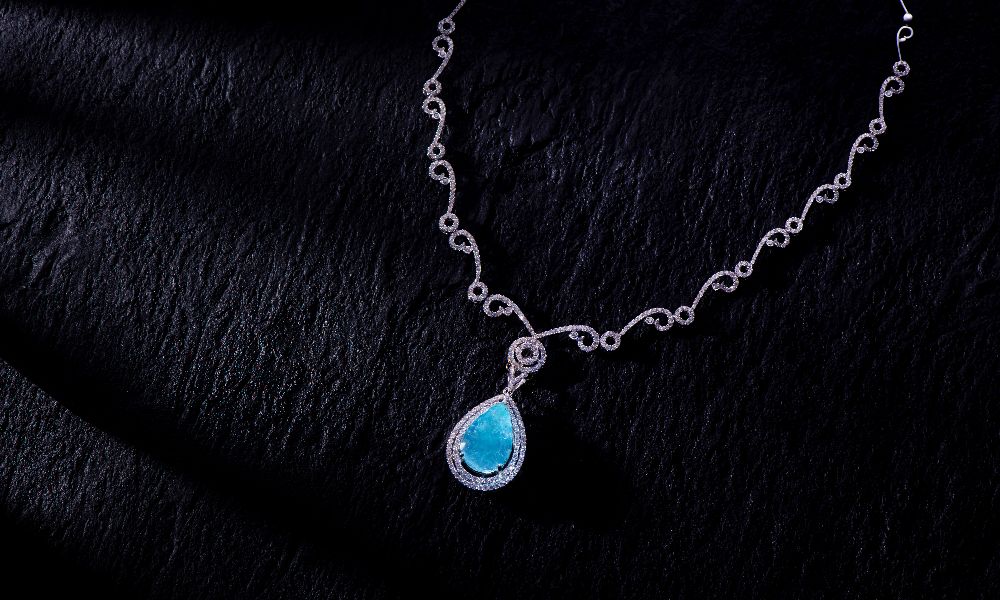
2026 - 08 - 03JUSTLEE Masterpiece: 17-Carat Unheated Mozambican Paraíba Tourmaline Necklace, Certified by Gübelin and GRS -
Signature Creations
2026 - 05 - 21JUSTLEE Masterpiece — A Brazilian Alexandrite: Strong Colour Change Noted by Gübelin, Origin Independently Verified by Gübelin and GIA