
品牌
動態
Signature Creations
JUSTLEE Masterpiece: 17-Carat Unheated Mozambican Paraíba Tourmaline Necklace, Certified by Gübelin and GRS
The electric blue-green of Paraíba tourmaline comes from trace copper (Cu) and manganese (Mn) held naturally within the crystal — a pairing so rare in the tourmaline family that it gives Paraíba a glow that seems to rise from within the stone, a quality no other tourmaline or aquamarine can reproduce. The principal stone of this necklace is a 17-carat pear-shaped Paraíba tourmaline of Mozambican origin, independently confirmed as natural and unheated by two international laboratories, Gübelin and GRS. In a market where Paraíba is routinely heated, a stone of this weight and unheated status is a rare combination. The design begins with the stone's own colour: taking shimmering water as its theme, it draws stone, cut, and chain together into a single expanse of light that moves across the neckline.
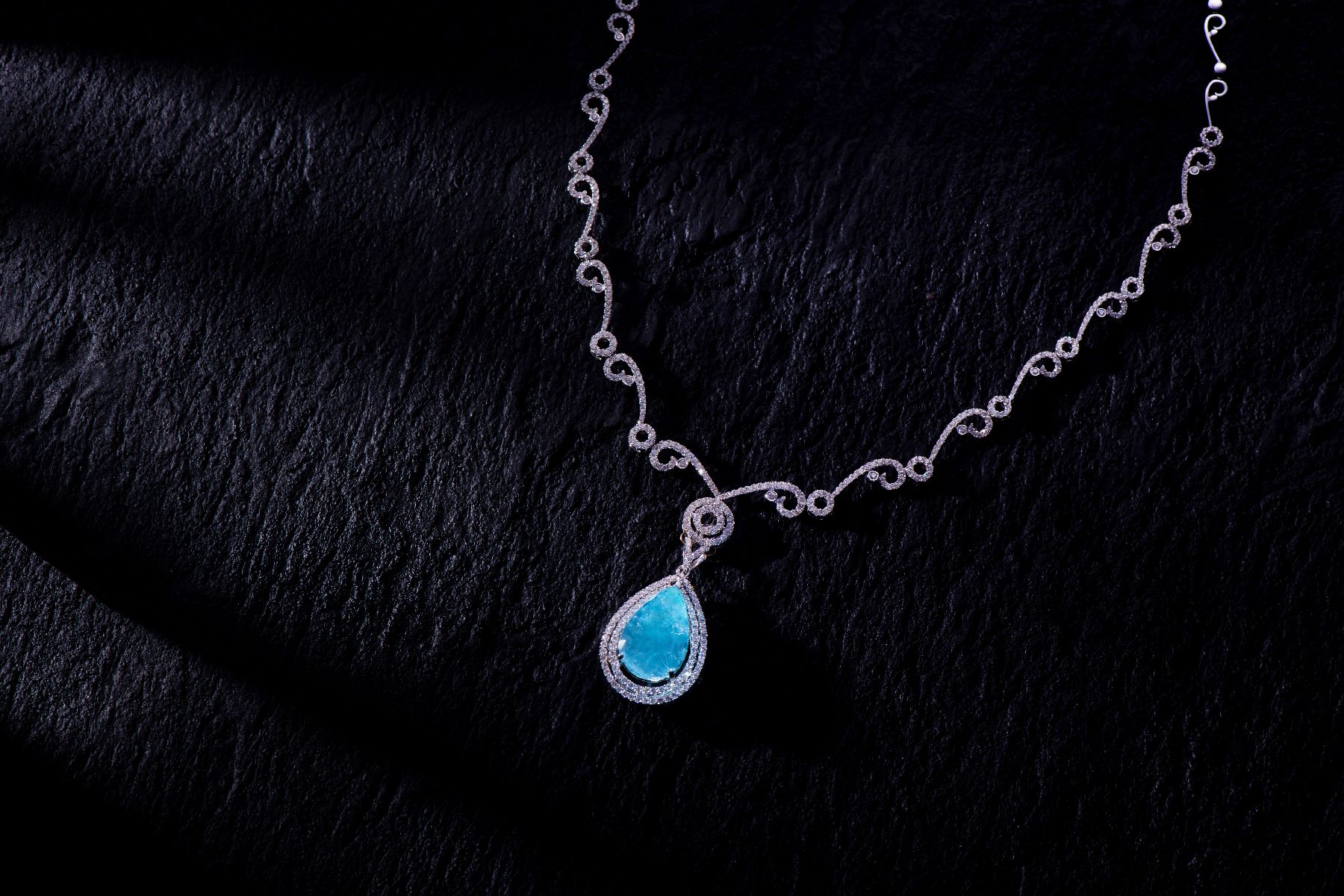
The Rarity of a Large, Unheated Mozambican Paraíba
To understand this piece, one has to begin with a basic fact of the Paraíba market: the vast majority of Paraíba is heated, and this holds all the more for stones of significant weight. According to SSEF, most Mozambican material — apart from stones already in the green to yellowish-green range — requires heating to develop the blue-green the market prizes. Heating is a disclosed and internationally accepted treatment, and precisely because it is the norm, unheated Paraíba is scarce; an unheated stone of large carat weight is rarer still.
This particular combination has been borne out at the top of the auction market. In May 2025, at Bonhams' Hong Kong Jewels and Jadeite sale, a 181.61-carat cushion-shaped Paraíba tourmaline known as "The Kat Florence Lumina" sold for HK$3,814,000. Of Mozambican origin, natural, unheated, and internally flawless, its identity was cross-confirmed by three international laboratories: Gübelin recorded Mozambican origin with no indications of heating, awarded it 95.4 points, and classified it as exceptional; Bellerophon likewise confirmed Mozambican origin and unheated status; and AGL confirmed the stone as natural with no clarity enhancement, its appendix describing the stone's size as representative of the finest material ever recovered from the African deposits. What such a stone confirms is that "Mozambican origin, large carat weight, unheated" is a distinct set of scarcity conditions now recognised by both the leading auction houses and the international laboratories. The 17-carat unheated Paraíba selected by JUSTLEE rests on this same set of conditions — not on any comparison with the premium commanded by Brazilian material.
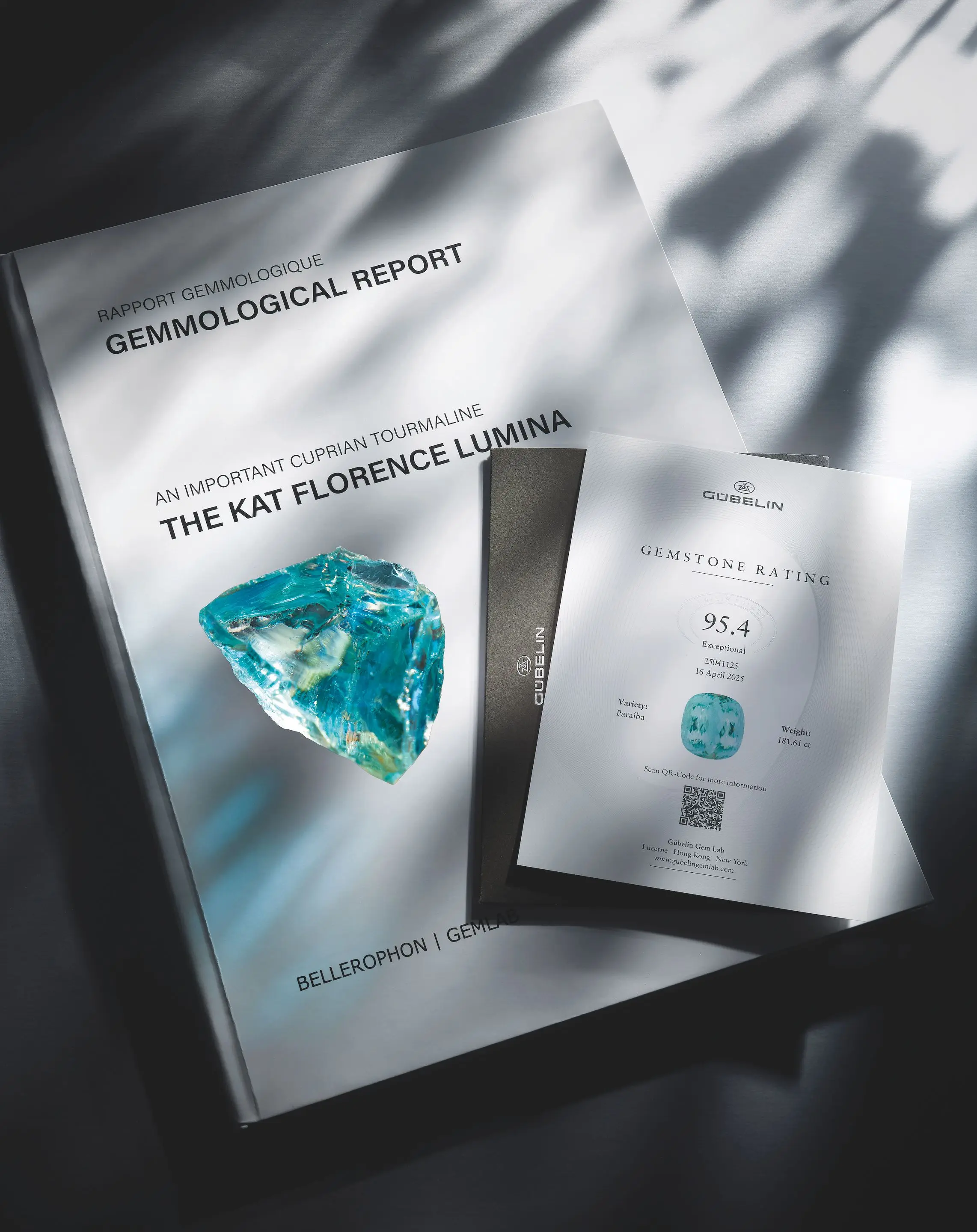
Source: Bonhams 2025 Auction | The Kat Florence Lumina
Two Independent Laboratories, One Conclusion: The Gübelin and GRS Reports
What most distinguishes this piece is that it carries two independent reports, from Gübelin and from GRS, both confirming Mozambican origin and both confirming that the stone is natural and unheated.
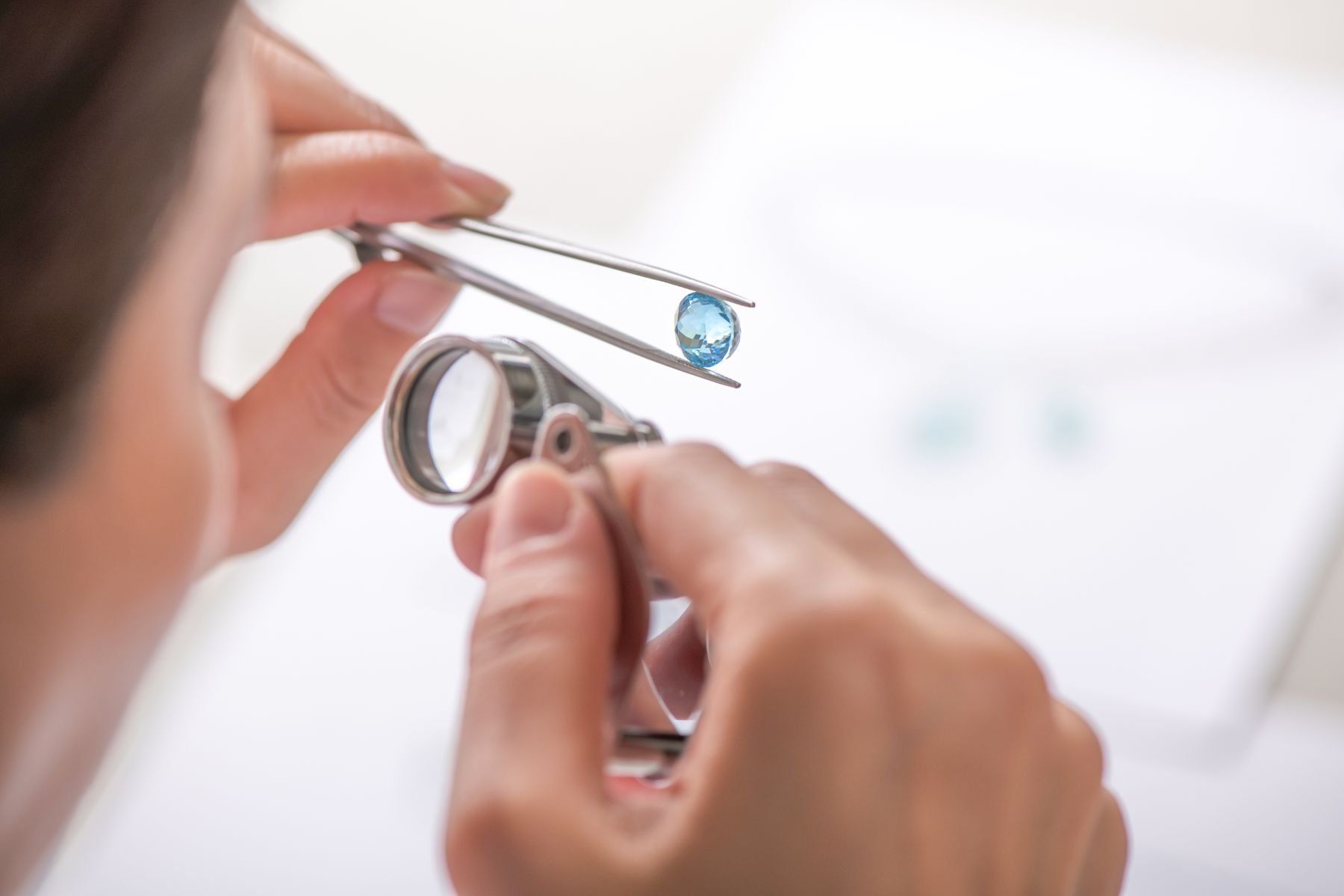
The weight of two concurring reports is especially concrete for Paraíba, because origin cannot be established by standard gemmological testing alone — it requires quantitative trace-element analysis. Colour and inclusion characteristics vary from one source to another: Brazilian material tends to carry a relatively higher copper content, while Mozambican material shows a distinct fingerprint in trace elements such as gallium and tin. Laboratories compare these signatures using LA-ICP-MS (laser ablation inductively coupled plasma mass spectrometry) before reaching an origin determination. Confirming unheated status likewise calls for the exclusion of any evidence of heat treatment at both the microscopic and the spectroscopic level.
Gübelin, founded in 1923, has long been among the laboratories most trusted by the leading auction houses; GRS is widely recognised internationally for its origin and treatment determinations on coloured stones. The two institutions work by different methods and against different reference databases, yet arrive at the same conclusion on the same stone's origin and treatment. This kind of cross-institutional corroboration is an uncommon pairing in Paraíba collecting, and it forms the most solid basis for this piece's credibility.
Shimmering Water: From a Single Stone to an Expanse of Light
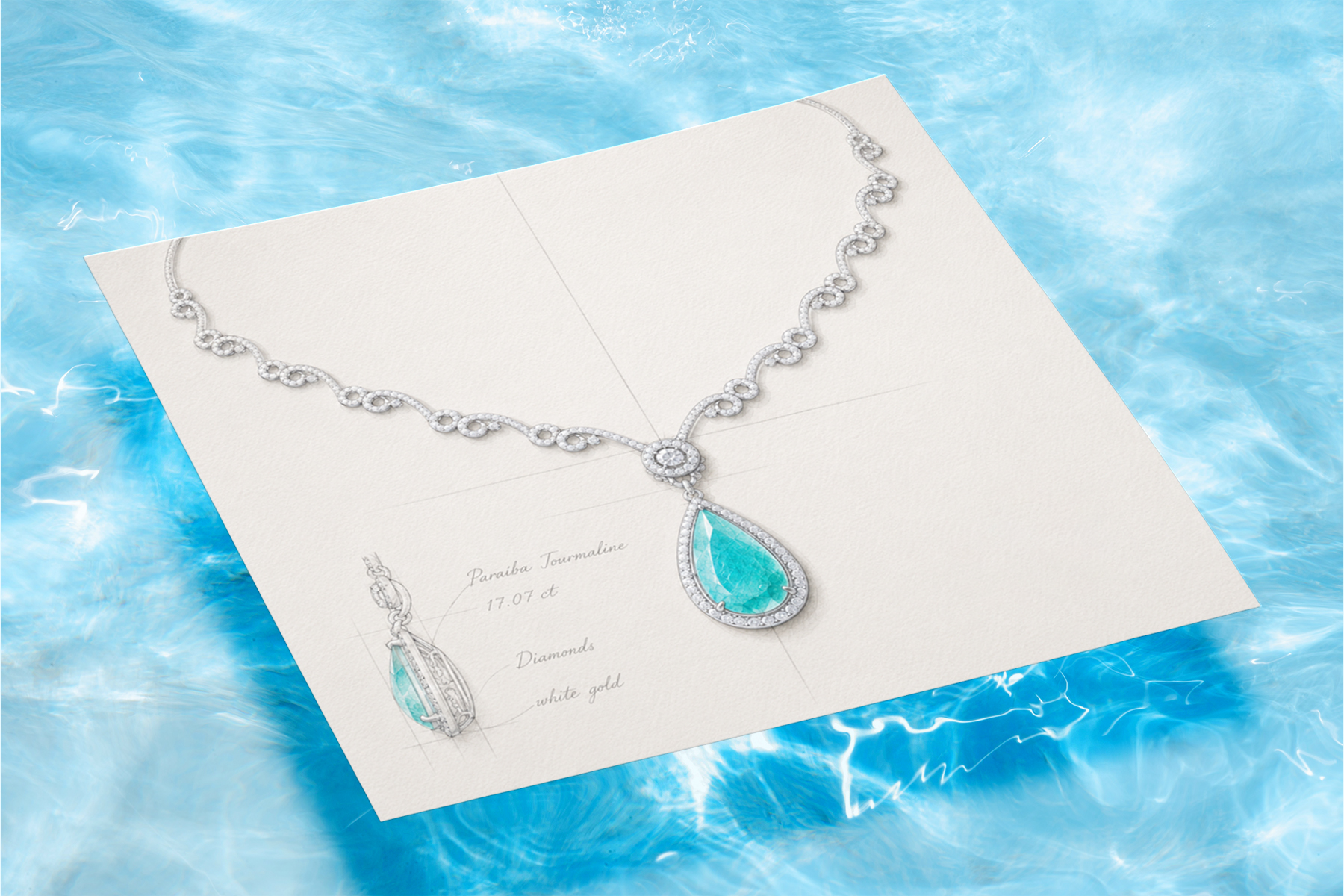
This piece began with the Paraíba tourmaline itself. Working to its selection standards, JUSTLEE first confirmed that the stone was natural, unheated, and certified by two international laboratories. The design followed from the stone's own character — the neon colour between blue and green, like sunlight passing through the surface of a lake. That image became the theme of the piece: shimmering water, drawn directly from the stone's natural colour.
The principal stone is a pear-shaped Paraíba, and it was the stone's own play of light that shaped the design. The pear cut lets light travel freely through the body of the stone and gathers the colour to a single focus at the point, so the blue-green shifts with the light and the angle — clear as a shallow in one moment, deep as the centre of a lake in the next. Under direct light it returns a bright, glancing shimmer, the very quality that suggested the theme of water.
The chain carries that image outward. Pavé-set diamonds form an unbroken wave that flows down from both sides of the neck, so that when the necklace is worn, the shimmer of light on water seems to move across the neckline itself and settle at the suspended stone.
The piece follows the selection standards JUSTLEE has kept for fifty years: the Paraíba at its centre and the diamonds around it are all natural, untreated stones, so the sense of clear, natural water runs through the whole design.
Why JUSTLEE Selected This Stone
In selecting this Paraíba, JUSTLEE followed its consistent order of priority: unheated status first, then international certification, then colour, and origin last.
Natural, unheated status is the first standard, and this stone is confirmed as such by both Gübelin and GRS — in a market where Paraíba is routinely heated, this is the most fundamental of its scarcity conditions. The second is the completeness of its certification, where two independent reports provide a cross-check that a single report cannot replace. Only then come the electric colour the pear cut brings out, and the standing of Mozambique as a source of large-carat material. This order reflects what fifty years of selection have taught JUSTLEE to value in a stone's natural essence: treatment status and certification are verifiable, objective conditions, upon which colour and origin then complete the judgement of a piece worth collecting.
JUSTLEE's craftsmen brought this carefully chosen Paraíba together with the work of senior goldsmiths to create this necklace, entered into the JUSTLEE Masterpiece collection. A natural, unheated Paraíba that has come through the long course of geological time without a trace of human intervention is here given the theme of shimmering water to carry its light forward — not merely a rare stone, but one meant to be worn, and to be passed to the next generation.
Learn more about Paraíba tourmaline: What Is Paraíba Tourmaline? Rarity, Origin, and the Value of Unheated Stones、JUSTLEE Curated Unheated Paraíba Tourmaline
This article was written by the JUSTLEE Consultant Team, drawing on the Gübelin Gem Lab and GRS Gemresearch Swisslab reports and on official international auction records, including the sale of "The Kat Florence Lumina" at Bonhams Hong Kong in 2025. All auction data is stated with the auction house, location, year, and specification, and treatment terminology follows the exact wording of the international laboratory reports.
FAQ
Q:Why is an unheated Mozambican Paraíba especially rare?
A: Paraíba is routinely heated, and large stones especially so. According to SSEF, most Mozambican material — apart from stones already green to yellowish-green — requires heating to develop the blue-green the market seeks. A stone that is both unheated and of large carat weight is therefore scarcity within scarcity. Mozambique is the world's most productive source and the principal origin of large-carat stones, yet genuinely unheated examples remain a minority among them. That is the basis of this 17-carat unheated Paraíba's rarity.
Q:What does having both a Gübelin and a GRS report actually mean for a collector?
A: A single report confirms one laboratory's conclusion; two reports provide cross-institutional corroboration. This stone carries independent reports from both Gübelin and GRS, each confirming Mozambican origin and each confirming that the stone is natural and unheated. Because the two laboratories work by different methods and against different reference databases yet reach the same conclusion, a collector gains a higher degree of certainty about origin and treatment, along with clear, traceable documentation for any future appraisal, transfer, or re-examination.
Q: How is the origin of a Paraíba determined?
A: The origin of a Paraíba cannot be established by eye or by standard gemmological testing; it requires quantitative chemical analysis. International laboratories use LA-ICP-MS (laser ablation inductively coupled plasma mass spectrometry) to measure trace-element composition — Brazilian material tends to show a relatively higher copper content, while Mozambican material carries a distinct fingerprint in trace elements such as gallium and tin. These compositional signatures are the scientific basis for an origin determination, and the reason a credible origin conclusion must come from a laboratory equipped for such analysis.
Q: Is the colour of this Paraíba natural?
A: Yes. The cause of Paraíba's colour is natural — the blue-green arises from trace copper and manganese held within the crystal itself, not from dye or coating. This stone is confirmed by both Gübelin and GRS as natural and unheated, meaning its colour has undergone no heat enhancement under the most rigorous scientific testing, and stands as it formed and was preserved in nature. This is especially uncommon in the Paraíba market, where the blue-green of most stones in circulation has been developed through heating.
Q: How does Paraíba tourmaline differ from ordinary blue tourmaline?
A: The essential difference lies in the colouring agent. Ordinary blue tourmaline is coloured mainly by iron or chromium and lacks Paraíba's electric fluorescence, whereas Paraíba is coloured by trace copper and manganese and glows as though lit from within. Only copper- and manganese-bearing lithium tourmaline meets the definition of Paraíba, and this compositional condition is at the heart of telling them apart — the reason Paraíba requires certification by an international laboratory equipped for trace-element analysis to establish its identity.
Q: For a Paraíba, should origin or unheated status come first?
A: Both inform the judgement, but the verifiable, objective conditions — international certification and treatment status — should be confirmed before origin and colour preference. Unheated status represents a stone's natural completeness and is exceptionally scarce in large-carat examples, while origin bears on historical rarity and market logic. JUSTLEE's selection standard follows exactly this order: unheated status, international certification, colour, then origin. The sound sequence is to confirm variety, unheated status, and origin through international reports, then assess carat weight and saturation together.
More News
-
Signature Creations
2026 - 06 - 17JUSTLEE Masterpiece — GRS-Certified Dual Phenomenon: A 45 ct Natural Unheated Color-Changing Star Sapphire from Burma -
Signature Creations
2026 - 05 - 21JUSTLEE Masterpiece — A Brazilian Alexandrite: Strong Colour Change Noted by Gübelin, Origin Independently Verified by Gübelin and GIA