

動態
Brand Highlights
What Is a GIA Portrait — And Why It Is Rarer Than a Certificate
A standard GIA report certifies. A GIA Portrait documents for history.
It is a bespoke scientific research publication — hardbound, typically 16 pages or more — issued only when GIA determines a piece possesses sufficient rarity and research significance to merit formal documentation. The content goes far beyond grading: it covers geological provenance, complete analytical methodology, UV-Vis-NIR spectroscopy, Raman spectroscopy, and LA-ICP-MS trace element profiling.
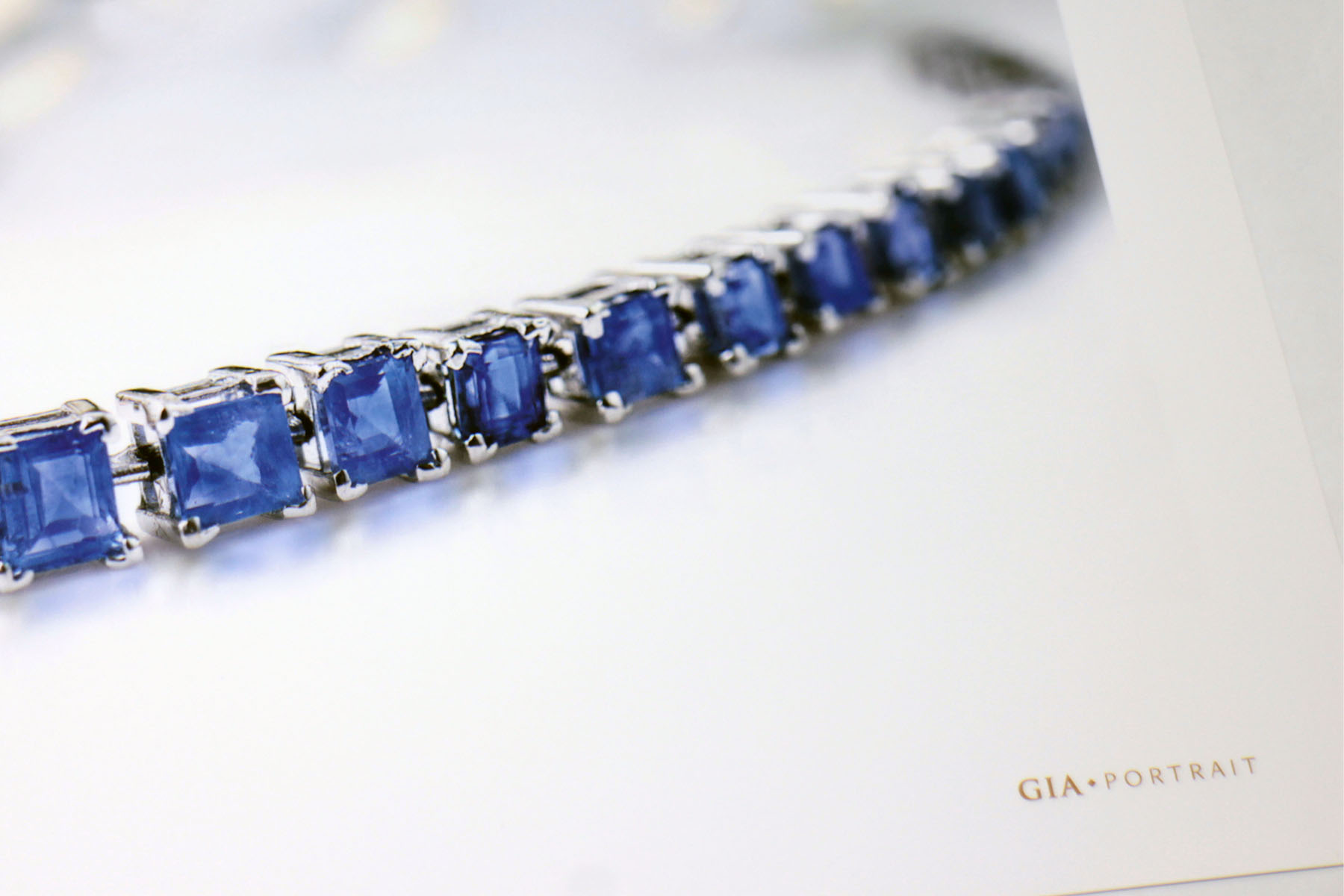
The GIA Portrait(© 2023) issued for JUSTLEE's Kashmir sapphire necklace is GIA's own determination that this piece belongs in the scientific record.
The Necklace: What GIA's Analysis Confirmed
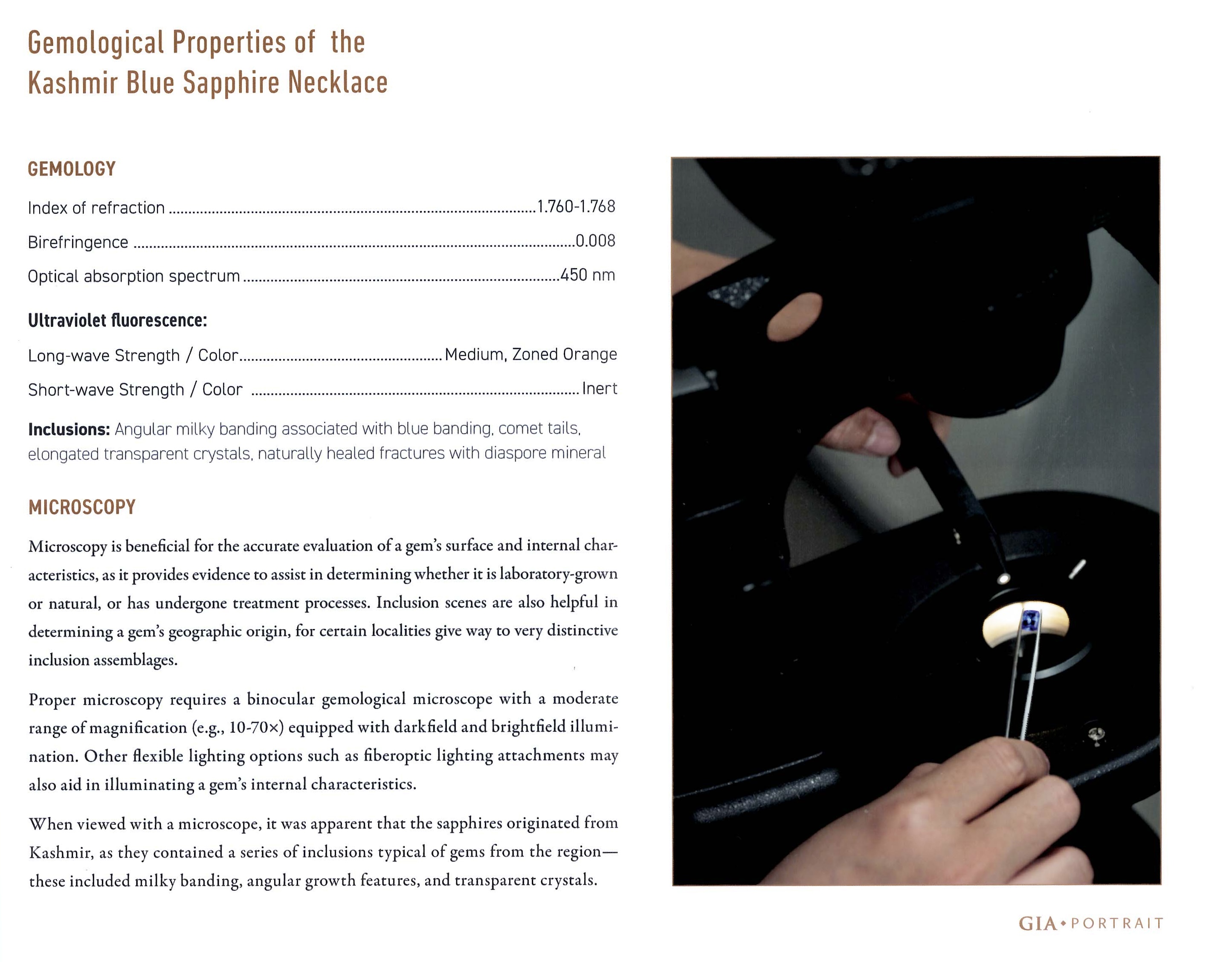
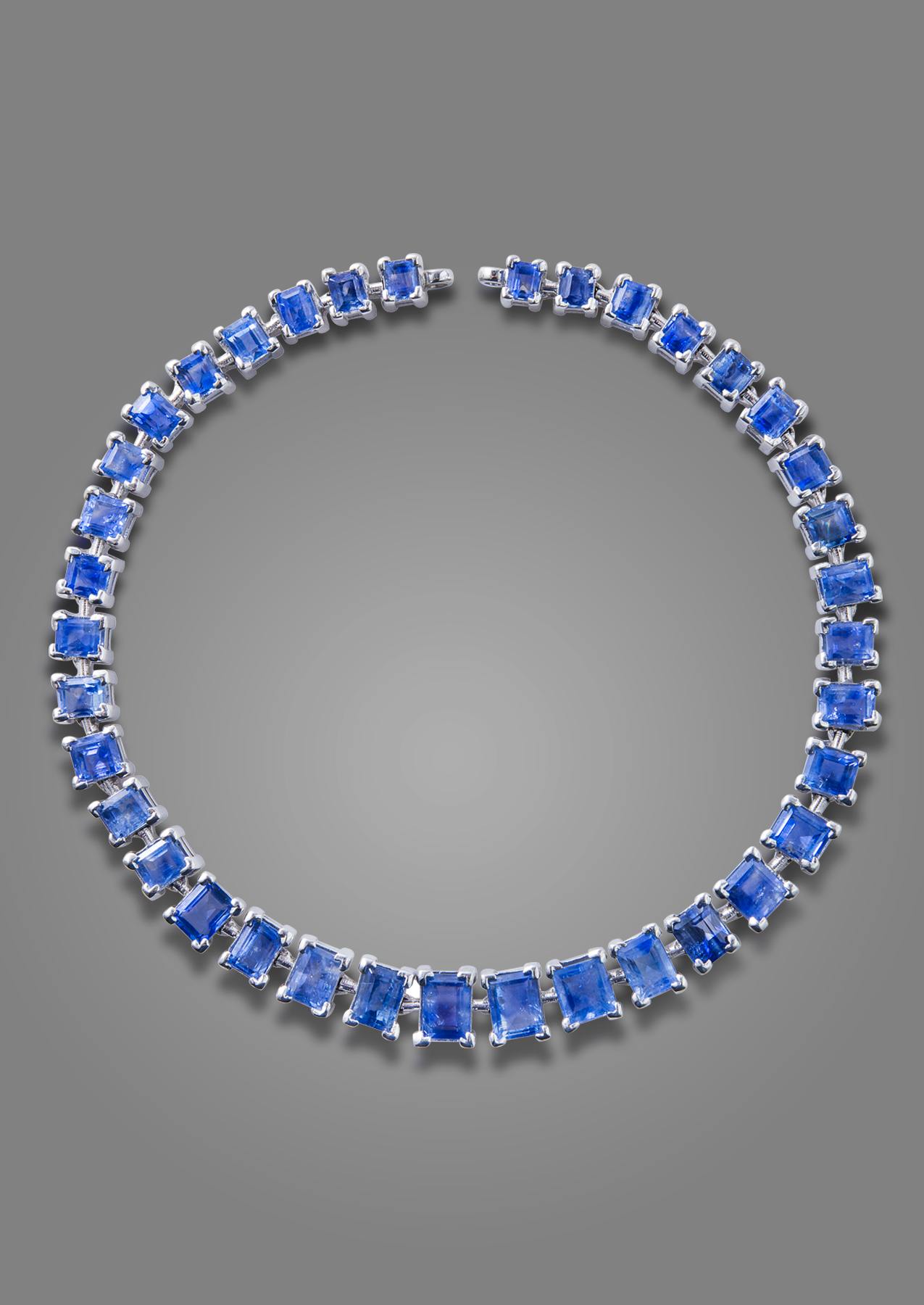
GIA's gemological team applied refractive index measurement, UV-Vis-NIR spectroscopy, FTIR infrared spectroscopy, Raman spectroscopy, and LA-ICP-MS mass spectrometry across all 37 stones.
The simultaneous confirmation of Kashmir origin and no heat treatment, on a 37-stone necklace, places this piece in the highest tier of rarity in the global colored gemstone market.
GIA Thailand Selected This Necklace as a Public Reference for Kashmir Sapphire Rarity
Following the completion of the Portrait, GIA Thailand's official account chose this necklace as a case study to explain Kashmir sapphire rarity to the public — noting that the finest stones are exceptionally scarce, with most having been mined during a brief window of roughly a decade, more than a century ago.
The post was photographed and filmed by GIA photographer Lhapsin Nillapat, with the credit line: "Photos courtesy of Just Lee Just Jewelry (TAIWAN)."
This is GIA, in its own name, on a public platform, formally associating JUSTLEE with this piece on the record.
→ Click to see GIA Thailand's Post
Why Kashmir Sapphire Is the Hardest Provenance to Certify
Two compounding challenges make Kashmir sapphire the most rigorously verified origin in the colored gemstone world.
The first is scarcity of supply
The primary mining period lasted approximately from 1881 to 1882, in the Himalayan region along the modern border between India and Pakistan. The total volume of genuine Kashmir sapphires ever extracted is finite — yet market claims of "Kashmir" origin far exceed actual production. Provenance verification is, for collectors, the most critical question of trust.
The second is the Madagascar challenge
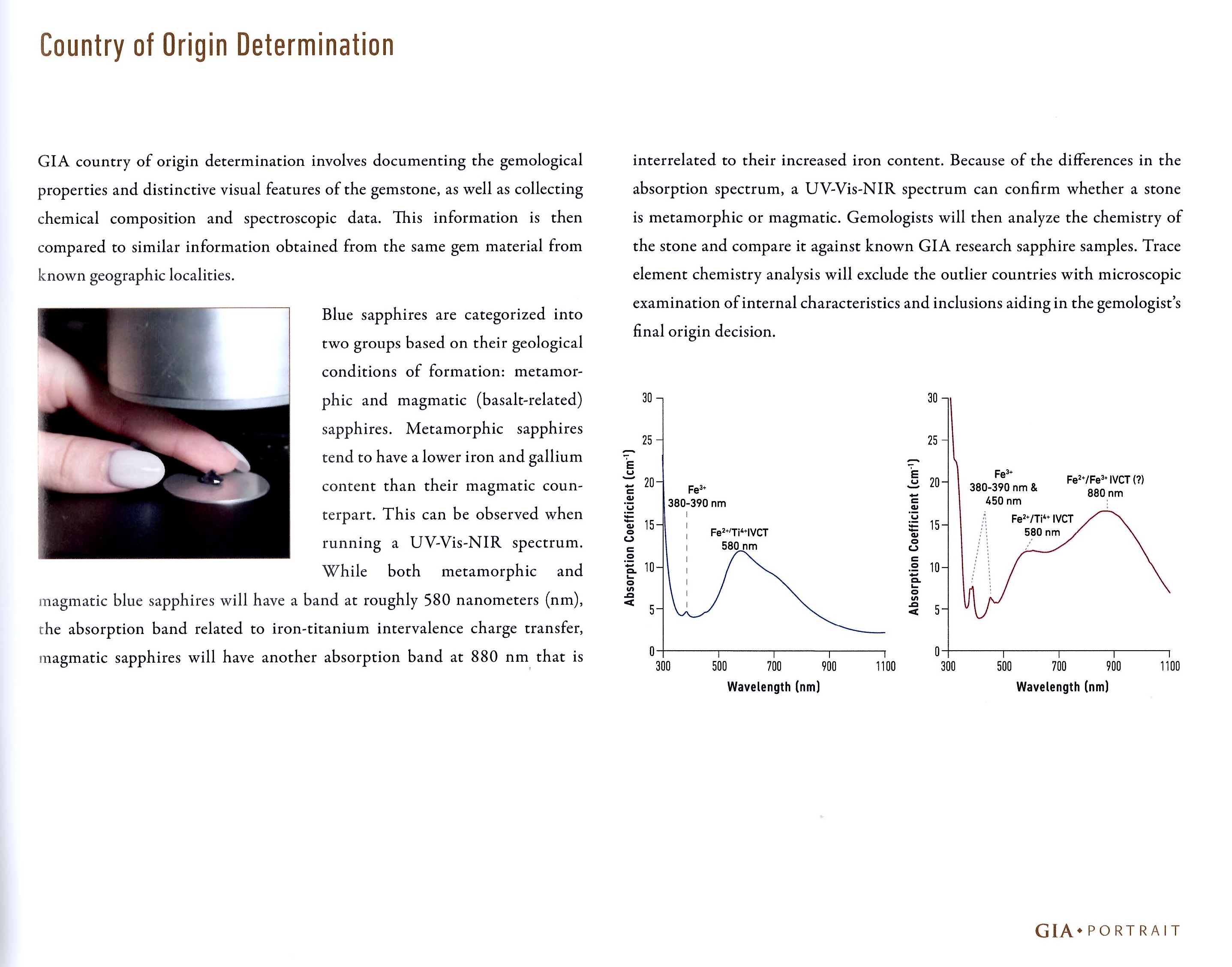
The discovery of the Ilakaka deposit in 1998 introduced sapphires that closely resemble Kashmir material in gemological appearance. GIA itself acknowledges in the Portrait that distinguishing between these two origins presents a significant scientific challenge.
This is why the Portrait employs multi-instrument cross-verification — systematically excluding all alternative geographic origins before arriving at the dual confirmation: Kashmir. Unheated.
The Science Behind Velvety Blue — Kashmir Sapphire's Defining Optical Character
What separates Kashmir sapphire from every other origin is not simply color — it is a phenomenon: velvety blue.
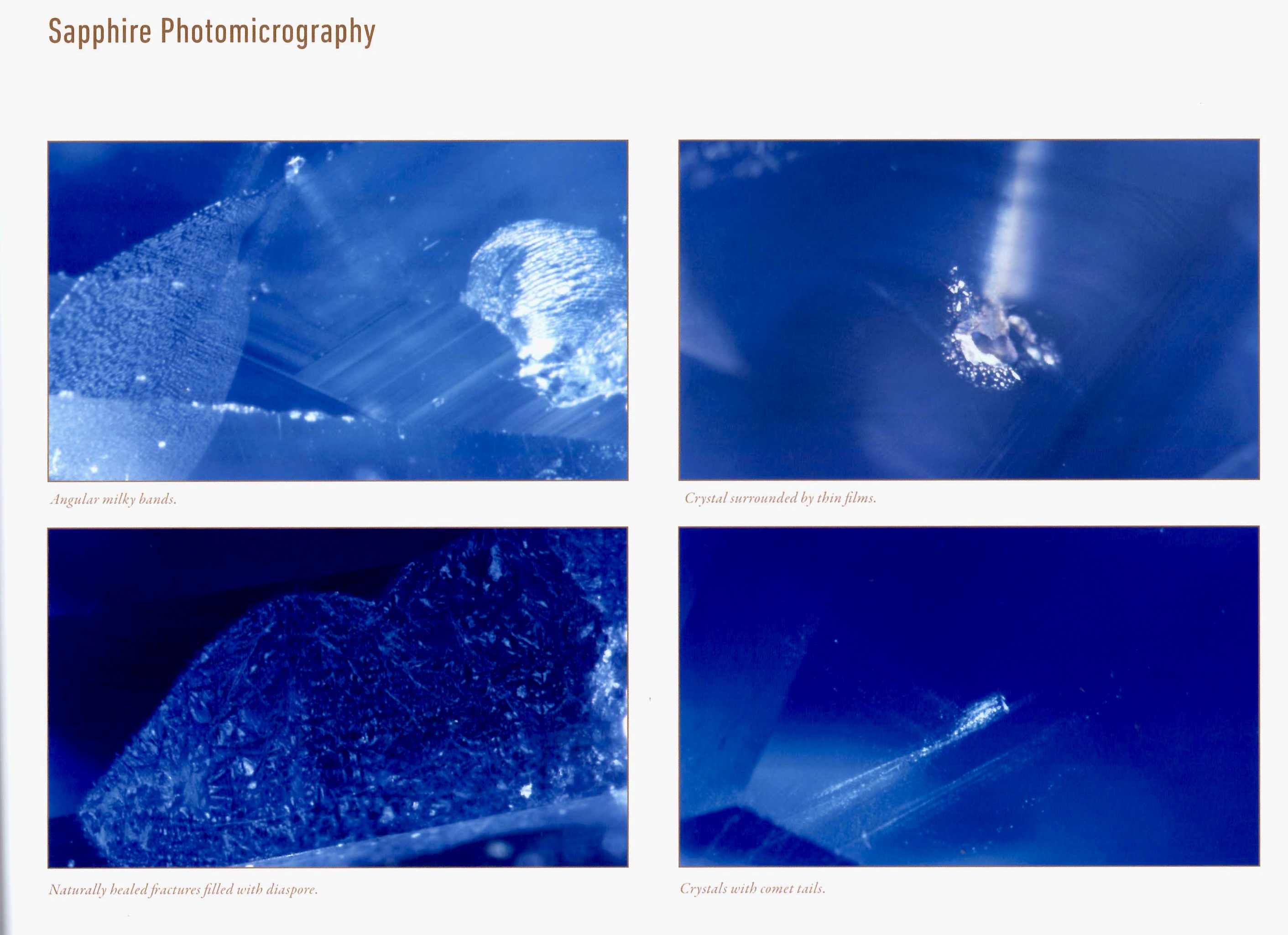
This quality does not come from depth of hue. It comes from microscopic silk inclusions within the stone — rutile needles that scatter light in a way that produces a soft, full, non-reflective royal blue, consistent across natural and artificial light. It is the optical characteristic that has made Kashmir sapphire irreplaceable for over 150 years.
Critically, this effect cannot be replicated by heat treatment. High-temperature heating dissolves these silk inclusions — permanently eliminating the velvety quality that defines the finest stones.
JUSTLEE's 37 stones have never been heated. Their inclusions remain intact. What GIA's Portrait verifies is not an added quality. It is an original one — preserved exactly as nature formed it.
JUSTLEE's Perspective
What this GIA Portrait records is more than spectral data. It is a piece of jewelry formally positioned within scientific literature — Kashmir, unheated, auction-grade, all three conditions verified simultaneously under GIA's analytical framework.
For JUSTLEE, this document is an external confirmation of five decades of stone selection. We have always held that rarity is something science can define — and that the most enduring collecting decisions are built on the most rigorous knowledge.
→ Why Are Kashmir Sapphires Becoming Increasingly Rare? Read the collector's perspective
→ Five Decades of Stone Selection: The Four Standards JUSTLEE Has Never Compromised Learn our criteria
 Facebook
 Instagram
 Line
Line